Saturday, December 7, 2024

’Tis The Season: Awards Race Kicks Off with a Wicked Surprise and an Emerging Frontrunner


It’s December in Southern California, where the nights do indeed get longer, despite the fact that it somehow remains 77 degrees. I won’t complain, even though I want to. It would be obscene since so many of my New York friends are enduring the latest of what will be many frigid spells. The point stands, however, that the weather does not change here, which means the only season that matters in L.A. is awards season.


That’s right, it’s that time of year again when the contenders dust off their suit jackets, prep their best sound bites, and hit the circuit for an ever-longer parade of interviews, industry parties, and awards nights. It’s good work if you can get it, but make no mistake: It is work. Each year, it becomes increasingly clear that the race to the Academy Awards stage is less a sprint than a marathon. And sometimes, it’s less a marathon than a Tough Mudder, leaving everyone bruised, bloody, and beaten. Figuratively, of course. No one wants to get their hands dirty, let alone a $3,000 gown.


The Gotham Awards – the East Coast answer to the Indie Spirits, which we’ll get to in a moment – got things started Monday night with a surprise best feature win for Aaron Schimberg’s arty thriller A Different Man. That was the only prize of the night for A Different Man, which bested Sean Baker’s Palme d’Or-winning Anora, as well as Babygirl, Challengers, and Nickel Boys.


Nickel Boys director Ramel Ross picked up directing honors, while Greg Kwedar’s Sing Sing swept the gender-neutral acting categories with best lead performance for Colman Domingo and best supporting performance for Clarence Macklin. Brandon Wilson scored the breakthrough award for his starring turn in Nickel Boys.


On Tuesday, Ross nabbed another citation for director, this time from the New York Film Critics Circle, who also cited his film’s cinematography. The big winner, however, was Brady Corbet’s epic The Brutalist, which was named best feature. That film’s star, Adrien Brody, earned best actor honors. Marianne Jean-Baptiste was named best actress for her work in longtime collaborator Mike Leigh’s Hard Truths. Kieran Culkin (A Real Pain) and Carol Kane (Between the Temples) won their respective supporting categories.


Then came the National Board of Review, a somewhat loosely defined conglomerate of film fans and critics, which gave John M. Chu’s Wicked the best film and director prizes. You could not swing harder in the opposite direction from dark indie dramas like Nickel Boys and The Brutalist to this cotton candy-light musical. Daniel Craig was named best actor for Queer, Nicole Kidman best actress for Babygirl, and Elle Fanning best supporting actress for A Complete Unknown. Culkin picked up his second award for best actor.


Finally, for our purposes, the Independent Spirit Awards announced their nominees, giving a boost to a number of the above titles and keeping some others in the race. The best feature nominees are Anora, I Saw the TV Glow, Nickel Boys, Sing Sing, and The Substance. A Real Pain is the surprising snub in the top category, though Jesse Eisenberg was nominated for his screenplay, and Culkin, of course, is in the gender-neutral supporting performance lineup.


Sean Baker earned a best director nomination for Anora, which also garnered three acting nominations – Mikey Madison in lead and Yuri Borisov and Karren Karagulian in supporting. All told, Anora finished with six nominations, tied with Jane Schoenbrun’s I Saw the TV Glow for most. Schoenbrun was recognized for directing and screenplay, while Justice Smith was cited in lead performance and Brigette Lundy-Paine in supporting. It would not be surprising if Anora is a top Oscars player. It would be surprising if the significantly more avant garde I Saw the TV Glow gained steam with Academy voters.


So where does this all leave us? The Los Angeles Film Critics Association will have its say tomorrow, and the LA critics rarely go the same way as the New Yorkers, so we could see some more names added to the list of contenders. Then, on Monday, the Golden Globes announce their nominees as the Hollywood Foreign Press Association attempts to worm its way back to relevance.


Safe to say The Brutalist, Nickel Boys, and Wicked all had a good week. This was also an important week for the early-year release Sing Sing to stake its claim. In addition to its performance citations, the inspirational prison drama also made the the top 10 lists for both the National Board of Review and the American Film Institute. It can sometimes be difficult for movies released as early as Sing Sing (I saw it in July) to make an impact, so this is good news for a great film.


We didn’t get a lot of direction in the acting races, except for Culkin solidifying himself as the frontrunner for Best Supporting Actor. He is great in A Real Pain, but he is absolutely the co-lead of the film. Hardly the first instance and surely not the last of such blatant category fraud. While not a lead winner anywhere, Madison added to her Indie Spirit nomination a breakthrough performance award from the National Board of Review, a little patronizing for a tremendous performer who seems to “break through” in every movie she appears in (Scream 5 and Once Upon a Time in Hollywood jump to mind).


The Globes are almost certain to give a major lift to Wicked, whose box office alone has catapulted it into the race. Also, as noted, it offers a kinder, gentler alternative to what has shaken out to be a largely gloomy lineup. Cynthia Erivo and Ariana Grande are almost certain to be nominated, and the film will absolutely be in the best musical or comedy lineup. Expect to see Chu ride the wave of good will the film is surfing to a directing nomination, as well.


One highly touted film that will need some love in the coming days is Netflix’s Emilia Perez, which was all but shut out this week, with the exception of a lone top 10 nod from AFI. Netflix’s other big would-be contender, Malcolm Washington’s The Piano Lesson – a far superior film – is also going to need a boost to stay in the running. Ridley Scott’s Gladiator II was also nowhere to be seen, but that’s not so much a critics’ movie as an industry movie. So, we’re in wait-and-see mode on that one.


Contenders like Conclave, Dune Part II, and A Complete Unknown, meanwhile, are doing just fine despite not receiving much attention from the critics so far. Conclave was named best ensemble by the National Board of Review, A Complete Unknown landed on both the NBR and AFI top 10s, and Dune Part II will be a crafts juggernaut at the Oscars, which is usually enough to propel a film into the big race.


All in all, the race is just getting going, but now we know the names of some of the major players. A lot can shift, and I personally am excited to catch up with some of the films that I haven’t had a chance to see yet. Nickel Boys and A Complete Unknown are right at the top of the list.


For the fun of it, here are my half-formed predictions for this year’s Best Picture nominees, given where the race stands right now: Anora, The Brutalist, A Complete Unknown, Conclave, Dune Part II, Emelia Perez, Nickel Boys, A Real Pain, Sing Sing, and Wicked

Monday, November 4, 2024

Music by John Williams: Five favorite scores


John Williams has composed music for roughly 125 feature films, in addition to things like the Olympic theme and the theme to NBC Sunday Night Football and the NBC Nightly News. In addition to the works mentioned in this piece and the rest of his Steven Spielberg collaborations, you would also instantly recognize his themes for Harry Potter, Home Alone, Superman, and Fiddler on the Roof. It’s a gargantuan oeuvre to narrow down to five favorites, but that’s what we do here.


I love film music. I have written about it many times here on the site. Williams is by no stretch my favorite composer, but the importance of his work to film history and to my personal history with film cannot be overstated. I was not exaggerating when I said that he wrote the soundtrack to my childhood. I saw Jaws when I was 3 years old. It terrified and intrigued me. I couldn’t get enough. Home Alone is a holiday-season classic from my youth. Raiders of the Lost Ark and, to an even greater degree, Indiana Jones and the Last Crusade taught me what adventure movies could be.


This music is a part of me in a very real way. It’s a part of most of us. So, how does one pick a favorite? You just go with your heart. This is what my heart says:


1. Raiders of the Lost Ark – One of the things that makes Williams such a master of the craft is his work with leitmotifs, or character themes. They are the repeated phrases in the music that remind you of who this character is and what he’s about. The “Raiders March” is one of the great character themes in history – you know which one that is; it’s the music you hear in your head when you hear the name Indiana Jones – but “Marion’s Theme” is not to be slept on. One of the key elements of any adventure film is romance. “Marion’s Theme” is one of the most romantic pieces Williams has ever written, and it gives the Raiders soundtrack a depth of feeling and breadth of composition that lands this at the top of my list.


2. Home Alone – Think of how many Christmas songs there are and how much Christmas music there is. Now, try to think of how much of it is relatively new. And, I only mean newer than Phil Spector’s A Christmas Gift for You. There’s not much. Mariah Carey’s “All I Want for Christmas Is You” counts. And Williams’ main theme for Home Alone. That’s how difficult it is to enter something new into the canon of Christmas music. Sixty-plus years, and I can think of two things. The main theme to Home Alone, apart from being a Christmas staple, evokes all of the moods of the film. It’s sentimental, a little dangerous, a little mischievous. It delivers you right to this time and space.


3. Jaws – There is only one reasonable rival here: Bernard Herrmann’s “The Murder” from Psycho. You know it. The shower scene. Roughly 100 years of modern film scoring, and it comes down to these two cues for the most iconic. Here’s how you know: The parody is accomplished through the music alone. Most parody relies on story beats, characters, costumes, images – it is a visual medium, after all – but to parody or homage Jaws, you need just two notes. The same is true of Psycho. Entire film universes are contained within these cues. 


I would be remiss if I didn’t mention, as well, how much fun so much of the rest of the non-shark Jaws music is. It’s a really jaunty adventure score. “Out to Sea” is particularly memorable. Williams says in the documentary that he thinks of Jaws as a pirate movie, and you can hear that influence in the music.


4. Catch Me If You Can – I’m sure Williams has fun every time he composes a new score, but it feels like he’s having the most fun with the jazzy, fanciful compositions he crafted for Spielberg’s cat-and-mouse story. Listen to the interplay of the instruments. It sounds like a cross-country chase, the way the instruments move back and forth and through each other. I learned from the documentary of Williams’ roots in and love for jazz. That love is infused into every note of this wonderful score.


5. Hook – This is the blatantly sentimental pick, and I presume it would be for many a millennial of a certain age. Hook is the much-maligned Spielberg film our microgeneration reclaimed. As someone who doesn’t much care for Goonies and has been told you need to see it when you’re young, I think of Hook as our Goonies. You have to see when you’re young for it to get its, well, hooks into you. 


Williams’ music hits the three key elements of the film. This is a sentimental family movie in its opening passages. Then, there is the adventure story of discovering Neverland and joining up with the Lost Boys. But, he undercuts all of this with a sense of dread and menace. In the story, the pirates are the menace, but thematically, of course, the menace is the unstoppable march of time that turns you from a child full of wonder to an adult lacking in imagination. The deft artist Williams is, he communicates all of this in 89 seconds of perfectly drawn music with the “Prologue.” Talk about delivering you to a time and a space.

New movie review: Music by John Williams


Whether you are Gen X, millennial, or Gen Z, John Williams probably wrote the soundtrack to your childhood. If you were to list out the 10 most famous music cues in film history, Williams almost certainly wrote half or more of them. With 54 nominations and five awards, he is the second-most-nominated person in the history of the Academy, behind none other than Walt Disney himself. At 92 years old and still working, his cultural legacy is staggering, almost beyond comprehension. As such, it’s a little more than one can fit into a 106-minute movie.


Director Laurent Bouzereau’s film follows most of the conventions we have come to expect from documentaries of this type. We get a little bit of background information on Williams’ parents – his father was a jazz drummer who worked with the greats; his mother was an actress and dancer; they met on the set of a movie they were both working on. We get Williams’ introduction to performing music, a little of his time in the service, and how he got started in movies. Then, we work chronologically through the biggest movies in his career.


If you watch enough of these types of movies, you’re familiar with the beats. What helps separate out Music by John Williams comes down to two related factors: 1) the “biggest movies in his career” also happen to be many of the biggest and most important movies in the history of the art form; and 2) because of that, the talking-head interviews are a who’s who of film history over the past 50 years. Of course, the best insights come from Williams himself and his greatest collaborator, Steven Spielberg.


Spielberg changed the face of the film industry forever, multiple times, but there is an argument to be made that he does not accomplish this without Williams’ contribution. I had this debate with a colleague earlier today, and I actually came down on the side of Spielberg likely succeeding nearly as well with someone like Alan Silvestri (Back to the Future, Forrest Gump) at his side. But, there is not a bone in my body that believes had that been the case that we would have five scores as iconoclastic as Jaws, Close Encounters of the Third Kind, Raiders of the Lost Ark, ET, and Jurassic Park.


These films are full of images we can hear, and that is thanks to Williams. An unknown POV underwater: BUH-BUM. An adventurer running from a boulder: BUM-BUH-BUM-BUHHH. A boy and his best friend flying in front of the moon. We know what that sounds like because of Williams.


Any one of those five films would be the crowning achievement of any other composer’s career, and yet, it is possible none of them serves in that position for Williams because, of course, there is Star Wars. One of the documentary’s truly special moments comes in hearing people describe their reaction to the opening fanfare at the beginning of A New Hope. It is as though Williams discovered fire and suddenly there is light and warmth in the world.


The other major highlight of the film is listening to Kate Capshaw describe Williams playing the Schindler’s List score on the piano for her and Spielberg for the first time. The story brings a tear to her eye – and to ours.


Moments like this will be catnip for fans of film history and fans of these movies, but they also hint at the doc’s great flaw. Every interview, every conversation, every sequence is so geared toward the legacy of Williams’ accomplishments that Bouzereau treats the compositions themselves almost as fait accompli. It sure is a lot of fun to listen to famous filmmakers talk about music we all love, but it would have been more valuable to interrogate Williams’ process of creation. Why does that horn go there? What does this violin solo accomplish? What would one more note here or one fewer note there mean?


The closest we get to this is in listening to Williams talk about his famed five-note composition for the climax of Close Encounters. He shows the camera a music sheet with 20-30 different five-note combinations and points at the circled one, buried innocuously at 15 or 16. That’s the one they used. He then demonstrates the difference a single note makes in the sequence and briefly explains the emotional effect of completing a musical phrase in different ways. This is gold, and I wish the film had space for more sequences like this.


Similarly, there is a good section of the film devoted to Williams’ time as the principal conductor of the Boston Pops, a tenure that proved somewhat controversial due to the perceived illegitimacy of film music. Williams did a lot to break down that barrier, and the film rightly credits him for that specific cultural shift.


These tangible impacts are what the movie needs more of to be fully rewarding. We understand inherently the ephemeral nature of Williams’ work, so deeply rooted in nostalgia for our childhoods and the cultural artifacts we cherished then and still hold dear now. What might give this film some depth is a deeper exploration of that nostalgia. Ultimately, Music by John Williams is like a really delicious cake. It’s sweet and satisfying and you greatly enjoy it as you consume it, but it’s not as nourishing as a full meal.

See it? Yes.

31 Days of Horror Redux: Wrapping up


I did not complete my goal of writing about 31 horror movies in 31 days this October. These things happen, and I won’t beat myself up about it. But, I did promise the 31 Days of Horror Redux, and for failing to deliver, I at least owe an explanation. 


For 16 years, I have kept this site up as a hobby, occasionally with more investment and occasionally with less, depending on how my life is shaking out at any given time. Last Cinema Standing is one of the joys of my life, a feeling I hope is conveyed in my writing and particularly around my year-in-review columns, when I take the opportunity to reflect. But, at the end of the day, it is a hobby, and thus, it sometimes falls down the priority list.


A little insight into my life recently: I am currently in the midst of some personal issues revolving around the end of my marriage. All is well, and all parties will be better off and happier once we get through the darkness of this tunnel. Of course, the only way through it is through it. Unrelated to that, I have picked up some additional work in the sports world on nights and weekends for a daily New York newspaper. 


You may have heard that the local New York baseball teams made quite the run to the World Series this year. As a result, I worked every single day of October with no days off and occasional doubles. I am in no way asking for sympathy and recognize that plenty of people out there balance as much or more simply to be able to survive. I am privileged that I can work both jobs from the comfort of my living room and have the flexibility and time to manage them.


However, with the above mentioned in mind, it was perhaps not the wisest decision to add an additional 20,000-30,000 words of horror writing to my plate, on top of the time it would take to watch the films before writing about them. I should also note I take a fiction writing class once per week, so even when I am not writing here, rest assured I am writing.


I am pleased with the pieces I was able to produce in October and had a tremendous amount of fun. I love horror, and I love sharing thoughts about it with others. It is truly one of the great pleasures of my life, but as we all know, life for most is too rarely about pleasure. Ultimately, I wrote about 15 movies over the course of the first 14 days of the month, then had to tap out. 


Over the final 17 days of the month, I watched an additional 10 horror films that were new to me, as well as some personal favorites just for the fun of it. So, to wrap up the 31 Days of Horror Redux, I wanted to share some brief thoughts on the films I didn’t have a chance to write about in full:


Black Friday, directed by Casey Tebo: An alien-invasion horror comedy set on the other scariest day of the year – the shopping holiday known as Black Friday. It’s a good time, and I’m always happy to see Bruce Campbell in anything. Like a feature-length version of the opening scene of Michael Dougherty’s Krampus with aliens thrown in. This 2021 film also got to Black Friday horror two years before Eli Roth’s Thanksgiving tackled similar territory.


Halloween Kills, directed by David Gordon Green: This won’t be the last movie in the Halloween franchise I discuss here. This is the second film in the most recent trilogy, intended as a sequel trilogy to the original film, making this the third film in a tetralogy, if you prefer. If that all sounds like gibberish, well, it is. I had intended to pair this with Halloween Ends to complete the series. However, Ends was not as readily available, and I found this installment uninspired and disappointing, so I was not inclined to go seeking.


Villains, directed by Robert Olsen and Dan Berk: A fun little thriller that proves Bill Skarsgård was destined for horror royalty even before It and Barbarian. His co-star, Maika Monroe, had already done It Follows by this point, but along with this year’s Longlegs, she is clearly on a path to being one of our great horror performers. Lots of fun twists and turns, and though none of the characters acts like a real person might in these situations, the actors (including Kyra Sedgwick and Jeffrey Donovan) give it their all.


King on Screen, directed by Daphné Baiwir: A documentary about the history of Stephen King film adaptations, this is strictly for King heads only. Baiwir largely spends the right amount of time on the correct selection of films (a lot of Misery and Green Mile, not a whole of In the Tall Grass, for instance). There’s a baffling bookend sequence to this film that does nothing for it, and it’s uncomfortable to watch the almost exclusively white, male filmmakers interviewed praise King for his writing of women and people of color.


Tetsuo: The Iron Man, directed by Shinya Tsukamoto: I have to be honest – I could not make heads or tails of the plot of this. In writing this short paragraph, I read the plot description and couldn’t tell you if that actually describes the movie I watched, at least from a story perspective. On the other hand, as an experience, this is a hell of a time. The imagery is a nightmare pulled straight from David Lynch, and the story of a man cursed to turn to metal feels like an astute commentary on the machinery of capitalism. Excited to share and rewatch this one.


Smile 2, directed by Parker Finn: I saw this in theaters after having seen the first film in theaters and enjoying it. This franchise takes the modern trend of “Trauma Horror” to its logical conclusion, featuring a demon that literally feeds on your trauma. Choosing a Sabrina Carpenter-esque pop star as the vessel for the curse is a fun gambit that opens up the world of the story. In service of maximizing its potential for twists and shocks, the movie doesn’t always play fair with its rules, but that’s not the worst thing. The final sequence is the only way this movie could have ended, and while perhaps predictable, it still works.


Rumours, directed by Guy Maddin: Spoilers, but I will almost certainly be writing more about this film when we get to the year in review, so I’ll have deeper thoughts for you then. For now, suffice it to say that Maddin and co-directors Evan and Galen Johnson have crafted a darkly brilliant satire of the way our world works. They also stuff more mood and atmosphere into every frame of this film than most filmmakers will ever find in their whole careers. A masterwork from one of our movie masters.


Humanist Vampire Seeking Consenting Suicidal Person, directed by Ariane Louis-Seize: Louis-Seize is not messing around here. The title is exactly what this movie is about, but the way it is about it is so fresh and fun and interesting. Like a gender-flipped Twilight for moody Canadians, this film takes its horror seriously and cranks up the teenage(-ish; the vampire is in her 90s) angst to a level that feels honest while still self-reflexively humorous. A neat little gem.


Halloween 4: The Return of Michael Myers, directed by Dwight H. Little: I was a Freddy Krueger kid, which you know if you’ve followed the site over the years. I appreciate the original John Carpenter Halloween, but Michael Myers never really did it for me. Freddy is just more fun. So, I mostly skipped all the Halloween sequels, though I did see the Rob Zombie and aforementioned Gordon Green remakes in theaters. This isn’t great. I might have liked it more if I had seen it when I was younger. It is cool to see the birth of Danielle Harris as one of our great horror performers. That said, it’s better than …


Halloween H20: 20 Years Later, directed by Steve Miner: I get what happened here. By 1998, teen slashers were all the way back in the wake of Scream, I Know What You Did Last Summer, etc., so why not bring back the original? Well, this movie is 86 minutes of: That’s why. It’s actually shocking how little happens in this movie and how wasted all of Jamie Lee Curtis, Josh Hartnett, and Michelle Williams are. We don’t ask for a lot from a Halloween movie, but this movie truly gives you the least amount it thinks it can get away with. Reader, it does not get away with it.


Those were all the new horror watches I got through in October. As a treat, I also rewatched two of my favorite films of all time: David Cronenberg’s The Fly and Rusty Cundieff’s Tales from the Hood. They’re both still great. I also watched my favorite of the Leprechaun franchise: Leprechaun 3. That one is set in Las Vegas. It’s exactly as much kitschy fun as that sounds and features most of my favorite kills in the series. Finally, I headed over to the Hollywood Forever Cemetery for an outdoor screening of Trick ‘r Treat, which was a delight, though I do recommend bringing your own snacks ($15 for a cupcake!).


So, that wraps up the 31 Days of Horror Redux. Thanks for bearing with me, and I promise this won’t be the last time I go way too deep on horror movies. Until next time, happy haunting.

Monday, October 14, 2024

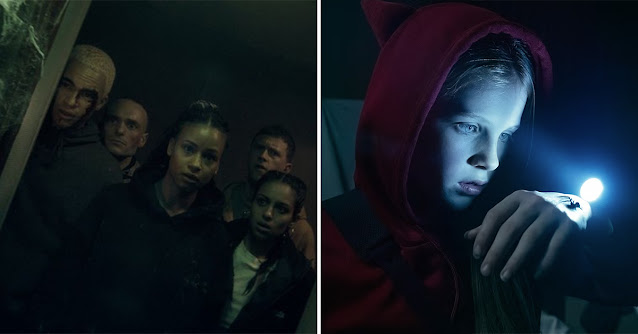
31 Days of Horror Redux: Infested and Sting


Welcome to the 31 Days of Horror Redux, a month-long celebration of genre filmmaking. Last time around, I made the recommendations. This time, I will be watching 31 days of films that are completely new to me. I hope you will join me on this journey of discovery.


Day 10: Infested, directed by Sébastien Vaniček, and Sting, directed by Kiah Roache-Turner


Spiders. I hate ‘em. Always have. Always will. It’s a primal kind of fear. There is no rationality to it. They’re little bugs like any other little bug, and I don’t mind other little bugs. Don’t particularly want them in my home, but I’m not scared of them. Spiders, on the other hand, pure, paralyzing fear.


With that context, I will tell you a movie I enjoyed very much as a child and have gained a greater appreciation for as an adult is Frank Marshall’s Arachnophobia. So terrifying yet enthralling to me as a child that I even had a little routine for watching it: sit on the floor, pile up blankets all around as a protective wall and stuff them under the couch so there would be no place for spiders to hide, then keep on high alert. It felt equal parts dangerous and fun, which is why I think horror movies appeal to kids. Older now, I appreciate Marshall’s film as a campy throwback to the creepy fun of ‘50s B movies.


That brings us to this double feature of spider movies, both released this year. The French film Infested was released to Shudder, while Sting, an Australian-American production, was in theaters back in the spring. Both are emblematic of the best parts of a creature feature but also have some of the same problems that often plague these kinds of movies. Let’s start with the bad because I really liked both of these movies and want to spend more time talking about their positive qualities.


What makes a spider (or spiders – Infested is, predictably, about an infestation, while Sting is about a single spider) inherently scary? To my mind, they are small and fast, they can hide anywhere, obviously there is potential danger of their bite, and there is something unearthly about a creature with that many legs and eyes that moves the way they do.


Editor’s note: I’m actually freaking myself out a little bit right now just in typing this piece. There’s a small spider on my bookshelf that I keep around for mosquitoes – see, I do recognize their value – and I’m checking on him a little more often as I write these words.


Both films understand all of these aspects and make great use of them. The problem is that Screenwriting 101 says that to hold an audience’s interest, you must continually raise the stakes or increase the threat. Unfortunately, the filmmakers in both of these cases accomplish this by making the spiders bigger. That’s a mistake.


Yes, it’s gross to see a spider the size of a dog or a bear, but it’s not that scary. Their greatest advantage is that they are tiny and could be anywhere, and our homes are filled with little places for them to be. Both films wring tremendous amounts of tension out of this basic idea, but eventually, both lean into: The spiders are getting bigger! The bigger they get, the less scary the movies. None of this is to say that if a spider the size of a car were in my home right now I wouldn’t just have a heart attack and drop dead, but on film, it’s a little silly.


Okay, that’s my complaint. Now for the good stuff, which we’ll talk about individually since each film takes a unique approach to the same basic premise: a deadly spider ends up in an apartment building.


Infested is the superior film in that it is both scarier and thematically richer. Vaniček, who has already been tapped by Sam Raimi and Co. to handle the next installment of the Evil Dead franchise, is even able to smuggle some fairly potent political and cultural themes into his fright flick. There are sequences in this movie I literally watched through my fingers, and I even paused it once to give my poor heart a break.


The film follows Kaleb (Théo Christine), his sister, and their friends as they try to survive their tower block, clearly in a lower-income area of the city, being overrun with deadly spiders. Kaleb is a lover of exotic creatures and keeps various bugs and reptiles in his room. He buys a spider on the black market, brings it home, and all hell breaks loose. The opening of the film is a nice little homage to Arachnophobia. 


Where the earlier film opens with scientists collecting specimens in a South American jungle, this film opens with smugglers in a Middle Eastern desert, a more culturally relevant reference point in France. Here, it works as a nice little metaphor for the opium trade and the way international drug rings disproportionately affect neighborhoods of color in the cities. If it seems I am reading too much into it, trust that film goes deeper into this metaphor than I am now.


Anyway, the spider gets loose and hides in a pair of shoes that Kaleb sells to a neighbor, and this is what I mean with the tension of a little spider that can hide anywhere. We know it’s in the shoe. It must be in the shoe. The terror is in wondering how the character will learn it is in the shoe. I won’t spoil it here, but it is creepy, surprising, and effective.


When that character’s body is found, the police are called. There is talk of a drug overdose, an infectious disease, maybe, and generally a lot of conspiratorial speculation. Eventually, the building is quarantined and the residents are forcibly kept inside, despite the deadly threat within. There’s a lot of good political allegory in this around the handling of the pandemic and the use of the police to violently suppress and oppress neighborhoods of color and poorer communities.


For the final 20 minutes or so, the spiders take a backseat to the police as the primary threat, and this is right around the time the spiders start to get really big – they reproduce quickly and each successive generation quadruples in size when it feels threatened. So, the end is not quite as strong as the beginning and middle passages, but as a whole, it all works. Frankly, any movie so terrifying that I have to pause it out of fear gets an ‘A’ in my book.


Sting does not rise to that level, but it is effective B movie fun that owes plenty to Arachnophobia but is even more indebted to another famous horror film. I will say right now that I saw the trailer for this movie and the marketing materials and had no idea even about the basic premise, so if you want to go in completely blind, stop reading now. Otherwise, we’re going to talk about what went down in some detail.


Alright, everybody ready? It’s an alien. The spider is an alien. It lands in this apartment building as a tiny little meteor that arrives as part of a passing meteor shower. This suggests the possibility of a full-scale invasion, but this movie wisely confines itself to this single apartment building. A young girl finds the spider – the creature, in look and mannerisms, is exactly like a spider – and takes it home as a pet. Then it starts doing a lot of things spiders can’t do, like whistling, opening the jar it’s kept in from the inside, and growing in size every time it eats.


Eventually, it grows big enough that it’s hiding in the building’s ventilation system and sneaking from apartment to apartment, snatching prey. By this point, it’s pretty clear that the whole movie is a fairly faithful homage to the Alien franchise, particularly the first two films. We even get a chest burster sequence, and the way the spider ensnares its victims and saves them for later is exactly the same as it works in the Alien movies.


I don’t have a problem with any of that. It’s cool to set an Alien movie in an apartment building and to make the xenomorph a spider. But, like I said, the bigger it gets – and it gets big pretty quickly – the less scary it is because it takes it out of the realm of the real. It becomes a sci-fi movie, which is fun but not as frightening. The early sequences when the spider is still basically spider sized are the most effective in the movie.


There is a family drama at the center of the film about the girl and her step-father trying to get along that gives the story its emotional backbone, but it honestly probably takes up too much space. Also, the only people of color in this movie are weird caricatures handled poorly, so that’s not great. But overall, it’s a nice little B movie that’s worth the price of admission. Of course, none of this has made me like spiders more.