Tuesday, January 22, 2019

Roma, The Favourite top nominees for 91st Academy Awards

Roma


The Academy, so reluctant in recent years to embrace Netflix and the streaming revolution in general, has kicked that bad habit cold turkey this year with massive support for Alfonso Cuarón’s masterful Roma.

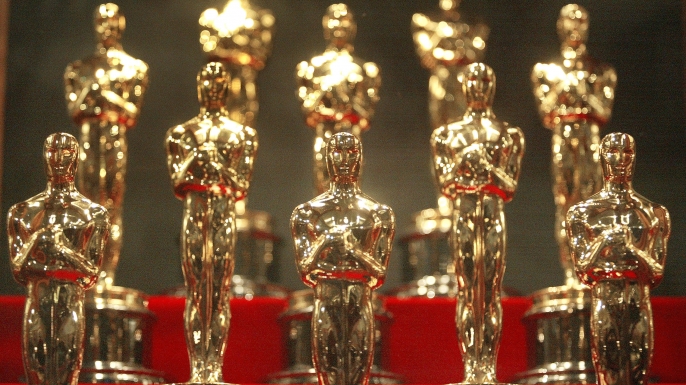
Nominees for the 91st Academy Awards were announced early Tuesday morning, and Roma led the way with 10, tied with Yorgos Lanthimos’ royal comedy The Favourite. A Star Is Born and Vice each picked up eight nominations, while Ryan Coogler’s powerful superhero epic Black Panther garnered seven.

All five of those films earned Best Picture nominations and are joined in the top category by BlacKkKlansman (six nominations), Bohemian Rhapsody (five), and Green Book (five).

Roma had been expected to be among the leaders and picked up expected nominations for Director, Cinematography, Sound Editing, and Sound Mixing but showed its true strength with well-deserved nominations for Yalitza Aparicio in Best Actress and Marina de Tavira in Best Supporting Actress. It also picked up nods for Production Design, Original Screenplay, and of course Foreign Language Film.

All of that means Cuarón is in position to walk away with five Academy Awards on the big night, as he served as writer, director, producer, and cinematographer on Roma. His name would also be on the statue in the Foreign Language category. He missed out on a sixth potential nomination when the film was surprisingly passed over for Best Editing, a category often seen as a bellwether for Best Picture.

Lanthimos, who had missed out with the Directors Guild, earned his first nomination for Best Director – a development that delights me to no end – and his wonderfully daft film showed up everywhere it conceivably could have. Its stars, Olivia Colman (Actress), Emma Stone (Supporting Actress), and Rachel Weisz (Supporting Actress) all picked up nominations, and though I would have liked to see all three in the leading category, I won’t argue with the recognition. The gorgeously mounted film was also named in Editing, Cinematography, Production Design, Costume Design, and Original Screenplay.

Filling out the Best Director category are Pawel Pawlikowski for Cold War, which also picked up a Cinematography nod and joined Roma among the Foreign Language nominees, Adam McKay for Vice, and Spike Lee with his long-overdue first directing nomination for BlacKkKlansman. That left Peter Farrelly (Green Book) and most shockingly Bradley Cooper (A Star Is Born) on the outside looking in, although both picked up other nominations – Farrelly for Original Screenplay and Cooper for Best Actor.

Coogler sadly did not make the final five for his work elevating the superhero genre to new heights, but the film’s stellar showing is evidence the Academy can embrace a Marvel blockbuster when it’s done right. Coogler, of course, knows how to do it right. In addition to Best Picture, Black Panther was cited for Costume Design, Production Design, Sound Editing, Sound Mixing, Original Score, and Original Song. It was not included among the Visual Effects nominees, where Avengers: Infinity War will carry the Marvel banner.

Joining Cooper on the Best Actor list are Rami Malek (Bohemian Rhapsody), Christian Bale (Vice), Viggo Mortenson (Green Book), and Willem Dafoe (At Eternity’s Gate). Aparicio and Colman will compete for Best Actress with Glenn Close (The Wife), Lady Gaga (A Star Is Born), and Melissa McCarthy (Can You Ever Forgive Me?).

The Supporting Actor category features Adam Driver (BlacKkKlansman), Sam Elliott (A Star Is Born), Mahershala Ali (Green Book), Richard E. Grant (Can You Ever Forgive Me?), and Sam Rockwell (Vice). Amy Adams (Vice) and Regina King (If Beale Street Could Talk) round out the Supporting Actress category with Stone, Weisz, and de Tavira.

It is traditional for film lovers and Oscar watchers to spend the rest of nominations morning grousing about the movies and performances that were not nominated, but on a celebratory day such as this, I like to keep positivity on the menu.

In that spirit, I shall dispense with small gripes as quickly as possible. I wish Ethan Hawke and Amanda Seyfried had found more appreciation for their work in First Reformed. While Mary Poppins Returns pulled down four nominations (Score, Song, Costume Design, and Production Design), it would have been nice to see Emily Blunt recognized for finding her own take on the titular character and Rob Marshall cited for his fluid and fanciful direction. Other minor quibbles can be saved for another day.

In the plus column – and the plus far outweighs the minus today – I am overjoyed by the showings of both The Favourite and Roma, for my money the two best films of the year. Lanthimos’ and Lee’s directing nominations are music to my ears. Also, it is about time Paul Schrader gets some love from the Academy with an Original Screenplay nod that by no means should be his first but somehow is.

This might be my favorite Costume Design group in a long while, featuring the double Sandy Powell nomination (The Favourite and Mary Poppins Returns) and the out-of-this world Ruth Carter designs on Black Panther. Excited to see Bing Liu’s Minding the Gap in Documentary for the kind of long-form character study Liu’s mentor, Steve James, usually gets overlooked for. And finally, bravo for Hirozaku Kore-eda’s Shoplifters making the final five for Foreign Language.

That’s all for now folks. Click here for the full list of nominees, and check back on the site over the next month for more about these awards and these great films.

Thursday, January 17, 2019

Year in Review: Top 10 Films of 2018


Another year is in the books, and here at Last Cinema Standing, it was a year less productive than I might have hoped. Less productive in the sense that fewer words were written and fewer films were discussed. However, I got married, traveled across Europe for the first time, explored Canada some, and never stopped going to the movies.

The cinema was there through every step of it, and though I did not check in here as I would have liked, the mission never changed: to explore the defining art of our time and to encourage interest in and enthusiasm for the artists who make it.

For this go-around, in lieu of the traditional series of top 10 lists and a sort of state of the cinema, I thought we would just jump right in with the Top 10 Films of 2018. Some may disagree – and I should like to meet them and discuss – but I felt this year was among the best in recent memory. Several masters of the form returned with beautiful new works, while many young talents announced themselves to the world with vibrant, vital pieces.

What struck me most in compiling this list was the manner in which these films reflect the many worlds that surround us, both far flung and close to home. The below filmmakers could serve as a case study in the desperate need for differing points of view and fresh perspectives – whether that be a Chinese woman reinventing the American cowboy picture or a black man changing the way we think about superheroes.

There was a time – and for many, we are still living in that time – when such voices would not have been heard on such topics. That’s a shame and a travesty. I feel sorrow for all the voices held silent throughout the years, voices that could have made conversations in and about the cinema that much more interesting and informed. However, I feel joy for the voices we will hopefully hear in the future because these filmmakers stood up and shouted above the noise, demanding to be heard. It’s a better cinema and a better world when all voices have a say.

First, five films that did not make the top 10 but which will have left an indelible mark on the year in movies no less (alphabetically): Pawel Pawlikowski’s devastating Cold War, a doomed romance that effortlessly makes the personal universal; Paul Schrader’s triumphant return to form, First Reformed, following a crisis of faith in a world in which faith holds little value; Barry Jenkins’ If Beale Street Could Talk, a quietly radical tale of two lovers’ strength; Bing Liu’s moving, years-in-the-making documentary of youth and young manhood, Minding the Gap; and first-time feature director Paul Dano’s searing portrait of mid-20th century family life, Wildlife.

Without further ado, Last Cinema Standing’s Top 10 Films of 2018:

10. Blindspotting, directed by Carlos López Estrada


López Estrada’s feature debut defines “blindspotting” for us as an inability to see two realities at the same time, to witness the multitudes that surround us, or to accept people for everything they are and not just the one thing we see them as. Written by and starring childhood best friends Daveed Diggs and Rafael Casal, Blindspotting makes a poignant case that we are all losing a piece of our humanity by refusing to engage with the humanity in others.

The film – part of an Oakland Cinema Renaissance that also featured in movies like Black Panther and Sorry to Bother You this year – casts a wide net, tackling topics as diverse as gentrification, racial profiling, the prison system, and identity. It does so with insight and ingenuity, grabbing our attention with story of ex-con Collin (Diggs) trying to make things right and holding it with an engaging exploration of the political and social realities that make that quest so difficult.

Diggs, perhaps best known for his stage work in Broadway smash Hamilton, draws you into Collin’s world and makes you feel the pain and persecution he lives with, while never letting you forget the resilience it takes to make it through the day. When the world tries to break him, it leads to a climax that is at once unexpected and perfect. Collin stands in for all those struggling to keep their heads above water while the weight of history pulls them down. The struggle is the story, and in that story are multitudes, there to see if only we chose to look.

9. First Man, directed by Damien Chazelle


Neil Armstrong’s voyage to the moon is among the defining moments of the collective human experience. It connects us all, striking at the thing inside us that demands to know what else is out there and whether we are capable of finding it. As such, it is simply shocking the story had not been made into a major motion picture, daunting as the challenge may seem. Leave it to Chazelle, then, to take the classic hero’s journey and turn it on its head.

First Man is thrill ride as character study. This is not The Right Stuff, an exhaustive historical accounting of the space program. Nor is it Apollo 13, a crowd-pleasing space flick about the power of human ingenuity and spirit. No, it is something else entirely. Coming off the $150 million-grossing La La Land, Chazelle’s latest effort was a surprise box-office failure. This, of course, says less about the film’s merit than it does about the audience’s desire for heroes to be bold and triumphs to be black and white (to say nothing of the inane flag non-controversy that dogged the film).

What the low grosses are proof of most of all, however, is the risk Chazelle took – undertaken as well by stars Ryan Gosling and Claire Foy – to tell an intimate tale of grief and loss across the backdrop of the most exciting adventure on which humankind has ever embarked. The great lead performances express all of the repression and fragility innate in these characters, trying to hold a life together while one of them travels farther from the other than any human has ever been from humanity. In the end, it turns out Chazelle was less interested in exploring that physical distance than the emotional distance between two souls and whether that gap can ever be bridged, here on earth or in the heavens.

8. Mary Poppins Returns, directed by Rob Marshall


It occurs to me how little unfettered, unabashed, all-out genuine joy many of us experience in our day-to-day lives. The world is not so peachy, and lives are hard, but it seems there must be room for joy. Never is that sense more palpable than when confronted with a pure distillation of exuberance, happiness, and, yes, joy. That is precisely what veteran musical director Marshall finds in Mary Poppins Returns.

Rare is the film that leaves you sore from smiling and happier for it. Rarer still is the film that accomplishes this without once feeling forced or false. Marshall, screenwriter David Magee, and star Emily Blunt approach the story with neither irony nor the winking snark that sours so much of today’s pop cultural landscape. Instead, the filmmakers embrace this bold, lovely tale in all its dreamy, technicolor glory, and they ask us to do the same.

The film version of Mary Poppins, that magical nanny who descends from the clouds, has always been about letting the pains and pressures that tie us down fade into the background and allowing the small pleasures to lighten and lift us up. It is a cheery message, to be sure. Some might say sappy or, worse, naïve. And maybe Mary Poppins Returns is the escapist fantasy its detractors claim it to be, but I say that is a feature, not a flaw. The sooner we can grab hold of that, the sooner we can all float on.

7. The Rider, directed by Chloé Zhao


White American men have not said all there is to say about The Western, that most American and male of genres. They have, however, said all they have to say about it – then repeated it and spit it back out ad infinitum throughout the history of the medium. It took Chinese émigré Zhao to find something new to say and, more importantly, a new way to say it.

This is a dusty, dirty tale of masculinity set in a frontier that is shrinking, in idea if not land. It is a cowboy picture of the highest order, but Zhao has no interest in the mythmaking that implies. Rather, her camera is fascinated by the hardscrabble lives of young men with few options or outlets and the rites and rituals they enact, more out of habit than desire.

With a cast populated by non-actors, all playing some version of themselves, The Rider tells the story of Brady (Brady Jandreau), who knows only one life and is one more bad accident from losing that life forever. If a rider cannot ride, who is he, the film asks. In so asking, it forces us to question how we define ourselves and those around us and what more there could be than what is there at first glance. At every turn, Zhao and her gorgeous film upend our expectations, and perhaps more impressive, they demand we set greater expectations, not only for ourselves but for the world we inhabit.

6. The Other Side of the Wind, directed by Orson Welles


The miracle of this film’s existence would be enough to make it a must-see. The long, troubled history of The Other Side of the Wind is by now common knowledge to those who would seek out such knowledge. For those wishing to know more, Morgan Neville’s superlative documentary They’ll Love Me When I’m Dead is an excellent starting point. All of this is to say to the film did not have to be a masterpiece to be magnificent, but in life, Welles could make nothing less. The same holds true in death, as the long-gone master delivers one last lesson.

Much has been said and will be said of the metatextual narrative of the film: An aging, legendary filmmaker is having trouble pulling together the financing for what would be his final film while critics and sycophants alike hover around like vultures, looking for scraps to gnaw from the carcass. But as much as we want to see Welles in his lead character, director Jake Hannaford (John Huston), the magician behind the camera is cleverer than that.

Welles weaves a shapeshifting tale of debauchery and hedonism among the Hollywood elite, an Eden overrun with sin. At the same time, he unleashes some of the most boldly satirical and astonishingly experimental filmmaking of his career in the film within the film, itself titled “The Other Side of the Wind.” What we are left with is the final document, the evidence – if there needed to be any further – of an iconoclast who pushed the boundaries of cinema right to the end and, it turns out, after as well.

5. Shoplifters, directed by Hirokazu Kore-eda


There have been films made before about how the best families are the families we choose. At this point, it is something of a clichéd logline. There are fewer movies – none comes to mind – about how difficult it is to keep that chosen family together. More than anything, Kore-eda, the humanist Japanese auteur, has made a film about the forces, internal and external, that pull us away from the things we need in this life.

On its face, Shoplifters does not appear to have much going on outside its central story of a family of thieves that takes in a young girl from the cold. However, in every new revelation about who these people are and what truly drives them, Kore-eda finds new meaning and new depth, which he mines for maximum empathy. It is a film of fathers and sons, mothers and daughters, husbands and wives, but it is also none of these things. We ultimately discover these are just people fulfilling that most basic of human needs: connection.

With a deft directorial hand and a storyteller’s knack for pulling you into the drama, Kore-eda, who also wrote the script, builds tension and anxiety until you fear you will jump out of your seat and leap to the screen, wishing to grab these characters and tell them someone out here cares for them. The very effortlessness with which Kore-eda communicates all of this serves as proof of just how difficult it really is. For, if were so easy to craft a gem such as this, would not we have more of them?

4. Black Panther, directed by Ryan Coogler


There has never been a more important superhero movie than this. Some movies capture the zeitgeist. Black Panther simply is the zeitgeist. Coogler, named multiple times on this site as the best young director in the game, stands up and practically demands that title with this Afro-futurist pop fantasia that is as radical as it is crowd-pleasing. Black Panther – yes, the big-budget, comic-book behemoth – is certainly the movie of our time, but in a just cinematic universe, it would be the movie of the future as well. Every blockbuster should be so bold and brilliant.

The superhero formula – and the Marvel formula in particular – can sometimes feel like it was handed down from on high, etched into stone tablets. Coogler takes those tablets, destroys them, and rearranges the pieces into a new form that reflects not the cold calculation of a studio board room but the beating heart of an artist. With a predominantly black cast and a crew of collaborators of the kind overlooked by big Hollywood for too long, including cinematographer Rachel Morrison and costume designer Ruth E. Carter, Coogler smashes down the doors of the establishment and plants his flag.

The story of King T’Challa (Chadwick Boseman) and the usurper Erik Killmonger (Michael B. Jordan) is a story of African determinism and black activism dressed up in the robes of a high-tech, sci-fi shoot-‘em-up. Simply populating the world with strong, intelligent, relatable black characters would be radical enough in the history of Hollywood, but Coogler takes it the extra step further with a film that demands the viewer be actively engaged. It dares to challenge and subvert the standard narrative of all those films that look like it but could never be it. Black Panther requires your attention and your thought. And it gets it.

3. BlacKkKlansman, directed by Spike Lee


Lee picked up an honorary Oscar in 2016, a career achievement award from an Academy that had to that point failed to recognize duly any of the filmmaker’s career achievements. It is the kind of award given to artists toward the end of their careers, when their best work is behind them. How silly the Academy must feel now that Lee has produced his best film in years, a film that by all rights should be Lee’s first Best Picture nominee and earn him his long-overdue first Best Director nomination. Of course, it is not about awards. It is about respect – the respect Lee has gone too long without. Here, he garners it without compromising one bit of the vision that has made him who he is.

BlacKkKlansman is at once a buddy-cop drama, a ’60s radical picture, and a prestige period drama, all filtered through a lens that is best described only as Spike. Ron Stallworth (John David Washington) and Flip Zimmerman (Adam Driver) – a black man and a Jewish man – infiltrate the Ku Klux Klan in a tale that if it were not true, would be impossible to believe. Lee exposes and dissects the dark heart of a nation still stained by the virulent plague of racism and which to this day, would rather look away than confront its deeply troubled past. ‘That’s a problem that existed,’ we wish to say, and Lee rebuts: ‘It is a problem that exists.’

The racist Klansmen of the film are buffoons, yes, but Lee never lets us forget they are well-connected buffoons, powerful buffoons, dangerous buffoons. It is not up for debate that the KKK is a terrorist organization that exists only to strike fear in the hearts of its enemies. Klansmen are terrorists who live here. Work here. Shop here. And march in our streets. It was true then and it is true now. And here is Lee with BlacKkKlansman, to show us how far we have not come.

2. Roma, directed by Alfonso Cuarón


Roma is a love letter to a place, a people, a history, written by the only filmmaker who could write so beautifully and so elegantly. Cuarón is hardly the first filmmaker to pen an ode to the times of his youth. On the contrary, the coming-of-age film is almost a rite of passage. This is not that, though. Cuarón is too smart a writer for that, too canny a filmmaker. With Roma, his masterpiece, he crafts a loving paean to the women who raised him, immortalizing their stories in ways the cinema has rarely seen.

Newcomer Yalitza Aparicio stars as Cleo, nanny to a wealthy family in Mexico City. Right away, we are privy to the visible and invisible class structures that define her life and the lives of those with whom she interacts. We see Cleo’s routine – she mops, she scrubs, she washes, she hangs the laundry out to dry – and we feel the rhythm of her day. All the while, the sights and sounds – oh, the sounds – of Mexico surround her and us, enveloping us and making the world of the story a fully lived in place, marked by hopes and dreams, loves and losses, life and death.

Immersion is too small a word for what Cuarón accomplishes with Roma. The film surrounds you, makes you a part of its whole, piling layer on top of layer, emotion on top of emotion, sensation on top of sensation. You are held speechless, breathless, enthralled by a new kind of cinema. Cuarón, who serves here as writer, director, producer, editor, and cinematographer, has dazzled us with his technical prowess before (Gravity and Children of Men spring to mind), but never before has he employed those gifts in service of a story this worthy. It is cinema and storytelling as high art, and with Roma, Cuarón has carved his name alongside the cinema’s foremost artists.

1. The Favourite, directed by Yorgos Lanthimos


It was only a matter of time, really, before Lanthimos made the best film of the year. Every film he has made has been in contention for the title. Dogtooth was a bleak comic fable. The Lobster a moving meditation on romance and fascism. The Killing of a Sacred Deer a strange, haunting morality play. Now, finally, Lanthimos achieves full Kubrickian splendor with a daft comedy of royal intrigue that is as unabashedly entertaining as it is formally accomplished. Everything he has made has been building to this satirical haymaker that lands with the blunt force of a sledgehammer to the chest.

From a biting and brilliant script by Deborah Davis and Tony McNamara, Lanthimos crafts a whole new kind of costume drama, one that isn’t afraid to roll around in the muck, literally and figuratively. It is the early 1700s, in the court of Queen Anne (Olivia Colman), and Lady Sarah (Rachel Weisz) controls the queen through sly mind games and overt sexual manipulation. Into this closed world arrives Abigail (Emma Stone), a ruthless social climber who will stop at nothing to achieve her ends. The power struggle that forms among these three women forms the basis of the wildest, most irreverent tale of the monarchy ever put to film.

Every element of the film has been fashioned to feed into the nightmare these characters have allowed to fester around them – the luxurious but tattered costumes; the fright-fest hair and makeup; the crumbling architecture of the set design; and most of all, that insane, near-fisheye camerawork that spins you like a top then stops you on a dime. Of course, it is the three-headed beast of a performance among Colman, Weisz, and Stone that ensures the film reaches its greatest potential, each actress delivering work that is by turns loony and lyrical, depraved and delectable.

From the irreverent title design onward, The Favourite is everything you could want from the cinema. It provides a sumptuous banquet for the eyes, the ears, and the mind. It is a gluttonous experience and a film filled to the brim with gluttons. Gluttons for food, power, wealth, influence, status, you name it. Lanthimos’ final trick is to show us the corrosive emptiness of getting everything you ever wanted – all it does is make you want more. And I will admit to suffering the same sin when it comes to films like this: Give me more.

Note: We will hopefully in the coming days explore the rest of 2018’s wonderful offerings, with discussions on the performances, moments, and quotes that stood out last year. The Oscar season will be fully upon us Tuesday with the announcement of the 2018 nominees, and we will be here to discuss that as well.

Last year, we got cut off in the middle of this. The goal this year is to make the workload more manageable so that it will not happen again. Let’s see how this goes. All I can promise is that I’ll be here, ready and willing, to talk about the cinema.

Tuesday, January 23, 2018

The Shape of Water leads Oscar nominations as Greta Gerwig, Jordan Peele make history


Guillermo del Toro’s Cold War fairy tale The Shape of Water led all comers Tuesday morning when the nominees were announced for the 90th Academy Awards. In addition to Best Picture, the film garnered 12 other nods, including Director, Actress, Supporting Actor, Supporting Actress and Original Screenplay, as well as a host of crafts nominations.

The story of the morning, however, is Greta Gerwig, who became just the fifth woman ever nominated for Best Director for her work on the magnificent Lady Bird. Gerwig, who is also nominated for original screenplay, joins del Toro, Jordan Peele for Get Out, Christopher Nolan for Dunkirk, and Paul Thomas Anderson for Phantom Thread, which also was a surprise nominee for Best Picture. Speaking of making history, Peele is just fifth black director ever nominated, and he also earned nods for his screenplay and as a producer on the Best Picture-nominated Get Out.

The biggest snub is Martin McDonagh missing out on a Director nod for Three Billboards ouside Ebbing, Missouri, which showed strength elsewhere, including with nominations for Picture, Actress (Frances McDormand), Original Screenplay, and two Supporting Actor nods (Sam Rockwell and Woody Harrelson). McDonagh is the sole screenwriter and a nominated producer, so he was not left out of the proceedings entirely, but it is a surprising miss for the presumed Best Picture frontrunner.

In addition to The Shape of Water, Lady Bird, Phantom Thread, Get Out, and Three Billboards outside Ebbing, Missouri, the nine-strong Best Picture lineup includes Dunkirk, Darkest Hour, The Post, and Call Me By Your Name.

Nolan’s World War II epic came in a distant second behind The Shape of Water in the nominations count with eight, including Editing, Original Score, Production Design, Sound Editing, Sound Mixing, and Cinematography. Three Billboards outside Ebbing, Missouri was third with seven nominations, picking up recognition for Editing and Original Score, in addition to the above-the-line categories.

In Cinematography, Rachel Morrison made history as the first woman to be nominated for her work on the spectacular Mudbound, breaking a long and frankly shameful streak of all-male nominees in the category. Darkest Hour, The Shape of Water, and Blade Runner 2049 were also recognized for their lensing.

The love for Anderson’s crazed romance Phantom Thread probably was the biggest shock of the morning, and its six nominations are tied with Darkest Hour for fourth-most. Joining producer-director PTA are Daniel Day-Lewis for Best Actor and Lesley Manville for Best Supporting Actress. Radiohead guitarist and frequent Anderson collaborator Johnny Greenwoord earned his first nomination for Original Score, and Mark Bridges was nominated for Costume Design, which if he hadn’t been, the category should just pack up and go home, so good on the Academy.

Joining Day-Lewis in the Best Actor lineup are frontrunner Gary Oldman (Darkest Hour), Timothée Chalamet (Call Me By Your Name), Daniel Kaluuya (Get Out), and Academy favorite Denzel Washington, earning his eighth career acting nomination (six lead, two supporting) for Roman J. Israel, Esq.

For Best Actress, joining McDormand are Saoirse Ronan (Lady Bird), Margot Robbie (I, Tonya), Sally Hawkins (The Shape of Water) and extending her own record with a 21st nomination, Meryl Streep for The Post.

Steven Spielberg’s newspaper drama, which looked on paper like a strong contender, wound up the weakest of the Best Picture nominees, pulling in just two nods for the top category and Streep, as Tom Hanks was left on the outside looking in. John Williams also missed for his score for The Post but extended his record with a nomination for scoring Star Wars: The Last Jedi.

Lady Bird came away with five nominations, all in above-the-line categories. Get Out nabbed four nominations but was a surprising snub in Best Editing. Call Me By Your Name also garnered four nods, including Best Original Song for Sufjan Stevens’ “The Mysteries of Love,” though Armie Hammer and Michael Stuhlbarg were shut out of the Best Supporting Actor category.

Instead the Supporting Actor nominees are Rockwell and Harrelson for Three Billboards, Willem Dafoe for The Florida Project, Richard Jenkins for The Shape of Water, and Christopher Plummer for All the Money in the World. For Supporting Actress, the nominees are Allison Janney for I, Tonya, Laurie Metcalf for Lady Bird, Mary J. Blige for Mudbound, Octavia Spencer for The Shape of Water, and Manville. Blige is a double nominee, also earning recognition for co-writing the original song “Mighty River” from Mudbound.

Overall, it was a morning light on surprises and heavy on frontrunners and Academy favorites. McDonagh missing out on Best Director puts a dent in the Best Picture hopes of Three Billboards outside Ebbing, Missouri, but it opens the door for a race that will come down to the wire with del Toro’s nominations leader The Shape of Water and the crowd-pleasing Lady Bird the most likely beneficiaries.

I was pleased with four nominations for Mudbound, though I would have liked to see it in the Best Picture lineup, and Dee Rees, nominated for Adapted Screenplay, certainly should be in contention for Best Director. I am over the moon for Angès Varda and JR getting a Documentary nod for Faces Places, which might not have a shot at the win against some of the heavy hitters in the category but its nomination is my favorite of the year. Similarly, it’s good to see Steve James finally back in the Documentary lineup with Abacus: Small Enough to Jail. He has been shut out too long.

In Foreign Language Film, I was sad to see Foxtrot and In the Fade miss out, though I am happy to root for Andrey Zvyagintsev’s Loveless and Ruben Östlund’s The Square, particularly after Östlund missed out a couple years ago for his masterful Force Majuere.

I wish I, Tonya had gotten more play overall. Its acting nominations and Editing nod are all well deserved, but it is unfortunate the Academy missed the chance to recognize it in the Best Picture lineup, as well as for its stellar costumes and hair and makeup.

So there you have it. Three Billboards outside Ebbing, Missouri stumbles. The Shape of Water soars. The race is wide open, and due to the Winter Olympics, we have an extended window in which to analyze and guess at what might happen. We will have our answers come March 4.

Thursday, January 11, 2018

Year in Review: Top 10 Moments of 2017


A film is a snapshot of the world at a place and time. It says, “This is who we are now,” and to future generations, it will say, “This is who we were then.” Films provide a metric for how far we have come or how little we have changed. What I would like to do here, then, is to take a snapshot of the snapshot, to pick images or sequences from some of the year’s best films that somehow represent a larger piece of our collective puzzle.


Traditionally, I have used this space in my annual Year in Review series for the Best & Worst column, identifying the positive and negative trends taking place in the film industry and filmgoing experience. That column frankly felt like a futile gesture this year in the wake of the ongoing sexual harassment and abuse scandal that has shaken Hollywood to its foundation. To call such abuse a negative trend feels glib and dismissive, however accurate, and no film business trends column would be complete without such a discussion.

Briefly, the rampant sexual abuse perpetrated by powerful members of the Hollywood community – almost universally men – has been dispiriting but not shocking. I say not shocking because throughout history, wherever power has been consolidated abuse has thrived. This is true of the political and business worlds, as well as film. However predictable these behaviors, it does not diminish their evil. If any good can be said to have come from this, it is the hope the #MeToo movement has raised awareness of the disheartening prevalence and disgusting banality of these abuses and the problem, now named, can be fixed sooner rather than later.

Elsewhere in the cinema world, things continued apace with theater revenues dropping even as ticket and concession prices rose. The MoviePass subscription service rocked the industry with its business model of essentially giving away movie tickets to those willing to take them, and the theater business, ever fearful of change, tried to battle back the upstart by incentivizing the theatergoing experience any way it could. This will be an interesting development to watch as 2018 unfolds and perhaps serves as a litmus test for new vs. old business practices. It may even provide the key for just what it will take to get people going to the cinemas again, if this is even possible.

A State of the Cinematic Union, however, feels less vital this year than years past, which is not to say it will not return in future installments of this column. Instead, this year, I wanted to introduce a new feature, the Top 10 Moments. This will not be the first site to compile such a list, and I have thought for years about introducing one. Now, the time feels right, and two moments this year made it feel so – the No. 10 moment on this list and the No. 1.

These are the moments that will stay with us once the rest of 2017 has fallen away, the moments that will remind us of who we were and just what it meant to be us. These are the Top 10 Moments of 2017:

10. When Bobby lights a cigarette, and the motel lights come on – from The Florida Project, directed by Sean Baker

Bobby (Willem Dafoe) stands on the balcony at dusk. It has been another hectic day managing the Magic Castle, the motel on the outskirts of Disney World where mostly poor families have made their temporary homes. If this is a castle, then Bobby is its king, but he does not feel much like one. In fact, he has stepped out on the balcony to steal a moment of peace, a quick cigarette before returning to the backbreaking work of running his little kingdom.


He lights his cigarette, and the porch lights of every room in the complex come on. It is a fleeting moment – blink and you might miss it – but it encapsulates his character perfectly. The motel lights are on a timer, surely, coming on as the sun goes down, and we realize Bobby is, too. He lights his cigarette and the lights come on because they are on the same schedule, part of the same entity, inseparable from one another.


All of the moments discussed below take place over entire scenes or sequences. They build, some slowly, some rapidly, to an apex of shock or catharsis. This moment, though, is a flash, a brief flicker, and then it is gone. In the time it takes to light a cigarette, we learn almost all we need to know about Bobby and his world, and all the filmmaker asks of us is to pay attention. We’d be foolish not to.

9. When we learn what happened to the Engineers – from Alien: Covenant, directed by Ridley Scott

I am among the few who think Scott’s earlier Prometheus is a misunderstood masterpiece. In fact, I might be the only one. Its investigation of the origins of human life and religious belief resonated for me on a level it didn’t for most observers. That’s okay. I don’t mind being in the minority. But it was hard not to watch Alien: Covenant and feel vindicated. The latest installment in the Alien franchise is much more highly regarded than its immediate predecessor, but I believe for any issues viewers had with Prometheus, any lingering questions or doubts, the answers are there in Covenant.

Now, one could argue it shouldn’t take a whole second movie for the first movie to make sense, but that is neither here nor there. As great as I think Prometheus is, everything in Alien: Covenant makes it that much better, that much more interesting. Covenant brings the Alien franchise full circle in a way that is both satisfying and shocking. It somehow makes perfect sense yet is so radical it boggles the mind.

Prometheus leaves off on the question: Where did the Engineers, those mysterious beings from deep space who seem to be the creators of life on Earth, come from? Did some other being create them? I will not discuss the specifics here because they would constitute major spoilers if you have not seen the film – for which it would be best to go in blind – but Alien: Covenant’s manner of dealing with these questions raises the level of the entire Alien franchise to high art. The moment we learn what happened to our creators is at once profoundly beautiful, philosophical, nihilistic, and perfect.

8. When Kay makes the decision to publish – from The Post, directed by Steven Spielberg

All of The Post builds to this moment. The audience, if it has any sense of history, knows what is coming, knows what must come. That it lands so well is a testament to the genius of Spielberg, the brilliance of Meryl Streep, and the wonderful script by Liz Hannah and Josh Singer. While characters like Tom Hanks’ hard-charging journalist Ben Bradlee and the rest of the newsroom are clear in their aims, Kay Graham, as portrayed by Streep, is a slow burn.

Kay is the owner and publisher of the Washington Post, a position she inherited through her husband’s death but would have gotten by birthright alone, if not for the sexist nature of the industry. She is questioned and doubted and patronized by the men around her who don’t wield her power but by virtue of their gender believe they should have a seat at the table. It is difficult to watch as Kay struggles to find her voice, to find her cause, and that is what the Pentagon Papers provide.

Her business – and by association, the past and future of her family – is at stake. She stands to lose everything she built and worked for, so the decision to publish does not come lightly. Finally, though, she can longer bow to the men in her life – not even Ben. She makes this decision because she believes it is right, because she decides it is her time to come out of the shadows and flex the muscle she has always had but was afraid to use. She will no longer be silent, and neither will her paper.

7. When a dinner party art show goes wrong – from The Square, directed by Ruben Östlund

We talked in yesterday’s feature about Östlund’s investigation in The Square of how little separates order and chaos and how quickly the rule of law can devolve into the law of nature. We are not so far from our primal selves, Östlund argues, and the repeated use of primates and a primate-man performance art piece drives this point home.

The museum at the center of the story hosts a dinner party for its donors and patrons. The moneyed elite gather to be entertained, to be pampered, to be coddled, and in some respects, to be thanked for their contributions. In essence, they are here to reaffirm to themselves and everyone else there would be no museum without them. It is a giant pat on the back, a self-congratulatory evening of conspicuous consumption. It is, by most definitions, order. 

Enter chaos, in the form of the aforementioned performance art piece in which the artist, aided by a pair of mechanical arm apparatuses, bounces around the opulent dining hall, imitating a chimpanzee or other primate. It begins innocently, amusingly enough, but ever so slowly, the situation escalates. This is no longer performance art but assault – an assault on these wealthy donors’ values, on their primness, on their beloved social structure. When they sense what is under attack, they fight back in the most shocking and brutal way imaginable. It is precisely what the artist intended, if perhaps not the outcome he predicted.

6. When Mildred Hayes sees a deer in the field – from Three Billboards outside Ebbing, Missouri, directed by Martin McDonagh


McDonagh’s moralist revenge thriller is a lot of things, but peaceful it is not. There is no peace in Mildred Hayes’ (Frances McDormand) life, not since her daughter was brutally raped and murdered. There is no certainty even that her quest to find the killer, if completed, will bring anything to her but more grief and ever-more focused rage. The world has let her down time and again, and her remorseless path of destruction through the system is what keeps her going.

But it can’t all be pain and rage. There must be some relief. As Mildred tends to the flowers she has planted in front of the billboards that give the film its title, a deer arrives in the meadow. It stands just yards from Mildred. They lock eyes. It is an otherworldly moment in an otherwise heavily grounded film. Time seems to stop. They linger in silence. McDonagh’s cinema brand is such that you half expect a gunshot to ring out and a hunter’s bullet to pierce the animal’s heart. But no such break in tension is coming.

Finally, Mildred tells the deer: “You’re pretty. But you ain’t her.” In a beautiful stroke of the pen, McDonagh denies us the easy metaphor. Of course we see in this beautiful, innocent creature the daughter Mildred lost so senselessly and violently. That is what we are meant to see. But Mildred will not be placated by such symbols. She has already turned away god in the form of the town preacher, and now she turns away nature itself. Only the real-world justice she seeks will do. And like that, the deer is gone.

5. When two inmates hug and all we hear is the beating of a heart – from The Work, directed by Jairus McCleary and Gethin Aldous

Toxic masculinity is a phrase that gets tossed around a lot, enough that its meaning has somewhat muddied, particularly for the uninitiated. It is essentially the cultural pressure felt by men to uphold standards of masculine gender roles – violence and anger, mostly, with a general inability to express emotion thrown in for good measure. This leads to all sorts of societal ills and takes men places both privileged and less so. For the subjects of McCleary and Aldous’ magnificent documentary, it has brought them to Folsom Prison.


The men in this film are almost all criminals, most of them violent offenders, but what they truly share is the capacity to change. They are the film’s subjects because they have chosen to break the cycles of neglect, abuse, and violence that brought them here. They choose to undergo intensive rounds of group therapy that at times devolve into primal screaming sessions. It is all meant to unleash the emotions these men have so long held back, to force them to confront their deepest fears and insecurities with no safety net but the support of the group.

It is a powerful film, deeply moving, and it feels revolutionary to watch hardened criminals bawling unselfconsciously about thoughts of suicide, their fathers, their friends, and all the promises they have broken and lives they have damaged. In one particularly brutal stretch, an inmate suggests he will kill himself, and another pleads with him not to. They lock eyes, and one makes the other promise not to kill himself. Then they hug, and they hold each other so closely, the microphones strapped to them pick up only their hearts beating. It is the thump of pain, resilience, and ultimately change.

4. When “the incident” goes down – from I, Tonya, directed by Craig Gillespie

The filmmakers know what you came to see. Everyone knows. We all want the same thing here in one way or another. Yeah, there’s the interesting character study and the wonderful dissection of class in America. There are the bravura performances and stellar direction. The finely tuned writing. All of that is there, and surely some of us entered the theater to be wowed by it. But deep down, we are all a little curious. We want to see what the film refers to as “the incident.” We want to watch as poor Nancy Kerrigan’s knee is busted by some thug.


Gillespie has taken heat in some corners for directing I, Tonya like Scorsese-lite. The film’s trailer even plays up these comparisons, proudly wearing the badge as the “Goodfellas of figure skating” movies. Admittedly, there are flashes of that, but Scorsese’s influence is far and wide, and it is to be expected even in the most unexpected places – say a figure skating biopic. But this gives Gillespie too little credit. He has constructed something else, something that operates on its own time, its own wavelength. When this sequence arrives, it feels like it could only be a piece of the puzzle I, Tonya is meant to reveal.


Just before the sequence plays out, as we all know it must, Margot Robbie, delivering the year’s best performance, snarls into the camera: “This is what you all came to see!” Then from the low gliding camera to the pulsing music, the performances to the dramatic irony of the whole situation, Gillespie does not disappoint. It is tense, propulsive, wild, and inevitable. By this point, it is more Shakespeare than Scorsese, a grand, fatalistic tragedy. And we got to see it all.

3. When Elisa and the Amphibian Man share a dance – from The Shape of Water, directed by Guillermo del Toro


For everything else The Shape of Water wants to be – all of which it is, from Cold War thriller to satire to romance – it is most of all a loving tribute to film itself. There is no other reason to put Elisa’s (Sally Hawkins) apartment directly above a movie theater than to proclaim loudly and for all to hear that this movie loves the movies. Del Toro has spoken of his direct influences, including the great old monster-movie actor Lon Cheney, and those drip through in every frame.

Yet it is not a monster movie that inspires the film’s most lively and gorgeous sequence. Rather, the inspiration comes from the films of Fred Astaire and Ginger Rogers, rewritten for a deaf-mute woman and the lonely Amphibian Man (Doug Jones) she loves. In a fantasy sequence of the highest order, the soundtrack swells, the real world melts away, and Elisa and the creature are transported to a black and white wonderland where the curtains shimmer and dance floor reflects their love back up to them.

It is a perfect choice, made all the more perfect by the actors’ performances. Hawkins, of course, is brilliant, but Jones truly mesmerizes in this sequence. Buried beneath layers of prosthetics, make-up, and visual effects, Jones makes us feel the warmth and passion simmering within this ancient creature. He makes the unknowable known, and it is no longer a question of how a woman could fall in love with an Amphibian Man, but rather how the rest of the world couldn’t.

2. When a woman cries in the rain – from Foxtrot, directed by Samuel Maoz

On their surface, the top two moments here deal with much the same subject matter, but each film comes at its story from a markedly different angle. While the No. 1 moment is about fostering empathy, this moment of quiet devastation is achieved by demonstrating a complete lack of empathy. We spoke yesterday about Maoz’s film as a condemnation of the dehumanizing effects of war, both on soldiers and citizens. In this heartbreaking moment, the writer-director drives that point home.

The second act of Foxtrot takes place entirely at a roadside checkpoint manned by Israeli soldiers. We see the monotony of their day as minutes and hours tick by, offering little interest or excitement. It is rare even that this road is used, but the soldiers sit at their posts, automatic weapons in hand, ready for the action or adventure the army promised them. Instead, day after day, there is just boredom. So they make their own brand of cruel fun.

With the exception of Israeli military personnel, the only cars that ever seem to come by here belong to Palestinian citizens. One evening, in a torrential downpour, a car pulls up. The soldiers stop it and notice a well dressed husband and wife, clearly on their way to an event. For no reason in particular, they force the man and woman to get out of the car and stand in the rain. As the woman’s gown and makeup and hair are ruined, the soldiers just look on. She tries to remain strong, but the effect of their cruelty – in fact the very reason for it – is to break her. She cries, and in the rain, it appears as a never-ending stream of tears. And we cry with her for a world so drained of humanity and decency.

1. When Jeannine sees her portrait on the front of her home – from Faces Places, directed by Agnès Varda and JR

Another woman brought to tears on a dreary day, but this time, it is because she is overwhelmed by the depth of feeling and connection she senses. Faces Places is an attempt by Varda and JR to recreate through their art the souls of the people they meet and places they visit. Their canvasses are found in the world around them, and their subjects are the individuals who inhabit those worlds. Fleeting as the physical portraits they create may be, their impact remains long after the poster paper JR works with has been washed away.

The film is broken down into a series of scenes and meetings. Varda and JR visit several farms. They visit the docks. They visit an industrial work site. They visit a small seaside town. In all of these places, they document what it means to be a person existing among other people, inseparable from your environment. Each sequence has its own style of resolution and catharsis, and each sticks its landing wonderfully, but none hits as hard as the filmmakers’ first visit to a small mining community that has been left almost entirely abandoned.

A row of houses, where once legions of miners came back after long, grueling days of work, now sits mostly empty but for one woman, Jeannine, who refuses to leave. This is her home, and she will not be going anywhere. Varda and JR rightly see in her the spirit of a freedom fighter, a revolutionary, and they post her portrait on the front of her home as big as the house itself. When they bring her out to see it, it is as though she is seeing herself for the first time. She is seeing herself in a new way, through the eyes of a pair of admiring filmmakers who saw in her something worth capturing and preserving. One wishes more films even tried to capture such beauty and soul, if only for a moment.

Check back tomorrow as we conclude our Year in Review series with Last Cinema Standing’s 10 Top Films of 2017, and be sure to go back through all of the Year in Review pieces posted throughout the week.