Showing posts with label Best Cinematography. Show all posts

Monday, March 4, 2024

Countdown to the Oscars: Best Cinematography


Welcome to this year’s edition of Last Cinema Standing’s Countdown to the Oscars, where we will break down each of the 23 categories, analyze the films, and make some guesses at their awards prospects.


Best Cinematography


The nominees are:


El Conde

Killers of the Flower Moon

Maestro

Oppenheimer

Poor Things


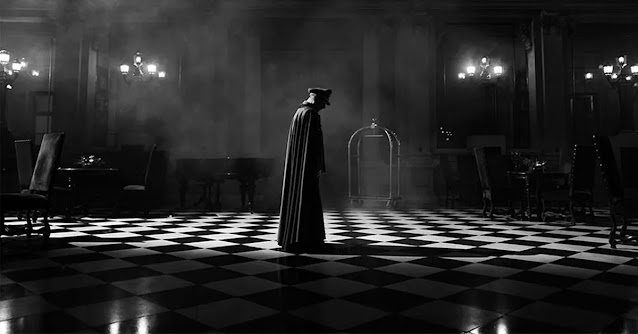
I don’t have the official numbers on this, nor the time and patience to go through and confirm, but I would guess this year features the most nominees at least partially in black and white since the Academy stopped giving separate awards for color and black-and-white photography in 1967. Of the five nominees, only Killers of the Flower Moon does not feature lengthy stretches in black and white.


More than likely, this is just an interesting anomaly rather than the start of a trend. In recent years, there has often been a single black-and-white nominee representing the art form, such as The Tragedy of Macbeth, The Lighthouse, or Ida. Sometimes, that movie can even win, like Mank or Roma


And, really, if we’re being honest, only one film in this bunch is a true black-and-white movie. The others simply have lengthy stretches without color for fairly clear thematic reasons. Not for nothing, I thought the actual black-and-white movie of the bunch was the best cinematography of the year.


El Conde

Speak of the devil (if you’ve seen the movie, pun intended), Ed Lachman’s gorgeous photography on Pablo Larraín’s historical fantasy-horror mashup absolutely floored me. Lachman has two previous nominations for his work on Todd Haynes films (Far from Heaven and Carol). He was also set to do this year’s May December with Haynes but broke his leg two weeks before shooting and had to bow out. We probably don’t deserve the embarrassment of riches anyway (no shade to Christopher Blauvelt’s work, which is lovely).


Lachman and Larraín use light and shadow to turn dictator Augusto Pinochet’s world into a gothic nightmare. The effect is to elevate the very real crimes of Pinochet into the realms of the phantasmagorical, forcing us to ask how such villainy could truly exist. But, we know the history. We know it exists. And, Lachman paints a picture so bold, imaginative, and clear that it becomes impossible to deny.


Killers of the Flower Moon

This is Rodrigo Prieto’s third consecutive nomination for a collaboration with Martin Scorsese, having previously been recognized for The Irishman and Silence. Frankly, he should have won for Silence, but that was the year of La La Land, which was a crafts juggernaut, while Silence did not catch on with the Academy. Their loss.


When you hear the words Scorsese and western, you already know you’re going to be in for something special visually. Prieto also knows his way around the genre, having lensed Brokeback Mountain for Ang Lee and The Homesman for Tommy Lee Jones. Here, he largely lets the dusty vistas speak for themselves, creating a vast, empty canvas that reminds us just how cut off from the outside world this place is. The Osage are on their own in their fight against the white interlopers.


Special mention should be made of the burning field sequence, which is destined to be played forever when people talk about the best cinematography of the 21st century. It is instantly iconographic, turning the subtext of the film into explicit text. The devil has come to the Osage nation, and he has brought the flames of hell with him. Masterful stuff.


Maestro

I love cinematographer Matthew Libatique, and his collaborations with Darren Aronofsky over the years have been some of the most interesting, innovative work of the modern era. From Pi to Requiem for a Dream to his nominated work on Black Swan, Libatique has been at the forefront of pushing the artform forward. All that said, I think the photography on Maestro is a little gauzy and overwrought. It’s actually a perfect match for the film Bradley Cooper is making, so I don’t lay the blame at the feet of Libatique. I just think it’s a tonally strange movie overall, and the photography reflects that strangeness.


Oppenheimer

Hoyte van Hoytema is not the most prolific cinematographer around, working on just seven feature films in the past 10 years. But, what he lacks in quantity, he more than makes up for in quality. Here are those seven films: Interstellar, SPECTRE, Dunkirk, Ad Astra, Tenet, Nope, and Oppenheimer. Now, these movies are, themselves, of quite varying merit, but one thing that can be said for all of them is that they are absolutely amazing to look at. 


If you take one thing away from all of that – including four collaborations with Christopher Nolan – it should be that van Hoytema is our reigning king of IMAX. There is no cinematographer working today who makes better use of the giant format than van Hoytema, and Oppenheimer may be his crowning achievement … so far. His only previous nomination came for Nolan’s Dunkirk, but if he continues on his current path, it is almost certain this second nomination will not be his last.


Poor Things

I’ve never sat down to make a definitive list of the best photographed films of the 21st century. Surely, there would be a few mentions of Emmanuel Lubezki. A couple of the other folks in this group would be on that list. Roger Deakins, of course. But, the one that is perhaps unique to me (or, at least, semi-unique; it was nominated after all) is The Favourite by Robbie Ryan for Yorgos Lanthimos. I think every element of the photography on that film is just about perfect and nearly without equal.


So, of course, this reteam had me positively thrilled. It does not disappoint. Ryan employs many of the same techniques he and Lanthimos innovated on that previous film, but here, they are expanded and altered to match the tone and themes of the story. We get less of that famous fisheye lens as Bella’s (Emma Stone) world opens up, at which point Ryan allows the visual language of the film to open up, as well. 


Ryan walks a fine line in that there is not a frame out of place, but despite that precision, the images feel consistently vibrant and alive. I hope these two make a dozen more films together. They’re already hard at work on their next collaboration, Kinds of Kindness, which hopefully will be released this year.


The final analysis


It’s been a great year for cinematography, and just about any of these would make a fine winner. My preference would be either Lachman for El Conde or Ryan for Poor Things, but Prieto and van Hoytema are highly deserving, as well. Frankly, there isn’t any part of me that wouldn’t love to see Libatique holding an Oscar statue, too, even if Maestro didn’t really work for me.


This is one of the places on the ballot where the Oppenheimer momentum is likely to carry a lot of weight. All things being equal – meaning with many equally excellent choices before them – voters will probably pencil in the presumptive Best Picture winner. Van Hoytema is a wonderful winner here. I just got the Oppenheimer 4k disc, and let me tell you: Whether on a 65-foot screen or a 65-inch screen, the movie looks incredible.


Will win: Oppenheimer

Should win: El Conde

Should have been here: Saltburn


A note about my favorite snub: The critics unaccountably abandoned this movie, and the American industry never really embraced it – though it was popular enough in the UK to pick up a couple BAFTA nominations. It’s a shame because they’re missing out on one of the truly remarkable films of the year, and one of its greatest virtues is Linus Sandgren’s stunning cinematography. Every shot is a painting, brilliantly conceived and executed by Sandgren and director Emerald Fennell. The Academy missed the boat on this one.

Wednesday, February 1, 2017

Countdown to the Oscars: Best Cinematography

Andrew Garfield and Yosuke Kubozua in Silence, nominated for Best Cinematography.

Welcome to Last Cinema Standing’s Countdown to the Oscars, our daily look at this year’s Academy Awards race. Be sure to check back every day leading up to the ceremony for analysis of each of the Academy’s 24 categories and more.

Best Cinematography


The nominees are:

Arrival
La La Land
Lion
Moonlight
Silence

Only one thing is for certain this year. Emmanuel Lubezki will not win his fourth consecutive Oscar. That is only because he was not invited to the party this year. Likely, the only reason he was not invited to the party is because he did not have a film released this year. Otherwise, the world’s greatest living cinematographer probably would be competing for his fourth Academy Award. There is always next year.

In addition, for the first time since 2012, legend Roger Deakins did not earn a nomination. Robert Richardson, who has been nominated in three of the previous five years, is not on this list. Neither does Bruno Delbonnel nor Janusz Kamiński appear. In fact, only Silence lenser Rodrigo Prieto has been to the Oscars as a nominee before, in 2005 with Brokeback Mountain.

That means the field is composed of Prieto and four first-time nominees, an unusual circumstance for this branch, which has its favorite cinematographers and tends to nominate them time and again. However, what these nominees lack in familiarity, they more than make up for in clear talent and wonderful execution. Every one of these films is a deserving nominee, and any would make a lasting, impressive winner.

Silence – Just because Lubezki will not be winning another Oscar this year does not mean a longtime collaborator of director Alejandro González Iñárritu will not. Prieto, in fact, shot every one of Iñárritu’s features until he was supplanted by Lubezki. It is perhaps unfair, though, to speak of Prieto only in the context of his collaborators and colleagues because he is a wonderful director of photography whose work speaks for itself in films such as Ang Lee’s Lust, Caution, Tommy Lee Jones’ The Homesman, and his previous collaboration with Martin Scorsese, The Wolf of Wall Street.

This time around, Scorsese and Prieto pull out all the stops. From the foggy beachside vistas to the shadowy, claustrophobic prisons, there is not a frame of this film that is not picture-perfect. The film, however, is not only naturalistic but impressionistic as well. It is an odyssey of faith and inner turmoil, and Prieto is unafraid to take his camera inside the characters’ minds and give the audience the subjective experience of the story. The pains and tortures suffered by many of the characters are unimaginable, and Prieto does not shy from putting us directly in their shoes.

On sheer beauty alone, Prieto would win the award walking away for his tremendous work, but Silence did not catch on with voters. Prieto is the film’s sole nominee, alone carrying the banner for another Scorsese masterwork. Perhaps the subject matter was too difficult or the length off-putting, but for whatever reason, the Academy did not embrace one of Scorsese’s best, most human films. Prieto’s work, on the other hand, was too great to ignore, and good on the cinematographers branch for recognizing as much.

La La Land – Lovely like a postcard you want to send to all your friends and family, La La Land’s 14 nominations mean I will be talking about it a lot in this space. I will try to avoid repeating myself where possible, but I apologize here at the beginning if I make the same or similar points more than once through this series. Swedish lenser Linus Sandgren is relatively green, and this is just his ninth feature film credit, though he has filmed David O. Russell’s last two pictures – American Hustle and Joy. The effect he captures here is, in a word one hears a lot associated with this film, magical.

For a film about dreamers and their dreams, Sandgren goes to great lengths to infuse every shot with a dreamlike, stars-out-at-dusk feeling. Characters seem to float through this movie, and Sandgren evokes that weightlessness through his fluid camerawork and surreally saturated color palate. This does not reflect the real Los Angeles, or indeed the real Hollywood, as anyone who has visited will attest, and Sandgren rightly does not impose the grittiness it might be natural to capture form the city. La La Land gives us a fantastical wonderland, and Sandgren proves a more-than-capable documenter of a world we may only be able to visit in dreams.

Moonlight – The opening shot of Moonlight is virtuosic as cinematographer James Laxton loops us through a dizzying, disorienting series of 360-degree swings all in a single unbroken take, introducing to the poor Miami neighborhood that will be its own character in the film. It is a bit like the twister in The Wizard of Oz, funneling us violently but not haphazardly into an unfamiliar world. It is not the only unbroken take we will see in the film, but what could be and often is a gimmick in lesser hands becomes a statement of purpose in writer-director Barry Jenkins’ emotionally engaging and morally probing film.

The frames practically drip with authenticity, vibrantly bringing to life the Miami main character Chiron (Alex R. Hibbert, Ashton Sanders, Trevante Rhodes) experiences. From its bursts of color to the off-kilter lighting schemes, Moonlight looks like no other coming-of-age drama out there. Laxton’s use of shadows only emphasizes the differences and inequities that get brought into the light. So many of these characters are either hiding or hidden from us, but Jenkins and Laxton use all their photographic tricks and techniques to force the audience to consider what we often cannot see – or sometimes choose not to see.

LionAustralian lenser Greig Fraser’s work on director Garth Davis’ heart-wrenching drama is superb, but it will not – no matter how successful Lion becomes – be Fraser’s most widely seen work this year. That distinction, without question, goes to Rogue One: A Star Wars Story, on which Fraser also served as director of photography. The stark photographic contrast between the two films is informative because it shows Fraser’s remarkable range and adaptability. Rogue One alone contains within it several distinct styles – war film, space opera, dark fantasy – and Fraser’s clever manipulations are key to making the movie’s wild tonal shifts feel of a piece.

That is not, however, the work for which he is cited here. Instead, his subtle, impressionistic touch in bringing to life the twin worlds of Lion garnered him this recognition. A moody, disorienting film about love, loss, and finding your place, Fraser’s camera takes on the weight of Saroo’s (Sunny Pawar, Dev Patel) struggle and makes us feel every moment of his displacement. He creates separate and distinct moods for the film’s India and Australia sections, contributing greatly to the film’s rich themes of true homes and real families.

Arrival – There must be a name for an occurrence that makes you want to applaud in joy while shaking your head in shame. Bradford Young is the first black American to be nominated for Cinematography by the Academy (second black director of photography ever, after Brit Remi Adefarasen). It is a wonderful, precedent-breaking achievement by Young, who is wholly deserving of the honor and probably should have been so nominated two years ago for his work on Selma or three years ago for the impossibly gorgeous Ain’t Them Bodies Saints. However, the Academy should be embarrassed at the existence of such a precedent, as well as by the still-true fact no woman ever, not one time, has been nominated for this award.

Rest assured, however, this is no token nomination. Arrival is marvelous to behold, and Young’s photography is as notable for what it withholds as what it shows. For a big-budget sci-fi film about a visit from aliens, Young remains steadfastly restrained in his approach, helping establish the film’s tone as more thoughtful than action-minded. In his patient, observant camerawork, Young ensures Arrival is like no other science-fiction epic before it. Young most likely will not become the first black cinematographer to win this award, but if the Academy is paying attention, he will have other chances.

The final analysis


I am still tempted to predict Lubezki here as a write-in candidate, perhaps for some of the photos on his wonderful Instagram account. Wouldn’t that be something? In all seriousness, though, this is shaping up like a sweep year, the likes of which we have not seen since Slumdog Millionaire in 2008. The rapturous overall love for La La Land will likely carry it all the way down the ballot. Moonlight has picked up a number of critical notices for its cinematography, and Silence is just gorgeous to look at it, but this is La La Land’s award to lose.

Will win: La La Land
Should win: Silence
Should have been here: Jackie

Tomorrow: Best Editing

Thursday, February 4, 2016

Countdown to the Oscars: Best Cinematography

Director of photography Roger Deakins earned his 13th nomination for Best Cinematography for Sicario.

Welcome to Last Cinema Standing’s Countdown to the Oscars, our daily look at this year’s Academy Awards race. Be sure to check back every day this month for analysis of each of the Academy’s 24 categories.

Best Cinematography


The nominees are:

Sicario

As I said last year, this is my favorite category, and everything I said then holds true now. I would also add cinematography might be the most democratic craft where general audiences are concerned. The average movie-goer does not necessarily know what makes for a good sound mix or whether something is well edited, but anybody can look at an image onscreen and understand its beauty. Photography is visceral. We respond to it because we feel it instinctively.

That said, it is among the most technically challenging aspects of filmmaking. Composition, depth of field, color, the interplay between light and shadow – these are intellectual, artistic pursuits. Only the masters can make it seem as easy as pointing a camera and rolling film. The audience feels the image because of the care and effort that went into creating it. Few use greater care or put forth more effort than these five nominees.

The Revenant – The images Emmanuel Lubezki captures boggle the mind. The ways his camera moves through space, frames action, and observes stillness are on a level we have never seen. I would call him the best cinematographer alive today if not for the fact I think he has a legitimate claim as the best of all time. A quick greatest hits from the man they call Chivo: Sleepy Hollow, The New World, Children of Men, The Tree of Life, Gravity, Birdman, and now The Revenant. Every frame from every one of those films could hang in a museum.

Perhaps it sounds like I am overstating his brilliance, but I promise the modern history of cinema will not be written without mentioning Lubezki. His work has always been otherworldly, but his two collaborations with director Alejandro González Iñárritu, Birdman and The Revenant, have changed the way we think about the art form. The Revenant is composed of a series of gorgeous gray and white tableaux that evoke the primal forces of nature in their grandeur and objectivity. Lubezki has no rival, and The Revenant has no equal this year in cinematography.

Lubezki has been nominated nine times and won twice – of course, he should have won at least twice more. His two wins have come in the last two years for Gravity and Birdman, making him only the fourth person in history to win consecutive cinematography Oscars. No one has done it three times, but this work and this artist might just break that streak. The only person standing in the way is the next nominee on our list.

Mad Max: Fury Road – John Seale retired a few years ago with a résumé that included four Oscar nominations and one win for The English Patient, as well as countless other popular and critical hits. His legacy was secure, and he could have left it at that. Instead, he let George Miller talk him back to work for the gonzo action epic Mad Max: Fury Road. Thank god he did because the 73-year-old director of photography brings to the film the energy and nihilism of someone 50 years younger but the skill of a craftsman who has been in this game forever.

When you watch Mad Max: Fury Road, the first thing you notice is the color. The hyper-saturated vistas of Miller’s post-apocalyptic wasteland are absolutely striking. Never has a desert been so orange, and at night, you never saw the earth so blue. It is audacious and bold and innovative in ways lesser filmmakers would shy away from, but Miller provides the canvas, and Seale paints the picture. Whether Seale will win the Oscar this year is an open question, but our victory as an audience is simply that he came back for one last ride – and on a war rig, no less.

Carol – Ed Lachman may not be the star the rest of the nominees in this category are this year, but his chameleon-like adaptability behind the camera has made him the perfect fit for genre-hopping director Todd Haynes. Every time they come back together, Lachman seems inspired to push his work in new, exciting directions. Beginning with the Sirkian melodrama Far From Heaven and onto the Bob Dylan biopic as experimental art film I’m Not There and cable miniseries Mildred Pierce, Lachman always seems to find new notes to play for Haynes.

So it is with their latest collaboration, Carol, a 1950s-set romance that is thematically similar to their previous work but as stylistically different as can be. Since the story is set primarily in New York City, Lachman has license to go darker and dirtier than one typically would expect for the era being depicted. This world feels lived in, and Lachman constantly obscures the frame with rain or curtains or windows or all three to suggest the hidden lives of the characters, the lives nobody sees or wants to see.

Sicario – Twelve previous nominations for Roger Deakins and no wins. This is his 13th nod, and he will not win this one either, putting him in a tie with the late George Folsey for Oscar futility in this category. To nominate him that many times, his fellow cinematographers must respect him beyond belief, and that respect is due, but the Academy as a whole simply has never been willing to go there. For actors and directors who get repeated nominations without winning, there is often a groundswell of support as members rally behind the artist and finally award him or her. That does not seem to be true for craftspeople such as Deakins.

The work itself this year, well, of course it is awesome. This is the fourth consecutive year Deakins has received a nomination, and Sicario is the best work he has done of the bunch. The night-vision sequence alone is enough to leave even accomplished filmmakers scratching their heads and wondering how it was done. Deakins uses shadows and silhouette the way musicians use silence, finding meaning in the emptiness. It is truly fine work and Deakins’ best probably since the one-two punch of The Assassination of Jesse James by the Coward Robert Ford and No Country for Old Men in 2007, but it still is only the third- or fourth-best nominated work this year.

The Hateful Eight – Like Lubezki and Deakins, Robert Richardson is a giant of cinematography. His work with Oliver Stone (10 films, three nominations, one Oscar) and Martin Scorsese (four films, two nominations, two Oscars) would be enough to secure his place in the canon. Yet, his collaborations with Quentin Tarantino are likely the films for which he will be most remembered – five films, three nominations, no Oscar yet.

Richardson has proved to be the ideal director of photography to capture Tarantino’s twin loves of American westerns and martial arts films. If you ask me, Kill Bill Vols. 1 and 2 constitute a crowning achievement in paying homage to a genre while establishing a unique voice outside the genre’s confines. Go figure, those are the only two films together for which Richardson was not nominated.

The Hateful Eight is a grand experiment in bringing a long-dormant film process back to life, glorious Ultra Panavision 70, as it was billed. It lives up to that billing in the movie’s opening sequences, set amid a blizzard in the mountains of Wyoming. However, when the film moves indoors for the last two hours and 20 minutes or so of its three-hour runtime, the wider frame loses some of its punch. The nomination is a nice bit of recognition from fellow cinematographers, but I doubt if the work will do much for the rest of the Academy when put up against this list of nominees.

The final analysis


Mad Max: Fury Road or The Revenant, flip a coin. The Academy likes its winners to be pretty, innovative, or both. That sounds more like The Revenant, but I have this nagging feeling that voters will be reluctant to award Lubezki for a third straight year. The work certainly deserves it, but with a viable alternative and a great story in Seale, it is just as possible members go that direction.

Carol and Lachman would be the likely beneficiary of a split vote between the top two films, and Lachman received the lion’s share of critical plaudits this season, though most of those awards came before The Revenant had screened. In the end, I am predicting Lubezki will pick up his third in a row because it is the film more Academy members are likely to have watched, and to watch it is to be in awe of it.

Will win: The Revenant
Should win: The Revenant
Should be here: The Tribe

Tomorrow: Best Editing