Showing posts with label Carol. Show all posts

Friday, February 19, 2016

Countdown to the Oscars: Best Actress

Brie Larson is far and away the frontrunner this year for the Academy Award for Best Actress for her performance in Room.

Welcome to Last Cinema Standing’s Countdown to the Oscars, our daily look at this year’s Academy Awards race. Be sure to check back every day this month for analysis of each of the Academy’s 24 categories.

Best Actress


The nominees are:

Cate Blanchett for Carol
Brie Larson for Room
Jennifer Lawrence for Joy
Charlotte Rampling for 45 Years
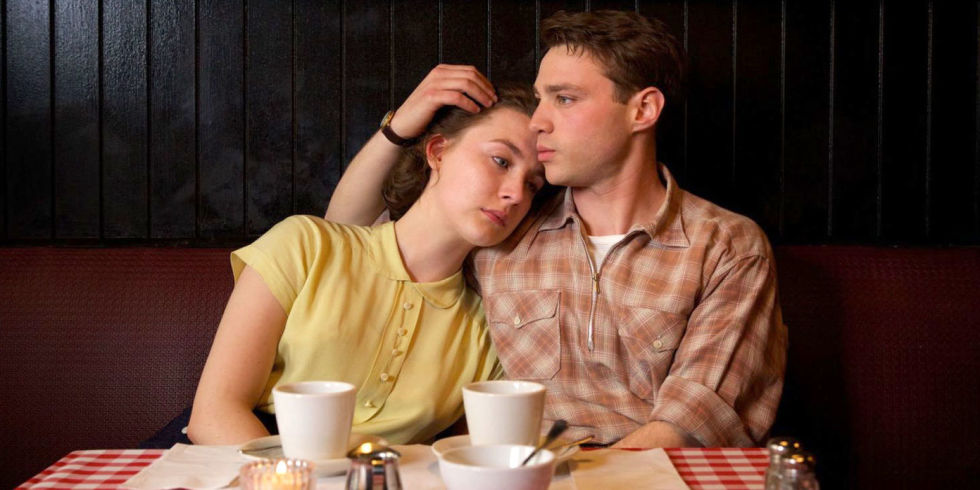
Saoirse Ronan for Brooklyn

I have not seen a more competitive year at the Oscars than this in my time following them. It seems like every category has two or three legitimate contenders that could come away victorious. Mad Max: Fury Road and The Revenant are battling it out through the crafts categories, while The Big Short and Spotlight wait in the wings, ready to pounce on the top awards. Nothing seems particularly settled, and that has made this season exciting.

Nothing is settled, that is, except the top two acting categories. It took longer than it usually does, but one actor and one actress have risen to the top, and each now seems assured of an Academy Award win. We will talk about Best Actor tomorrow, but today, we are focused on Best Actress in an incredibly strong year for women.

You can always determine the quality of the year by the strength of the performances not nominated, and this year, we have Yana Novikova in The Tribe, Marion Cotillard in Macbeth, and Sarit Larry in The Kindergarten Teacher all on the sidelines, along with many other wonderful performances. The five actresses below have all turned in tremendous work, but only one has run away with every award under the sun, including the Screen Actors Guild Award, the BAFTA, and the Golden Globe.

Brie Larson for Room – Larson has been appearing onscreen since she was 9 years old and is now in line to become the 11th-youngest Best Actress winner in the 88-year history of the Academy Awards. She has dominated the awards circuit thus far this season, and barring a major scandal in the very near future, she will roll to that richly deserved Oscar win in a little more than a week’s time.

One of the best things about Larson’s awards success is that it has driven more people to discover the film and her work in it. Room is a harrowing experience but one which rewards viewers willing to endure it. As Joy, the kidnapping and sexual abuse survivor at the heart of the story, Larson is among the film’s chief draws. She is battered but not broken, terrorized but not terrified. She is a survivor whose pain we could never imagine, but through Larson’s performance, we come that much closer to understanding the character’s personal hell.

Some have said viewers will find the film too painful to sit through, too difficult to watch. To a degree, that is the point. To sexual slavery and abuse, which goes on in every part of this world, we too often turn a blind eye. Those unwilling to see this film are the very people who need to see it most. Abrahamson has done a commendable job portraying the suffering and horror that exist in this world, but it all starts with a tremendous, committed performance by Larson.

Saoirse Ronan for Brooklyn – At the beginning of this Oscar season, most pundits figured the Best Actress race would be a fight to the finish between Larson and Ronan, thinking Brooklyn would be more popular than it ultimately proved to be. It was not an unreasonable position to take. Brooklyn is a delicately moving romance about a shy, brave girl who makes her own way thousands of miles from home. If Room is an endurance test, then Brooklyn is its opposite, a feel-good story about perseverance.

Ronan is absolutely luminous as Irish immigrant Eilis Lacey. Though the plot may have all the trappings of a fairly drippy romance, Ronan’s performance makes us care about Eilis as a person. Ronan gives Eilis steadfastness and charisma that are not always present on the page, lending weight to the struggles of this lonely immigrant girl. Like Larson, Ronan made her first onscreen appearance at the age of 9, earning her first Oscar nomination at 13 for her supporting role in Atonement. She is a longshot to win the Oscar this year – as is everyone not starring in Room – but if she keeps choosing smart, interesting projects such as this and this year’s Lost River, she will be back.

Cate Blanchett for Carol – When Carol Aird enters a room, all eyes are on her. She is beautiful, yes, but she is alluring and mysterious in a dangerous way. You know you should not follow her, but the fear of what you could be missing out on is too much to bear. She is classy and confident, the kind of woman who knows what she wants and has little trouble getting it. Luckily for her, she is played by Blanchett, an actress about whom all the same things could be said.

Blanchett was nominated just two years ago and won Best Actress for her role in Woody Allen’s Blue Jasmine. A seven-time nominee, she also won Best Supporting Actress in 2004 for Martin Scorsese’s The Aviator. She is indisputably among the best actresses of her generation because she is unafraid of disappearing into her characters. She has been Bob Dylan and Katherine Hepburn, a Soviet commander and Queen Elizabeth I, and she is fiercely committed to creating the reality of each and every role. As Carol, Blanchett crafts an enigma, a human puzzle box at the center of the story that both the characters and the audience must solve.

Jennifer Lawrence for Joy – Lawrence is a hard actress to pin down. Just 25 years old, she is the youngest person ever with four acting nominations from the Academy, and she is also the second-youngest Best Actress winner in Academy history. She always delivers great performances, but sometimes, she seems at the mercy of the characters she is given to play. All of this is to say, she really needs to get back to doing work outside franchises or for David O. Russell. If she can get back to the kind of gritty, intense performance she gave in Winter’s Bone at 19, it seems she would be taking steps in a better artistic direction.

She is not bad in any of these films, but now, with The Hunger Games series at an end, she has an opportunity to break out and try something different. As a fictional version of Miracle Mop creator Joy Mangano, Lawrence is playing a strong-willed, intelligent woman of the sort Russell usually writes for her. This time out, though, the overall script is so shoddy that Lawrence can only do so much. She carries off the part with poise and professionalism, but she will have better roles and better chances to show off her talents in the future.

Charlotte Rampling for 45 Years – Putting aside her recent unfortunate comments regarding diversity at the Oscars this year, Rampling is well respected within the industry, and that veneration is most likely why she finds herself nominated here. I named this the best performance of the year, and I would say the contest is not close, but the Academy does not seem to have warmed to 45 Years the way it otherwise might have. It is an unfortunate oversight, and I hope more people discover this movie in the years to come. It is a treasure.

At the core of that treasure is Rampling and her emotionally raw, wounded performance as Kate Mercer. As a woman whose husband has been lying to her for nearly five decades, Rampling shows all the pain, betrayal, and hurt Kate experiences with little more than a furtive glance or a shift in posture. Due respect to her excellent scene partner, Tom Courtenay, but I would argue the entire film could be played in a tight close-up on Rampling’s face, and the emotional impact would still register. She has been in this game a long time and turned in some of the most iconic performances of European art-house cinema, but this may be her crowning achievement.

The final analysis


Larson will win her first Oscar. The honor is well earned, and one hopes she continues to make savvy decisions with her career, unlike so many other Oscar winners who cash in their prestige for a payday or two. She deserves her choice of roles right now – not just because she is young and people will pay to see her but because she is a gifted performer who will only get better as she gains experience.

Will win: Brie Larson for Room
Should win: Charlotte Rampling for 45 Years
Should have been here: Yana Novikova for The Tribe

Tomorrow: Best Actor

Wednesday, February 17, 2016

Countdown to the Oscars: Best Supporting Actress

Alicia Vikander is the frontrunner for Best Supporting Actress at the Oscars for her performance in The Danish Girl.

Welcome to Last Cinema Standing’s Countdown to the Oscars, our daily look at this year’s Academy Awards race. Be sure to check back every day this month for analysis of each of the Academy’s 24 categories.

Best Supporting Actress


The nominees are:

Jennifer Jason Leigh for The Hateful Eight
Rooney Mara for Carol
Rachel McAdams for Spotlight
Alicia Vikander for The Danish Girl
Kate Winslet for Steve Jobs

We can quibble all day over the meaning of “supporting actress” – or more specifically, as this award is officially known, Best Actress in a Supporting Role. I have written a few times throughout this season that while category fraud is common, this year, it has felt rampant, resulting in nominations in this category for two actresses who are unequivocally co-leads in their films.

Anyone who has seen either Carol or The Danish Girl could be forgiven for wondering whom exactly Mara and Vikander are supporting. The same question could be posed, however, for Leigh in The Hateful Eight. The movie is essentially about her, and there is a scarcely a scene in which she does not appear. Each of these actresses has delivered a tremendous performance, but every one of them should have been considered for Best Actress.

Oh, well, no turning back now. It is a campaign strategy that sometimes works and sometimes does not. Marcia Gay Harden (Pollock), Jennifer Connelly (A Beautiful Mind), and Rachel Weisz (The Constant Gardener) all have supporting Oscars for leading roles. However, the first actress we will discuss today can tell you about what happens when the season has its own plans, campaigns be damned.

Kate Winslet for Steve Jobs – Winslet, a seven-time nominee now, earned her only Oscar win for Best Actress in The Reader, this despite master awards campaigner Harvey Weinstein pushing Winslet as a supporting actress. He and many others thought she might have a better chance at the win in the supporting category. There was also some consideration of her clearly leading performance in that year’s Revolutionary Road costing her votes. Ultimately, the Academy nominated her in the proper place for The Reader, and she won because the work was deserving.

This time around, there is no question of category placement. As Joanna Hoffman, Winslet is among the people swirling around the vortex that is Steve Jobs at the center of this film. She is his right-hand woman, his confidant, and his moral center. When he loses his way, she is there to tell him so, and while she cannot always correct his course, she is never afraid to tell him he is wrong.

Most of the other characters in the film are there to be bowled over by Jobs – either awed by his brilliance or cowed by his power. Hoffman is there to stand up to him, and Winslet gives the character a unique blend of inner strength, personal ethics, and business savvy that makes Hoffman memorable and effective. Aaron Sorkin’s screenplay does not always give her the best material, but Winslet takes all that muddled dialogue and creates a real person to whom we can relate and for whom we have sympathy.

Alicia Vikander for The Danish Girl – I said back in April last year when I reviewed Ex Machina that 2015 would be a coming-out party for Vikander. Ten months later, I feel safe in saying I was correct. Apart from stunning work in Ex Machina and her nominated performance in The Danish Girl, she also delivered standout turns in Testament of Youth and The Man from U.N.C.L.E. Next year, we should see her in Justin Chadwick’s Tulip Fever, Derek Cianfrance’s The Light Between Oceans, and Paul Greengrass’ Jason Bourne. It seems she is just getting started.

Holding nothing against Eddie Redmayne’s commendable work, The Danish Girl belongs to Vikander. As Gerda Wegener, the wife of someone going through a major life transition, hers is the experience through which the audience understands the story. We understand her confusion, frustration, and hurt over losing the person she thought of as her husband. As Lili’s transition takes over their lives, Gerda’s life and work is put on hold. In showing this pain and struggle, Vikander shoulders as much of the success of the film as Redmayne but has received much less of the credit. An Oscar win would go some way toward righting that perception.

Rooney Mara for Carol – Make no mistake, Carol is about Therese (Mara) as much as if not more than it is about Carol (Cate Blanchett). There is definitely more politicking involved here than with Vikander’s category misplacement as the film’s awards team likely believed Blanchett and Mara would split votes in the lead category. So, Blanchett – the veteran, a seven-time nominee, and two-time winner – was pushed for lead while the young ingénue, herself a previous nominee for David Fincher’s The Girl with the Dragon Tattoo, was shoved aside in supporting. In any event, the work is highly deserving of any recognition.

Over the course of a love affair, Mara takes Therese from a shy, innocent girl to a confident, world-weary woman. Therese is never more or less than quiet and reserved, but Mara makes us feel the inner turmoil she wrestles with as she experiences thoughts and feelings she never knew were inside her. Early on, the film seems to be about Carol’s influence over Therese, but as the story progresses, we come to realize it is really about what Therese wants out of her life and what she feels about Carol. Mara sells Therese’s dilemma beautifully with stoicism, grace, and tenderness.

Jennifer Jason Leigh for The Hateful Eight – Not one of those three adjectives could be used to describe Leigh’s unhinged performance as Daisy Domergue, but the work sure is something to behold. Leigh plays Domergue like a woman possessed, but behind the bitterness, sarcasm, and yeah, hate, there lies intelligence, cunning, and strength that let the audience know why so many people are concerned with taking this woman to hang. She takes insult after insult, beating after beating, and she still stands up to spit blood and bile back at her captors.

It is an entirely different look for Leigh, who to this day probably remains best known for her early role in Fast Times at Ridgemont High. She has spent her career carving a niche in the independent and art film world, and she has excelled in such films as eXistenZ, Margot at the Wedding, and Synecdoche, NY. Here, she lets loose with the rage and demonic force of someone who cannot help but fight, no matter how dire her circumstances. The Hateful Eight is a film about villains, and she may be the biggest villain of all, which just makes her the most fun to watch.

Rachel McAdams for Spotlight – A bit of a surprise nominee, though not wholly out of thin air, McAdams’ nomination seems like evidence of Spotlight’s overall strength with Academy. She plays journalist Sacha Pfeiffer, who is smart, determined, and empathic in the pursuit of the most difficult story of her career. In keeping with the general theme of Spotlight, her work is not flashy but effective. She knows that no matter what she is going through, the story is not about her. It is about the victims and survivors whose suffering she is trying to bring to light.

McAdams shines most in the one-on-one interviews she conducts with survivors, particularly the first, which takes them from a coffee shop to a walk in the park, past one of the many Catholic Churches that litter Boston’s streets. McAdams is expert at showing how Pfeiffer gets the source to trust her and open up about things he has told almost no one in his life. Her heroism comes from the fact that she is not using this man for her own gains. She genuinely wants to help him and all others in his situation the best way she knows how – with the power of the truth.

The final analysis


At the beginning of the awards season, when it looked as though Vikander and Mara would end up in the supporting category, most pundits had this down to those two with a slight edge to Mara for appearing in the more popular Carol. It was not an unreasonable assumption, and most of that has come to pass, except Vikander has really started to run away with things. It is not exactly cut and dry, though, as Winslet won both the Golden Globe and the BAFTA for her performance, while most of the early season critics’ awards went to Leigh and Vikander but for Ex Machina.

The trouble with predicting Winslet, who would be a good bet based on those two major awards, is that she was not nominated against Vikander’s The Danish Girl performance, which was considered a leading performance by both organizations. The only major place they were nominated against each other was the Screen Actors Guild Awards, which Vikander won. I expect that ultimately to be more predictive of the Oscars and for Vikander to win on the strength of her performance, the fact it is a leading role, and her overall body of work this year.

Will win: Alicia Vikander for The Danish Girl
Should win: Jennifer Jason Leigh for The Hateful Eight
Should have been here: Günes Sensoy for Mustang

Tomorrow: Best Supporting Actor

Saturday, February 13, 2016

Countdown to the Oscars: Best Adapted Screenplay

Brooklyn, written by Nick Hornby and starring Saoirse Ronan, is among the nominees this year for Best Adapted Screenplay.

Welcome to Last Cinema Standing’s Countdown to the Oscars, our daily look at this year’s Academy Awards race. Be sure to check back every day this month for analysis of each of the Academy’s 24 categories.

Best Adapted Screenplay


The nominees are:


The Writers Guild of America Awards will take place this evening to honor the writers in a host of different screenwriting categories for television and film. Unlike the Directors, Producers, Screen Actors guilds, the Writers Guild is not a great indicator for the Oscars. Its eligibility rules require writers be guild signatories to be considered even for a nomination. Foreign films, some independent films, and writers who just do not want to sign are excluded.

People like Quentin Tarantino, a two-time Oscar winner, are never nominated here because they are not guild signatories. Last year’s Best Original Screenplay winners, Alejandro González Iñárritu, Armando Bo, Nicolás Giacabone, and Alexander Dinelaris for Birdman, were not cited at the Writers Guild. Across its original adapted screenplay categories, over the last five years, six guild winners have gone on to win a screenwriting Oscar, a 60 percent hit rate that tells us very little. All that being said, if anything other than The Big Short wins tonight or at the Oscars, it would be shocking.

The Big Short – There are four Best Picture nominees nominated for Best Adapted Screenplay, plus a film the Academy clearly loved in giving it six Oscar nominations, but only The Big Short is among the frontrunners for the top award. A large part of the reason is the film’s unique voice, crafted by co-writers Adam McKay and Charles Randolph, both first-time nominees, and adapted from the book by Michael Lewis.

This is a great film, but it did not fully work for me because of that voice. To me, it is too snarky and takes it subject matter too lightly. Listening to McKay and Randolph speak and reading interviews with them, it is clear they do not take this lightly. Both men are genuinely angry and concerned with the way the U.S. economy has functioned to benefit the wealthy at the expense of everyone else. If you are asking me, that concern only loosely translates to the screen. Though the writers may be sincere, their film is anything but.

However, those are my problems with the material, and I am in the minority, particularly as concerns industry voters. The other side of the coin – the side that makes this a deserving winner – is despite its snark, The Big Short is a witty, structurally complex script that takes incredibly dense material and makes it palatable for viewers who otherwise might never learn a thing about the financial crisis. It is absolutely must-see viewing for anyone troubled by the direction of the nation.

The Martian – Drew Goddard has made his career mostly writing smart, highly self-conscious material for television shows such as Buffy the Vampire Slayer, Alias, and Lost and films such as The Cabin in the Woods and World War Z. The Martian is a stark departure from that work in that it is completely unself-conscious. The script embraces its genre without winking at the audience and tells a straightforward tale about rescue and survival that is universal in its emotions but specific in its circumstances.

Working from a densely scientific novel by Andy Weir, Goddard makes the correct assumption that his audience is smart and does not dumb down the material. Viewers never get lost in the minutiae of the science because Goddard – and Weir – give the story a strong emotional through-line. The basic story is one of a castaway, which in and of itself is instantly enthralling, but the screenplay also adds in layers about the importance of science, teamwork, and problem-solving that frankly too few films consider.

Room – Somewhat remarkably, Emma Donoghue is the first woman ever nominated for adapting her own novel. The statistic is somewhat meaningless in its specificity – for instance, Lucy Alibar was nominated with co-writer Benh Zeitlin for adapting her play Juicy and Delicious into the film Beasts of the Southern Wild in 2012 – but it is still telling in some ways. It obviously has never been a conscious decision by the writers to exclude women who adapt their own novels, but the phenomenon speaks to a larger issue about diversity, representation, and the kind of stories that get told in Hollywood.

Whatever it means, the writers have chosen a fabulously accomplished screenplay to be first. Donoghue’s writing is subtle, stirring, and brilliantly attuned to the emotional states of the characters. On first watch, it may not seem to be that complex of a film – a young woman and her son escape from the man who has held them prisoner for years and adjust to their newfound freedom. However, juggling the inner lives of Joy (Brie Larson), Jack (Jacob Tremblay), their captor (Sean Bridgers), and their family (Joan Allen and William H. Macy) is as deft a feat of writing as you will see this year.

Brooklyn – Nick Hornby, who previously was nominated for adapting the memoir An Education, has been a successful author for years and is well known and well liked in writing circles. Though his most popular novels have been focused primarily on lost, man-child-type main characters (About a Boy, High Fidelity, Fever Pitch), he has carved out an interesting niche in Hollywood as a writer of insightful stories about strong women – the aforementioned An Education, last year’s Wild, and now Brooklyn.

Based on the novel by Colm Tóibín, Brooklyn is a simple story about in Irish immigrant in 1950s America, but it is told with such grace and intelligence as to be almost revolutionary. We watch as Eilis (Saoirse Ronan) is slowly introduced to a world of possibilities she had never known, and that burgeoning awareness is magical. Though the story’s actual stakes are low – particularly compared to the other nominees in this category – the emotional stakes for the characters could not be higher, and by that, we are drawn into caring.

Carol – This is Phyllis Nagy’s first feature screenwriting credit, though she did write and direct the television movie Mrs. Harris. For her first feature, Nagy chose the defiantly strange and deeply passionate Patricia Highsmith novel The Price of Salt. Thankfully, in the translation from the page to the screen, she loses none of the strangeness or passion that drive the story of two women who fall in love but are kept apart only by prevailing social norms.

Nagy’s script drips with pain and longing in ways that we so rarely see brought to life on screen. Portraying repression in a ‘50s setting is nothing new, but the way the script explores what it is like to be a liberated person in repressive times is beautiful and tragic. These women, Carol (Cate Blanchett) and Therese (Rooney Mara), know what they want and grasp at it but cannot take hold. The script portrays their closeness, even when they are separated, with the kind of despair less daring romantic dramas would never show. It is honest and heartbreaking.

The final analysis


This is The Big Short’s award to lose. It is one of three or four Best Picture frontrunners, none of the others of which are nominated in this category. It is a sterling achievement of screenwriting and will be a deserving winner. If it loses, that will be our first indication The Big Short will not be winning Best Picture. If it wins, the race to the top will remain close to the end.

Will win: The Big Short
Should win: Room
Should have been here: 45 Years

Tomorrow: Best Original Screenplay

Wednesday, February 10, 2016

Countdown to the Oscars: Best Original Score

Ennio Morricone's score for The Hateful Eight is the frontrunner at the Academy Awards for Best Original Score.

Welcome to Last Cinema Standing’s Countdown to the Oscars, our daily look at this year’s Academy Awards race. Be sure to check back every day this month for analysis of each of the Academy’s 24 categories.

Best Original Score


The nominees are:

Sicario
Star Wars: The Force Awakens

So, I spent a lot of words yesterday tearing down the music branch for its uninspired nominations for Best Original Song. Last year, I used this space to gripe about the exclusion of the year’s best score due to the branch’s seemingly arbitrary rules. The entire system for determining eligibility and nominees in both music categories needs an overhaul.

However, even a blind squirrel finds a nut once in a while, and though these may not be the five nominees I would have chosen, the music nominated for Best Original Score this year is fantastic across the board. A few of the best composers working today are nominated alongside two of the best film composers of all time, and their work covers a broad spectrum from big and bombastic adventure music to subtle and subdued drama.

Unusually for this category, only one nominated film is also nominated for Best Picture. The last time that happened was in 2003 with The Lord of the Rings: The Return of the King, which went on to win the award. In fact, a Best Picture nominee has won this award every year since 2003, though interestingly only three Best Picture winners in that 12-year span have also won Best Original Score. Either way, the run of Best Picture dominance in this category seems set to end this year as the Academy may finally be ready to reward one of the giants of the craft.

The Hateful Eight – Ennio Morricone is among the most famous composers in the world, and his compositions have been repurposed in countless ways across a wide variety of mediums. The main title theme to The Good, the Bad, and the Ugly might be one of the two or three most recognizable pieces of film score ever written. He has been nominated for six Oscars and received an honorary Academy Award in 2007 for his contributions to cinema.

Morricone had consciously avoided scoring westerns recently to avoid being thought of as only a western composer, and it took Quentin Tarantino to convince the Italian master to return to the genre that launched his career. The funny thing is – and Tarantino has acknowledged this in numerous interviews – Morricone pretty much avoided writing a western score. The music in The Hateful Eight sounds like it belongs in a horror movie more than a talky western.

Every element of the score oozes dread. From the sinister pounding of the drums to the whining and pulsing strings layered over it to the low-register lead, Morricone has perfectly tapped into the drawing-room mystery aspects of Tarantino’s script while bringing an unhinged energy that ultimately makes the music the best part of the film. The Hateful Eight is well liked enough by Academy members, and the season appears headed in the direction of awarding Morricone his first competitive Oscar. It would be a well-deserved and fitting honor.


Star Wars: The Force Awakens – The man who could stand in Morricone’s way, though, has been here before – more times than almost anybody. John Williams’ 50 Academy Award nominations are second only to Walt Disney for most nominations for an individual. His compositions for Jaws, Star Wars, and Raiders of the Lost Ark are part of the cultural heritage, and the American Film Institute named the theme to Star Wars the greatest score of all time. It does not get much more iconic than that.

If Morricone returning to the western genre is exciting, then Williams returning to the Star Wars universe is on another level. The 84-year-old Williams has reduced his work load significantly in recent years, but there is only one man for the job of composing a Star Wars soundtrack. His music for Star Wars: The Force Awakens is everything we have come to expect from Williams – big horns, driving strings, and dynamic tension between the quiet and the loud that signals adventure and mystery.

Williams has been nominated 19 times since his last win for Schindler’s List in 1993. Not among those 19 nominations are any of the Star Wars prequels, though he was nominated for each film in the original trilogy and won for A New Hope. Williams is a legend, and every single member of the Academy knows it, and it is possible that respect will carry him to a sixth Oscar.


Bridge of Spies – While Williams went off to compose the score for Star Wars: The Force Awakens, Thomas Newman stepped in to fill the musical void for director Steven Spielberg on the Cold War thriller Bridge of Spies. This is the first Spielberg film in 30 years not conducted by Williams, but Newman does an admirable job of getting on Spielberg’s wavelength and finding the right tones for an old-school story of heroism in the face of insurmountable odds.

The horns and military-style drums immediately stand out, and some of the main themes feel like a throwback to some of James Horner’s early 1990s compositions for films such as Patriot Games, Clear and Present Danger, and Apollo 13. Newman has been nominated 12 times for Best Original Score and once for Best Original Song, but he has never won.

Newman’s compositions throughout his career have tended to be more idiosyncratic than the Academy usually likes, and his more classical work on Bridge of Spies could be right up members’ alley. That, coupled with the Best Picture nomination for the film, would make him a threat for the win in most years, but with Williams and Morricone in the picture, Newman will likely be relegated to bridesmaid status once again.


Carol – A little more than six years ago on this site, I called Carter Burwell the best composer working in Hollywood. That feels even truer today than it did then. He is my personal favorite music composer of any kind, film or not. His scores for Before the Devil Knows You’re Dead, In Bruges, A Serious Man, and Where the Wild Things Are rank among my favorite albums of all time. He is best known probably for his work with the Coen Brothers – or perhaps among certain people for his Twilight scores – but his recent collaborations with director Todd Haynes on the Mildred Pierce miniseries and Carol have been equally fruitful.

For Carol, Burwell is working firmly within his favorite subgenre – off-kilter dramas about descent into darkness. The way his strings swirl around the listener while the piano holds the center together just spells gloom and madness, but it is never overbearing, which is key for a film as subtle and restrained as Carol. Burwell also introduces themes of romanticism into the score that he rarely uses but that perfectly complement the film’s thematic intent.

I am ecstatic that Burwell has received his first Oscar nomination. It is long overdue. He is unlikely to win and is probably running third or fourth in the category this year, but now that he is in the club, expect to see Burwell pop up as a perennial nominee. He will win one eventually, and when Burwell accepts his Oscar someday, that will be one of the happiest moments of my Oscar-watching life.


Sicario – Kudos to the music branch – how often do I say that? – for nominating something as strange and unsettling as Jóhann Jóhannsson’s work on Sicario. Jóhannsson earned his first Oscar nomination last year for his far more traditional score for The Theory of Everything. I had him pegged for the win last year as well, but he lost out to the overwhelming popularity of The Grand Budapest Hotel. This time, I would be shocked if Jóhannsson found himself onstage, not because the work is not deserving but because the Academy rarely goes for something this unusual in the category.

The driving percussion and punishing strings remind of Hans Zimmer’s iconic work on Inception but set in a world without hope. Amid the brutality and carnage of the U.S.-Mexico border wars, the music makes the characters’ sense of dread palpable for the audience. Deep feelings of disquiet creep into viewers minds thanks in large part to the way Jóhannsson’s score penetrates the narrative. You do not so much hear the music as feel it in your gut. That does not make it a good bet to win an Oscar, but it does make it a great score.


The final analysis


Morricone has the inside track here. Along with a Golden Globe win and general industry love, he is overdue for this honor, and voters know it. Williams could get in on sentiment, but much of the same sentiment that would drive him to a victory also holds true for Morricone. The other nominated scores are great and would be deserving winners, but a win for Morricone would be history-making, and that temptation might be too much to pass up for the Academy.

Will win: The Hateful Eight
Should win: The Hateful Eight
Should have been here: It Follows

Tomorrow: Best Sound Mixing

Sunday, February 7, 2016

Countdown to the Oscars: Best Costume Design

Sandy Powell's costumes for Cinderella are bold, brilliant, and beautiful.

Welcome to Last Cinema Standing’s Countdown to the Oscars, our daily look at this year’s Academy Awards race. Be sure to check back every day this month for analysis of each of the Academy’s 24 categories.

Best Costume Design


The nominees are:

Cinderella

As with production design, the Academy likes its costumes big, flashy, and period, plus a whole lot of them. If you designed a historical monarch’s royal court, so much the better for your chances of going home with an Oscar. That is no exaggeration. Just in recent history, during a stretch from 2006-2009, the winners of Best Costume Design were: Marie Antoinette, Elizabeth: The Golden Age, The Duchess, and The Young Victoria.

Diving deeper into this, just one film in the last 30 years has won for contemporary costumes. That was The Adventures of Priscilla, Queen of the Desert in 1994, which certainly qualifies as flashy, if nothing else. Other than that, it is fantasy or period all the way down the line, either of which could describe every single nominee this year. The most likely winner, i.e., the one that checks the most boxes: a period fantasy with a massive royal ball as its centerpiece.

Cinderella – Director Kenneth Branagh’s Disney adaptation was a surprise hit last spring, pulling down huge numbers at the box office for a decades-old property with limited appeal outside its core demographic. The reason, best as I can tell, is that it is actually pretty good. While audiences get bombarded with gritty reboots of every fairytale under the sun, Branagh and company play it straight with the simple fable of an abused girl who finds strength and love.

In this case, playing it straight means hewing very closely to the Disney animated version of the story, and Branagh takes the central ball, where Cinderella dances with her prince, and turns it into a visual extravaganza. Every element is simply stunning, but Sandy Powell’s costume designs are impossibly beautiful. Powell draws from cultures around the globe to give each princess from a different land a specific identify, and she has some fun inserting ball-gown versions of classic Disney princess costumes in among the extras.

Of course, the real treat is Cinderella’s iconic blue dress, a feat of costuming that boggles the mind. The colors are lush and vibrant, and the fabric is adorned with 10,000 Swarovski crystals, each hand placed. The point of the dress is to turn heads at the ball, and it sure does that. When one remembers the same care and thought went into clothing the hundreds of extras in the scene, the herculean nature of the task becomes clear, and that is not even accounting for the rest of the film’s equally impressive work.

Carol – Powell’s biggest competition this year may come from herself for designs that could not be more different from the fairytale work she pulled off in Cinderella. The costumes in the 1950s-set Carol are instantly character defining. When Cate Blanchett walks onscreen as Carol, with her fur coat or red jacket, we know immediately who this woman is. From the vests, scarves, and hats to the women’s dresses and men’s suits, Powell’s nuanced designs are a wonder to behold but never overtly call attention to themselves within the film’s muted color scheme and dingy aesthetic.

Only four designers have more nominations in this category than 12-time nominee Powell, and only four designers have more wins than Powell’s three. Her first nomination came in 1993 for the British dramatic fantasy Orlando, and her most recent nod came for Martin Scorsese’s Hugo in 2011. She won for the aforementioned The Young Victoria, Scorsese’s The Aviator, and Best Picture winner Shakespeare in Love. With the two strongest contenders in the race this year, she seems almost certain to add a fourth Oscar to her mantelpiece.

The Danish Girl – Director Tom Hooper’s biopic of transgender pioneer Lili Elbe is an inspired nomination in the category since so much of Lili’s early transition in the film is told through her clothing choices. As Lili comes more and more into her own as a person, her clothes become increasingly feminine until finally she does away with all of her male garments. Designer Paco Delgado also has the opportunity to explore a number of different styles within the film’s 1920s setting as Lili’s story takes her from Denmark to France to Germany, each with its own specific set of cultural markers.

Delgado is a two-time nominee who was previously nominated for his work on Hooper’s Les Miserables. Both films stand out on Delgado’s résumé, which is populated primarily by contemporary Spanish and Latin America cinema with directors such as Pedro Almodóvar and Alejandro González Iñárritu. Appropriately, however, a number of those films also deal with themes of gender, identity, and transformation.

Mad Max: Fury Road – The least traditional work in the category this year comes from another titan of costume design, Jenny Beavan, a 10-time nominee whose early career was defined by her work on Merchant-Ivory productions such as The Remains of the Day, Howards End, and A Room with a View. She earned nominations for all three of those films and won her only Oscar for A Room with a View. Her most recent nomination came in 2010 for the Best Picture winner The King’s Speech.

This time, Beavan steps way outside her perceived comfort zone of reserved period work with the punk-rock insanity that colors every corner of Mad Max: Fury Road. From the peasants to the warriors, Beavan has an instinctive feel for the way this post-collapse world has forced the people to cobble together clothes from whatever was left lying around the wasteland. While working essentially with just one or two colors, Beavan establishes the characters with little details such as the bric-a-brac that adorns the dusty clothing and various degrees of decay into which the wardrobes have fallen. This film would be an unconventional winner in the category but certainly not undeserving

The Revenant – Another film with an extremely limited color scheme, The Revenant requires designer Jacqueline West to create something out of virtually nothing. Working with almost exclusively grays and browns, West piles on the furs and hides to establish a very specific kind of Old American West. Her designs have the same naturalistic feel of so much of the film and seem to be pulled directly from nature itself.

West is a three-time nominee who has never won the award. Her previous nominations came for more traditional work on The Curious Case of Benjamin Button and Quills, and like so many of Iñárritu’s other collaborators on The Revenant, she has a long history with director Terrence Malick. West’s designs for The Revenant are impressive and certainly further the thematic explorations of the plot, but the costumes may not be flashy enough to pull off a win. Even in years when one film dominates the crafts categories, Best Costume Design still tends to go to work that screams out for recognition.

The final analysis


This is Powell vs. Powell, and either film could win. A number of pundits are predicting Carol to walk away with the award, mostly based on the film’s overall popularity with the Academy. This is a fair point as the film does have six total nominations to Cinderella’s one. However, I would look at the fact that Carol failed to make it into the Best Picture lineup as evidence of slight weakness with voters. Cinderella on the other hand is a popular Disney adaptation with the exact kind of costume work that usually wins in this category. Neither win would shock me, but it is hard to bet against the brightest, boldest work of the lot.

Will win: Cinderella
Should win: Carol
Should have been here: Brooklyn

Tomorrow: Best Makeup and Hairstyling

Thursday, February 4, 2016

Countdown to the Oscars: Best Cinematography

Director of photography Roger Deakins earned his 13th nomination for Best Cinematography for Sicario.

Welcome to Last Cinema Standing’s Countdown to the Oscars, our daily look at this year’s Academy Awards race. Be sure to check back every day this month for analysis of each of the Academy’s 24 categories.

Best Cinematography


The nominees are:

Sicario

As I said last year, this is my favorite category, and everything I said then holds true now. I would also add cinematography might be the most democratic craft where general audiences are concerned. The average movie-goer does not necessarily know what makes for a good sound mix or whether something is well edited, but anybody can look at an image onscreen and understand its beauty. Photography is visceral. We respond to it because we feel it instinctively.

That said, it is among the most technically challenging aspects of filmmaking. Composition, depth of field, color, the interplay between light and shadow – these are intellectual, artistic pursuits. Only the masters can make it seem as easy as pointing a camera and rolling film. The audience feels the image because of the care and effort that went into creating it. Few use greater care or put forth more effort than these five nominees.

The Revenant – The images Emmanuel Lubezki captures boggle the mind. The ways his camera moves through space, frames action, and observes stillness are on a level we have never seen. I would call him the best cinematographer alive today if not for the fact I think he has a legitimate claim as the best of all time. A quick greatest hits from the man they call Chivo: Sleepy Hollow, The New World, Children of Men, The Tree of Life, Gravity, Birdman, and now The Revenant. Every frame from every one of those films could hang in a museum.

Perhaps it sounds like I am overstating his brilliance, but I promise the modern history of cinema will not be written without mentioning Lubezki. His work has always been otherworldly, but his two collaborations with director Alejandro González Iñárritu, Birdman and The Revenant, have changed the way we think about the art form. The Revenant is composed of a series of gorgeous gray and white tableaux that evoke the primal forces of nature in their grandeur and objectivity. Lubezki has no rival, and The Revenant has no equal this year in cinematography.

Lubezki has been nominated nine times and won twice – of course, he should have won at least twice more. His two wins have come in the last two years for Gravity and Birdman, making him only the fourth person in history to win consecutive cinematography Oscars. No one has done it three times, but this work and this artist might just break that streak. The only person standing in the way is the next nominee on our list.

Mad Max: Fury Road – John Seale retired a few years ago with a résumé that included four Oscar nominations and one win for The English Patient, as well as countless other popular and critical hits. His legacy was secure, and he could have left it at that. Instead, he let George Miller talk him back to work for the gonzo action epic Mad Max: Fury Road. Thank god he did because the 73-year-old director of photography brings to the film the energy and nihilism of someone 50 years younger but the skill of a craftsman who has been in this game forever.

When you watch Mad Max: Fury Road, the first thing you notice is the color. The hyper-saturated vistas of Miller’s post-apocalyptic wasteland are absolutely striking. Never has a desert been so orange, and at night, you never saw the earth so blue. It is audacious and bold and innovative in ways lesser filmmakers would shy away from, but Miller provides the canvas, and Seale paints the picture. Whether Seale will win the Oscar this year is an open question, but our victory as an audience is simply that he came back for one last ride – and on a war rig, no less.

Carol – Ed Lachman may not be the star the rest of the nominees in this category are this year, but his chameleon-like adaptability behind the camera has made him the perfect fit for genre-hopping director Todd Haynes. Every time they come back together, Lachman seems inspired to push his work in new, exciting directions. Beginning with the Sirkian melodrama Far From Heaven and onto the Bob Dylan biopic as experimental art film I’m Not There and cable miniseries Mildred Pierce, Lachman always seems to find new notes to play for Haynes.

So it is with their latest collaboration, Carol, a 1950s-set romance that is thematically similar to their previous work but as stylistically different as can be. Since the story is set primarily in New York City, Lachman has license to go darker and dirtier than one typically would expect for the era being depicted. This world feels lived in, and Lachman constantly obscures the frame with rain or curtains or windows or all three to suggest the hidden lives of the characters, the lives nobody sees or wants to see.

Sicario – Twelve previous nominations for Roger Deakins and no wins. This is his 13th nod, and he will not win this one either, putting him in a tie with the late George Folsey for Oscar futility in this category. To nominate him that many times, his fellow cinematographers must respect him beyond belief, and that respect is due, but the Academy as a whole simply has never been willing to go there. For actors and directors who get repeated nominations without winning, there is often a groundswell of support as members rally behind the artist and finally award him or her. That does not seem to be true for craftspeople such as Deakins.

The work itself this year, well, of course it is awesome. This is the fourth consecutive year Deakins has received a nomination, and Sicario is the best work he has done of the bunch. The night-vision sequence alone is enough to leave even accomplished filmmakers scratching their heads and wondering how it was done. Deakins uses shadows and silhouette the way musicians use silence, finding meaning in the emptiness. It is truly fine work and Deakins’ best probably since the one-two punch of The Assassination of Jesse James by the Coward Robert Ford and No Country for Old Men in 2007, but it still is only the third- or fourth-best nominated work this year.

The Hateful Eight – Like Lubezki and Deakins, Robert Richardson is a giant of cinematography. His work with Oliver Stone (10 films, three nominations, one Oscar) and Martin Scorsese (four films, two nominations, two Oscars) would be enough to secure his place in the canon. Yet, his collaborations with Quentin Tarantino are likely the films for which he will be most remembered – five films, three nominations, no Oscar yet.

Richardson has proved to be the ideal director of photography to capture Tarantino’s twin loves of American westerns and martial arts films. If you ask me, Kill Bill Vols. 1 and 2 constitute a crowning achievement in paying homage to a genre while establishing a unique voice outside the genre’s confines. Go figure, those are the only two films together for which Richardson was not nominated.

The Hateful Eight is a grand experiment in bringing a long-dormant film process back to life, glorious Ultra Panavision 70, as it was billed. It lives up to that billing in the movie’s opening sequences, set amid a blizzard in the mountains of Wyoming. However, when the film moves indoors for the last two hours and 20 minutes or so of its three-hour runtime, the wider frame loses some of its punch. The nomination is a nice bit of recognition from fellow cinematographers, but I doubt if the work will do much for the rest of the Academy when put up against this list of nominees.

The final analysis


Mad Max: Fury Road or The Revenant, flip a coin. The Academy likes its winners to be pretty, innovative, or both. That sounds more like The Revenant, but I have this nagging feeling that voters will be reluctant to award Lubezki for a third straight year. The work certainly deserves it, but with a viable alternative and a great story in Seale, it is just as possible members go that direction.

Carol and Lachman would be the likely beneficiary of a split vote between the top two films, and Lachman received the lion’s share of critical plaudits this season, though most of those awards came before The Revenant had screened. In the end, I am predicting Lubezki will pick up his third in a row because it is the film more Academy members are likely to have watched, and to watch it is to be in awe of it.

Will win: The Revenant
Should win: The Revenant
Should be here: The Tribe

Tomorrow: Best Editing

Thursday, January 14, 2016

Academy Awards nominations announced


The Academy has spoken, and their words say Spotlight remains the film to beat. Writer-director Tom McCarthy’s investigative journalism drama had been seen as weak coming into nominations morning, but that assessment always felt a little off base. While The Revenant and Mad Max: Fury Road may have been called out in seemingly every category (actually it was 12 for The Revenant and 10 for Mad Max: Fury Road), the big winner was Spotlight, which showed up everywhere it conceivably could have with nominations for Picture, Director, Original Screenplay, Supporting Actor, Supporting Actress, and Editing.

That said, after its triumph at the Golden Globes, many will see director Alejandro González Iñárritu’s Western revenge saga The Revenant as the likely frontrunner now that it is also the nominations leader. While Spotlight is sitting pretty above the line, it looks like The Revenant and George Miller’s post-apocalyptic action epic Mad Max: Fury Road will battle for supremacy in the below-the-line categories. Both were nominated in the same 10 categories – Picture, Director, Editing, Cinematography, Production Design, Sound Mixing, Sound Editing, Visual Effects, Makeup and Hairstyling, and Costumes – while The Revenant also picked up acting nominations for Leonardo DiCaprio and Tom Hardy.

In addition to Spotlight, The Revenant, and Mad Max: Fury Road, the other films nominated for Best Picture are The Big Short, Bridge of Spies, Brooklyn, The Martian, and Room. The biggest surprise of the morning was the overall strength of Room, which also earned nods for Brie Larson in Lead Actress, Emma Donoghue for Adapted Screenplay, and Lenny Abrahamson’s direction. The Martian had a strong showing with seven nominations, while Bridge of Spies earned six and The Big Short came away with five. Brooklyn pulled up the rear in terms of Best Picture nominees with just three nominations, failing to score in either Production Design (rightly) or Costumes (unfortunately).

Carol (six) and Star Wars: The Force Awakens (five) led the way among films not nominated for Best Picture but took very different routes to get there. Carol came away with nominations for Actress, Supporting Actress, Adapted Screenplay, Cinematography, Costumes, and Score, while Star Wars: The Force Awakens showed strength in the crafts categories with nominations for Editing, Sound Mixing, Sound Editing, Visual Effects, and Score.

Regarding those acting categories we were all so curious about, the Academy went the easy way with tough decisions and listened to the campaigners. As a result, Alicia Vikander (The Danish Girl) and Rooney Mara (Carol) both showed up in Supporting Actress for their co-lead performances, probably shutting Vikander out of Supporting Actress for Ex Machina. On the other hand, the Academy avoided the question of Paul Dano in Love and Mercy by not nominating him at all. Sylvester Stallone did make it into Supporting Actor for Creed – to tremendous applause in the room – along with Hardy’s surprise nomination.

As far as my personal reaction, I could not be happier for Charlotte Rampling’s Best Actress nomination for 45 Years, my favorite performance of the year, and Mustang’s recognition in the Best Foreign Language Film category is a wonderful delight, though not wholly unexpected. As a huge fan of Abrahamson’s career and of Room, I was excited to see him show up in Best Director, and despite Vikander missing out in Supporting Actress for Ex Machina, I was thrilled to see that film show up in Original Screenplay and Visual Effects.

Snubs? Well, I will leave that to others. Many of my favorite films showed surprising strength this morning or showed up in categories where they had only slim hope, so I had a great morning. Others will grip and grouse, and that is their right. You are more than welcome to do so as well. Let me just say, though, people like to complain about the Academy Awards nominations every year, but in my experience – more than a decade now of following this race – the Academy gets it right more often than it gets it wrong. Take that for what it is worth.

The ceremony is still more than six weeks away, and there is a lot of room for movement in this race. From where I am sitting, it is still Spotlight out in front with The Big Short, The Revenant, and Mad Max: Fury Road not far behind. It should be a fun race all the way to the end with almost no category already decided, although DiCaprio should probably start working on his speech, just in case. As with last year, check in here at Last Cinema Standing throughout the next month and a half for analysis and predictions in all 24 categories as we make our way to the red carpet and Oscar night.

Click here for a full list of nominees.