Showing posts with label Brooklyn. Show all posts

Sunday, February 28, 2016

Totally Accurate, 100 Percent Guaranteed 2015 Academy Awards Predictions*


Alright, I did not do so hot at this last year. I ignored the warning signs and went with my gut, which is always a fatal error in the predicting game. If it looks like a winner and talks like a winner, it is probably the winner. This year, I am throwing my lot in with the blockbuster epic to win it all by a couple touchdowns.

If you have followed the site this month, you know that movie is The Revenant. It is a big, artsy statement by a well respected director and features not just the best crafts of the year but the most, which is always a plus with this group. I am unsure how wise it is to predict something that has never happened – a filmmaker directing back-to-back Best Picture winners – but it feels like this is the year to throw out the past and embrace the now. The movie of “the now” just happens to be a survivalist revenge saga set in the American pioneer days. Go figure.

So, here they are, Last Cinema Standing’s Totally Accurate, 100 Percent Guaranteed 2015 Academy Awards Predictions*. Click on any category to jump to a full analysis of the nominees and check back after the ceremony for some thoughts about the winners and the show itself. Enjoy, everybody.

*Once again, I cannot vouch for the efficacy of this guarantee anywhere a human language is spoken.

Will win: The Revenant
Should win: Spotlight

Will win: Alejandro González Iñárritu for The Revenant
Should win: Alejandro González Iñárritu for The Revenant

Will win: Leonardo DiCaprio for The Revenant
Should win: Leonardo DiCaprio for The Revenant

Will win: Brie Larson for Room
Should win: Charlotte Rampling for 45 Years

Will win: Sylvester Stallone for Creed
Should win: Mark Rylance for Bridge of Spies

Will win: Alicia Vikander for The Danish Girl
Should win: Jennifer Jason Leigh for The Hateful Eight

Will win: Spotlight
Should win: Ex Machina

Will win: The Big Short
Should win: Room

Will win: The Revenant
Should win: The Revenant

Should win: Mad Max: Fury Road

Will win: Mad Max: Fury Road
Should win: Mad Max: Fury Road

Will win: Cinderella
Should win: Carol

Will win: Mad Max: Fury Road
Should win: Mad Max: Fury Road

Will win: The Revenant
Should win: The Revenant

Will win: The Revenant
Should win: The Revenant

Will win: The Revenant
Should win: Ex Machina

Will win: The Hateful Eight
Should win: The Hateful Eight

Will win: “’Til It Happens to You” from The Hunting Ground
Should win: “Simple Song #3” from Youth

Will win: Inside Out
Should win: Anomalisa

Will win: Amy
Should win: Winter on Fire: Ukraine’s Fight for Freedom

Will win: Son of Saul
Should win: Mustang

Will win: Stutterer
Should win: Shok

Will win: Claude Lanzmann: Spectres of the Shoah
Should win: Last Day of Freedom

Will win: Sanjay’s Super Team
Should win: World of Tomorrow

Predicted big winners

The Revenant – 7
Mad Max: Fury Road – 3

Friday, February 26, 2016

Countdown to the Oscars: Best Picture

The Revenant could make history Sunday night if it wins Best Picture at the Academy Awards.

Welcome to the final day of Last Cinema Standing’s Countdown to the Oscars, a category-by-category breakdown of the Academy Awards, all leading up to the Oscars on Feb. 28. If you have not been to the site before or have not been in a while, click through the list to the right and check out our analysis of the other 23 categories. If you joined us all month, your support is appreciated, and be sure to check back tomorrow and Sunday for a couple more fun features ahead of the big night.

Best Picture


The nominees are


Despite what some will try to tell you – both earnestly and derisively – there is no formula for an Oscar-winning film, certainly not for Best Picture. Perhaps you have some vague concept in your mind of a prestige picture – something arty or high-minded. Well, that is fair. These awards are meant to be high-minded. They are not the People’s Choice Awards. They are these people’s choice, the Academy’s.

Even so, there is no single connecting thread among films such as Birdman, 12 Years a Slave, Argo, The Artist, The King’s Speech, The Hurt Locker, Slumdog Millionaire, or No Country for Old Men. Those are the last eight Best Picture winners, and the only thing they have in common is quality. It is not as if these are exclusionary films, either, movies meant for the elite rather than the public. Only one of those films made less than $40 million at the box office, and three of them were blockbuster-sized hits, relative to their budgets.

No, the reason people like to claim the Academy is predictable or stagnant or boring is because the films they like do not win. All calls for increased racial and gender diversity are warranted and necessary, but as we have discussed, the Academy is not the root of the problem. It is the result. I do not begrudge anyone their boycott, but I also do not think it will solve anything. The Academy is simply an easy, highly visible target.

It is a weird world in which social media have made immediate reactions the only reactions that matter. True of almost everything now, it seems particularly true of art. New book? The consensus has formed before most of us have finished reading the dust jacket. New album? It is declared the greatest of all time, overhyped, and already overplayed before your download is even finished. New film? Well, we all know how that goes.

So, no matter which of these eight fantastic films wins, there will be a backlash, then a backlash to the backlash, then a thousand think-pieces on which film won, why, and what should have won. It will be talked to death for a day or two, then people will move on to the next thing. This is just the cycle of information now. However, thankfully, the work itself is not part of the cycle. Once the world moves on, the book is still there to read, the album to listen to, and the film to watch.

Keep that in mind over the next few days as you watch the Oscars or read about them. No matter what films win or do not win, were nominated or not nominated, every film you love is still out there to enjoy and share with others. No one person or organization can take that away. The art rises above it all. If the Academy stands for anything, it is the preservation of film – whether literally or in the public consciousness. If years from now people discover these films because the Academy nominated them, that victory will mean far more than any related to a little gold statue.

The Revenant (directed by Alejandro González Iñárritu) – What more is there to say about The Revenant? It is a flawlessly executed, immaculately realized film about man’s struggle with nature, vengeance, and his own soul. Right now, Iñárritu is the filmmaker other filmmakers want to be. His ambition and skill are unrivaled in the industry. No one else is making the kind of technically masterful, ideologically investigative films he makes.

This is not just the Iñárritu show, however. Leonardo DiCaprio and Tom Hardy give the performances of their lives. Cinematographer Emmanuel Lubezki somehow finds new ways to paint with light and digital images. All the way down the line, every element of production fully commits to bringing the brutal and beautiful reality of The Revenant to life. We talked above about high-minded art. There is no film this year more artful or high-minded than this.

It absolutely can win Best Picture, and in fact, it is probably the frontrunner. A win would mean making history, the first time consecutive films by the same director will have won Best Picture. If that happens, it will be hard to argue against Iñárritu being the first to achieve it. Crafting two films as different but equally impressive as Birdman and The Revenant in back-to-back years is an achievement that deserves a place in history.

The Big Short (directed by Adam McKay) – You have to laugh so you do not cry. The Big Short employs a comedic lens to consider the massive fraud the banking industry perpetrated on all of us and the failure of seemingly anyone to care. People do not get away with huge crimes because they are crafty or smart or somehow do not get caught. The only reason crimes of this sort go unpunished is because we have created a system complicit – some might argue reliant – on their commission.

The Big Short is as infuriating as it is funny, the kind of film you shake your head in disbelief at as you try to forget that it is all real. It is too painful to acknowledge the truth. We were all lied to, and we all got screwed. We are still being lied to, and we are still getting screwed. Several of this year’s Best Picture nominees tackle vitally important topics, but this is the only one that directly affects each and every single one of us.

Barring an unprecedented victory by The Revenant, The Big Short has the best chance of taking the top prize. It has all the key nominations – Picture, Director, (Adapted) Screenplay, Editing, and an acting nomination – of which only one other film in this lineup can claim to have all (Spotlight). The Big Short won the Producers Guild award, which has predicted every Best Picture winner since 2007. The Producers Guild has not been wrong since it and the Academy switched to a preferential balloting system, which seeks greater consensus for a winner. If this is not the consensus pick, then the next film down is.

Spotlight (directed by Thomas McCarthy) – Here is how the preferential balloting system works, briefly. Voters rank all eight nominees. The film with the fewest first-place votes is eliminated, and its votes go to the second-ranked film on the individual ballots. This process of eliminating films and redistributing votes continues until one film garners 50 percent of votes plus one. What this means is that not only is it important to be everybody’s favorite film, but it is important to get a lot of second- and third-place votes as well.

Nobody dislikes McCarthy’s film. Even those who do not think it is the grandest artistic achievement of the year still think it is a good story well told. Spotlight will get a lot of No. 1 votes, and it will not be at the bottom of many lists. As films get eliminated from the balloting, many votes will be redistributed to Spotlight, as opposed to more divisive films such as The Revenant and Mad Max: Fury Road. This film is a certain beneficiary of the preferential system, which is just as well since it is the best of the nominated films anyway.

McCarthy’s film is a masterpiece, grafting an arthouse sensibility onto a more middle-brow legal thriller and taking on one of the most important stories of this generation. Spotlight is not just the story of the investigative reporters who uncovered the sex abuse scandal within the Catholic Church. It is the story of a city and its legions of faithful who were betrayed by the very organization they trusted with their souls. No film this year hits harder or pulls fewer punches than Spotlight, which makes sense for a drama about journalists. Nothing comes before the truth.

Mad Max: Fury Road (directed by George Miller) – If you said back in June that Mad Max: Fury Road would be a Best Picture nominee – all credit due to the few people who did – then you were either mocked or quietly dismissed. The third sequel to an action franchise that started nearly 40 years ago would not be anyone’s idea of a sure-fire Oscar contender. Add to that the film itself, which is a wild, adrenaline-fueled ride through a post-apocalyptic wasteland, and you could forgive those who did not see its awards potential.

However, the one thing it has going for it that no other nominee – nor any other film this year – can claim is Miller. Miller is the brains, the soul, and the beating heart beneath all of this. At 70 years old and directing his first live-action film in 17 years, Miller has crafted a gonzo action epic that will be admired and studied for years to come. If sequels and reboots are Hollywood’s way of the future – as they are the way of its present – then this is the template by which all should be judged. Mad Max: Fury Road drives relentlessly forward rather than looking back. It infuses new energy and instills new ideas in a tired genre that apparently needed a kick in the pants from one of its old masters.

There were moments this season when it looked like Miller’s film might push its way to the top by sheer force of will. It is too big, too bold to ignore. Those moments seem to have passed, and the film will likely prove too divisive to win on a preferential ballot, though Miller is still a major threat to Iñárritu for the Best Director prize. The victory is for something this strange to get this close to the top award, and hopefully, it will inspire other films to take similar risks.

Room (directed by Lenny Abrahamson) – The power of great storytelling is that it puts you in the mind of the characters and allows you to experience, for a brief period of time, what they experience. Except for maybe The Revenant, which is on another scale entirely, no nominee this year does a better job of drawing the audience into the characters’ world than Room. The world it explores is claustrophobic, hellish, and frightening, but it is also all too real.

One thing that has been strangely forgotten throughout this Oscar season is the truth behind the fiction of Room. It is common for awards strategists to highlight their films’ importance through real-world parallels – Spotlight and the Catholic Church, The Big Short and Wall Street, The Revenant and the environment, etc. – but the tragedy of sexual slavery in this country and around the world has come up very little. One could argue it is more respectful not to use such a tragedy to campaign for awards, but those campaigns also have the ability to draw attention to an issue. It is unlikely it would have affected Room’s awards chances one way or the other, but it is unfortunate the opportunity to talk about such a pressing issue was mostly bypassed.

Abrahamson was a surprise nominee for Best Director, though wholly deserving of the recognition, and his nomination signaled strength for Room that had seemed to dissipate throughout the season. During the festival season last year, Room picked up the coveted audience award at the Toronto Film Festival. Since 2008, only one film to win that award has failed to be nominated for Best Picture, and three went on to win. Perhaps Room has proved a little too tough, too dark for some viewers, but it has lasted because those who see it do not soon forget its impact.

The Martian (directed by Ridley Scott) – In my review of The Martian, I talked about how satisfying it is to watch talented people work. Those comments were made in the context of the plot of the film, which follows a group of scientists working toward the common goal of bringing home an astronaut stranded on Mars. However, the same comments work just as well for the filmmakers behind The Martian, all of whom are talented craftspeople working together to bring a wonderfully imaginative, refreshingly un-cynical film to the screen.

I never mean workmanlike as a pejorative. There is nothing wrong with doing solid work on a difficult project. To me, it means unfussy, uncluttered, and unself-conscious, and in all those ways, The Martian is workmanlike. Scott depicts a simple, Robinson Crusoe-like premise in a straightforward fashion and does not feel the need to pile on overworked clichés or strained metaphors to impose deeper philosophical meaning on the story. It is meaningful enough to watch the process of science done well by talented experts, and it is engaging enough to watch an entertaining film made well by talented experts.

Bridge of Spies (directed by Steven Spielberg) – Only one director in history has had more films nominated for Best Picture than Spielberg (William Wyler with 13). As of this year, Spielberg has helmed 10 films that went on to vie for the top award. He is one of the most popular and successful film directors of all time. Some would say his success is because he makes popular entertainments such as the Indiana Jones and Jurassic Park series, but I would argue it is because he makes good films popular.

What other director could turn a three-hour holocaust drama into a $300 million-plus worldwide grosser? Who else but Spielberg could craft hit after hit after hit without forfeiting his directorial vision or personal connection to his material? So, Spielberg returns this year with a Cold War thriller about a good man standing up for what is right in complex, difficult times, and he casts the ultimate good-guy actor, Tom Hanks, as his leading man.

Bridge of Spies is timeless. It could have been made in any era and proven successful because its message is powerful, its filmmaking is impressive, and its story is engaging. This film will not win Best Picture, following in the footsteps of eight other Spielberg films to fall short of the top prize once nominated, but the director has made his magic once again. He has turned a forgotten footnote from mid-20th century history into a rousing entertainment, a $160 million global hit, and a Best Picture nominee.

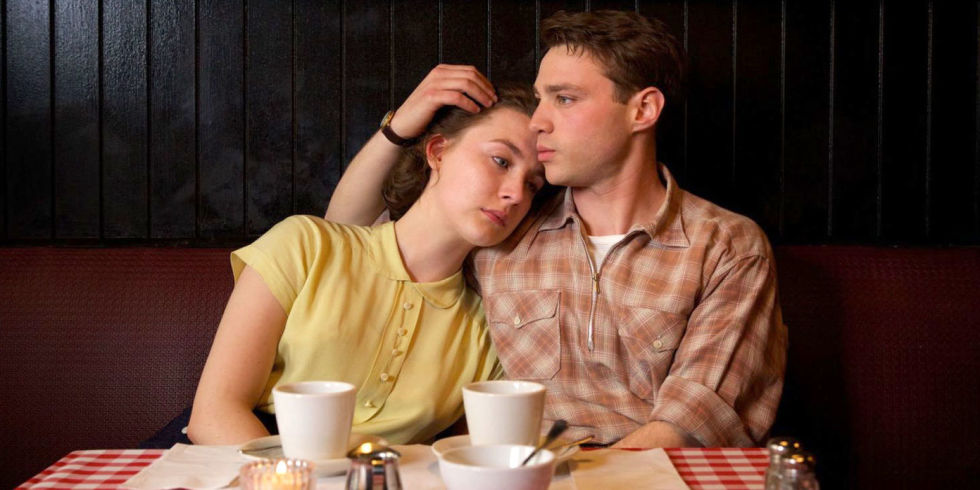
Brooklyn (directed by John Crowley) – Smart, elegant, and delicately handled, Brooklyn is an immigrant story for a time when there has never been more discussion of the American Dream and who is entitled to it. I do not think anyone would argue Eilis Lacey (Saoirse Ronan), the intrepid traveler at the center of this tale, has not earned the right to pursue the life she desires. Hers is one of millions of immigrant stories, and she stands in for all the people whose stories we will never hear, never know, because so many of these people were never given a voice.

Brooklyn will seem like the lightweight if feel-good choice among these nominees. Some have and will continue to dismiss it as a silly little love story, a frivolity that does not hold up to closer inspection. On the contrary, Crowley’s film absolutely requires closer inspection. Only upon deeper examination do the film’s layers become clear. There is a romance at the center of the story, yes – though I would also argue when the stories of most of our lives are told, there is a romance at the center – but the margins of the story are suffused with the color and detail of the hardships and perseverance that define the immigrant experience in America.

The final analysis


There are three films that could win this award – The Revenant, The Big Short, and Spotlight. Each has picked up a win with a major industry group. The Revenant won the Directors Guild, The Big Short prevailed with the Producers Guild, and Spotlight triumphed with the Screen Actors Guild. The Big Short and Spotlight, as mentioned, have all the key nominations, but The Revenant is the nominations leader, hitting in every crafts category, two acting categories, Director, and Picture. The Revenant won the top prize with BAFTA and the Golden Globes, but it is divisive where The Big Short and Spotlight might do well with a consensus vote.

The truth is no one could possibly say what is going to happen. The Revenant has looked impressive recently with those major wins at the Directors Guild, BAFTA, and Golden Globes, but it could all be an illusion. Nothing is certain until the envelope is opened. Last year, I predicted against the prevailing winds of the season and was dead wrong. This year, I will go where the wind blows, and if it leads me astray, so be it. I am banking on The Revenant to make history.

Will win: The Revenant
Should win: Spotlight
Should have been here: The Tribe

This weekend: A ranking of all 57 nominees, predictions in all 24 categories, and more

Friday, February 19, 2016

Countdown to the Oscars: Best Actress

Brie Larson is far and away the frontrunner this year for the Academy Award for Best Actress for her performance in Room.

Welcome to Last Cinema Standing’s Countdown to the Oscars, our daily look at this year’s Academy Awards race. Be sure to check back every day this month for analysis of each of the Academy’s 24 categories.

Best Actress


The nominees are:

Cate Blanchett for Carol
Brie Larson for Room
Jennifer Lawrence for Joy
Charlotte Rampling for 45 Years
Saoirse Ronan for Brooklyn

I have not seen a more competitive year at the Oscars than this in my time following them. It seems like every category has two or three legitimate contenders that could come away victorious. Mad Max: Fury Road and The Revenant are battling it out through the crafts categories, while The Big Short and Spotlight wait in the wings, ready to pounce on the top awards. Nothing seems particularly settled, and that has made this season exciting.

Nothing is settled, that is, except the top two acting categories. It took longer than it usually does, but one actor and one actress have risen to the top, and each now seems assured of an Academy Award win. We will talk about Best Actor tomorrow, but today, we are focused on Best Actress in an incredibly strong year for women.

You can always determine the quality of the year by the strength of the performances not nominated, and this year, we have Yana Novikova in The Tribe, Marion Cotillard in Macbeth, and Sarit Larry in The Kindergarten Teacher all on the sidelines, along with many other wonderful performances. The five actresses below have all turned in tremendous work, but only one has run away with every award under the sun, including the Screen Actors Guild Award, the BAFTA, and the Golden Globe.

Brie Larson for Room – Larson has been appearing onscreen since she was 9 years old and is now in line to become the 11th-youngest Best Actress winner in the 88-year history of the Academy Awards. She has dominated the awards circuit thus far this season, and barring a major scandal in the very near future, she will roll to that richly deserved Oscar win in a little more than a week’s time.

One of the best things about Larson’s awards success is that it has driven more people to discover the film and her work in it. Room is a harrowing experience but one which rewards viewers willing to endure it. As Joy, the kidnapping and sexual abuse survivor at the heart of the story, Larson is among the film’s chief draws. She is battered but not broken, terrorized but not terrified. She is a survivor whose pain we could never imagine, but through Larson’s performance, we come that much closer to understanding the character’s personal hell.

Some have said viewers will find the film too painful to sit through, too difficult to watch. To a degree, that is the point. To sexual slavery and abuse, which goes on in every part of this world, we too often turn a blind eye. Those unwilling to see this film are the very people who need to see it most. Abrahamson has done a commendable job portraying the suffering and horror that exist in this world, but it all starts with a tremendous, committed performance by Larson.

Saoirse Ronan for Brooklyn – At the beginning of this Oscar season, most pundits figured the Best Actress race would be a fight to the finish between Larson and Ronan, thinking Brooklyn would be more popular than it ultimately proved to be. It was not an unreasonable position to take. Brooklyn is a delicately moving romance about a shy, brave girl who makes her own way thousands of miles from home. If Room is an endurance test, then Brooklyn is its opposite, a feel-good story about perseverance.

Ronan is absolutely luminous as Irish immigrant Eilis Lacey. Though the plot may have all the trappings of a fairly drippy romance, Ronan’s performance makes us care about Eilis as a person. Ronan gives Eilis steadfastness and charisma that are not always present on the page, lending weight to the struggles of this lonely immigrant girl. Like Larson, Ronan made her first onscreen appearance at the age of 9, earning her first Oscar nomination at 13 for her supporting role in Atonement. She is a longshot to win the Oscar this year – as is everyone not starring in Room – but if she keeps choosing smart, interesting projects such as this and this year’s Lost River, she will be back.

Cate Blanchett for Carol – When Carol Aird enters a room, all eyes are on her. She is beautiful, yes, but she is alluring and mysterious in a dangerous way. You know you should not follow her, but the fear of what you could be missing out on is too much to bear. She is classy and confident, the kind of woman who knows what she wants and has little trouble getting it. Luckily for her, she is played by Blanchett, an actress about whom all the same things could be said.

Blanchett was nominated just two years ago and won Best Actress for her role in Woody Allen’s Blue Jasmine. A seven-time nominee, she also won Best Supporting Actress in 2004 for Martin Scorsese’s The Aviator. She is indisputably among the best actresses of her generation because she is unafraid of disappearing into her characters. She has been Bob Dylan and Katherine Hepburn, a Soviet commander and Queen Elizabeth I, and she is fiercely committed to creating the reality of each and every role. As Carol, Blanchett crafts an enigma, a human puzzle box at the center of the story that both the characters and the audience must solve.

Jennifer Lawrence for Joy – Lawrence is a hard actress to pin down. Just 25 years old, she is the youngest person ever with four acting nominations from the Academy, and she is also the second-youngest Best Actress winner in Academy history. She always delivers great performances, but sometimes, she seems at the mercy of the characters she is given to play. All of this is to say, she really needs to get back to doing work outside franchises or for David O. Russell. If she can get back to the kind of gritty, intense performance she gave in Winter’s Bone at 19, it seems she would be taking steps in a better artistic direction.

She is not bad in any of these films, but now, with The Hunger Games series at an end, she has an opportunity to break out and try something different. As a fictional version of Miracle Mop creator Joy Mangano, Lawrence is playing a strong-willed, intelligent woman of the sort Russell usually writes for her. This time out, though, the overall script is so shoddy that Lawrence can only do so much. She carries off the part with poise and professionalism, but she will have better roles and better chances to show off her talents in the future.

Charlotte Rampling for 45 Years – Putting aside her recent unfortunate comments regarding diversity at the Oscars this year, Rampling is well respected within the industry, and that veneration is most likely why she finds herself nominated here. I named this the best performance of the year, and I would say the contest is not close, but the Academy does not seem to have warmed to 45 Years the way it otherwise might have. It is an unfortunate oversight, and I hope more people discover this movie in the years to come. It is a treasure.

At the core of that treasure is Rampling and her emotionally raw, wounded performance as Kate Mercer. As a woman whose husband has been lying to her for nearly five decades, Rampling shows all the pain, betrayal, and hurt Kate experiences with little more than a furtive glance or a shift in posture. Due respect to her excellent scene partner, Tom Courtenay, but I would argue the entire film could be played in a tight close-up on Rampling’s face, and the emotional impact would still register. She has been in this game a long time and turned in some of the most iconic performances of European art-house cinema, but this may be her crowning achievement.

The final analysis


Larson will win her first Oscar. The honor is well earned, and one hopes she continues to make savvy decisions with her career, unlike so many other Oscar winners who cash in their prestige for a payday or two. She deserves her choice of roles right now – not just because she is young and people will pay to see her but because she is a gifted performer who will only get better as she gains experience.

Will win: Brie Larson for Room
Should win: Charlotte Rampling for 45 Years
Should have been here: Yana Novikova for The Tribe

Tomorrow: Best Actor

Saturday, February 13, 2016

Countdown to the Oscars: Best Adapted Screenplay

Brooklyn, written by Nick Hornby and starring Saoirse Ronan, is among the nominees this year for Best Adapted Screenplay.

Welcome to Last Cinema Standing’s Countdown to the Oscars, our daily look at this year’s Academy Awards race. Be sure to check back every day this month for analysis of each of the Academy’s 24 categories.

Best Adapted Screenplay


The nominees are:


The Writers Guild of America Awards will take place this evening to honor the writers in a host of different screenwriting categories for television and film. Unlike the Directors, Producers, Screen Actors guilds, the Writers Guild is not a great indicator for the Oscars. Its eligibility rules require writers be guild signatories to be considered even for a nomination. Foreign films, some independent films, and writers who just do not want to sign are excluded.

People like Quentin Tarantino, a two-time Oscar winner, are never nominated here because they are not guild signatories. Last year’s Best Original Screenplay winners, Alejandro González Iñárritu, Armando Bo, Nicolás Giacabone, and Alexander Dinelaris for Birdman, were not cited at the Writers Guild. Across its original adapted screenplay categories, over the last five years, six guild winners have gone on to win a screenwriting Oscar, a 60 percent hit rate that tells us very little. All that being said, if anything other than The Big Short wins tonight or at the Oscars, it would be shocking.

The Big Short – There are four Best Picture nominees nominated for Best Adapted Screenplay, plus a film the Academy clearly loved in giving it six Oscar nominations, but only The Big Short is among the frontrunners for the top award. A large part of the reason is the film’s unique voice, crafted by co-writers Adam McKay and Charles Randolph, both first-time nominees, and adapted from the book by Michael Lewis.

This is a great film, but it did not fully work for me because of that voice. To me, it is too snarky and takes it subject matter too lightly. Listening to McKay and Randolph speak and reading interviews with them, it is clear they do not take this lightly. Both men are genuinely angry and concerned with the way the U.S. economy has functioned to benefit the wealthy at the expense of everyone else. If you are asking me, that concern only loosely translates to the screen. Though the writers may be sincere, their film is anything but.

However, those are my problems with the material, and I am in the minority, particularly as concerns industry voters. The other side of the coin – the side that makes this a deserving winner – is despite its snark, The Big Short is a witty, structurally complex script that takes incredibly dense material and makes it palatable for viewers who otherwise might never learn a thing about the financial crisis. It is absolutely must-see viewing for anyone troubled by the direction of the nation.

The Martian – Drew Goddard has made his career mostly writing smart, highly self-conscious material for television shows such as Buffy the Vampire Slayer, Alias, and Lost and films such as The Cabin in the Woods and World War Z. The Martian is a stark departure from that work in that it is completely unself-conscious. The script embraces its genre without winking at the audience and tells a straightforward tale about rescue and survival that is universal in its emotions but specific in its circumstances.

Working from a densely scientific novel by Andy Weir, Goddard makes the correct assumption that his audience is smart and does not dumb down the material. Viewers never get lost in the minutiae of the science because Goddard – and Weir – give the story a strong emotional through-line. The basic story is one of a castaway, which in and of itself is instantly enthralling, but the screenplay also adds in layers about the importance of science, teamwork, and problem-solving that frankly too few films consider.

Room – Somewhat remarkably, Emma Donoghue is the first woman ever nominated for adapting her own novel. The statistic is somewhat meaningless in its specificity – for instance, Lucy Alibar was nominated with co-writer Benh Zeitlin for adapting her play Juicy and Delicious into the film Beasts of the Southern Wild in 2012 – but it is still telling in some ways. It obviously has never been a conscious decision by the writers to exclude women who adapt their own novels, but the phenomenon speaks to a larger issue about diversity, representation, and the kind of stories that get told in Hollywood.

Whatever it means, the writers have chosen a fabulously accomplished screenplay to be first. Donoghue’s writing is subtle, stirring, and brilliantly attuned to the emotional states of the characters. On first watch, it may not seem to be that complex of a film – a young woman and her son escape from the man who has held them prisoner for years and adjust to their newfound freedom. However, juggling the inner lives of Joy (Brie Larson), Jack (Jacob Tremblay), their captor (Sean Bridgers), and their family (Joan Allen and William H. Macy) is as deft a feat of writing as you will see this year.

Brooklyn – Nick Hornby, who previously was nominated for adapting the memoir An Education, has been a successful author for years and is well known and well liked in writing circles. Though his most popular novels have been focused primarily on lost, man-child-type main characters (About a Boy, High Fidelity, Fever Pitch), he has carved out an interesting niche in Hollywood as a writer of insightful stories about strong women – the aforementioned An Education, last year’s Wild, and now Brooklyn.

Based on the novel by Colm Tóibín, Brooklyn is a simple story about in Irish immigrant in 1950s America, but it is told with such grace and intelligence as to be almost revolutionary. We watch as Eilis (Saoirse Ronan) is slowly introduced to a world of possibilities she had never known, and that burgeoning awareness is magical. Though the story’s actual stakes are low – particularly compared to the other nominees in this category – the emotional stakes for the characters could not be higher, and by that, we are drawn into caring.

Carol – This is Phyllis Nagy’s first feature screenwriting credit, though she did write and direct the television movie Mrs. Harris. For her first feature, Nagy chose the defiantly strange and deeply passionate Patricia Highsmith novel The Price of Salt. Thankfully, in the translation from the page to the screen, she loses none of the strangeness or passion that drive the story of two women who fall in love but are kept apart only by prevailing social norms.

Nagy’s script drips with pain and longing in ways that we so rarely see brought to life on screen. Portraying repression in a ‘50s setting is nothing new, but the way the script explores what it is like to be a liberated person in repressive times is beautiful and tragic. These women, Carol (Cate Blanchett) and Therese (Rooney Mara), know what they want and grasp at it but cannot take hold. The script portrays their closeness, even when they are separated, with the kind of despair less daring romantic dramas would never show. It is honest and heartbreaking.

The final analysis


This is The Big Short’s award to lose. It is one of three or four Best Picture frontrunners, none of the others of which are nominated in this category. It is a sterling achievement of screenwriting and will be a deserving winner. If it loses, that will be our first indication The Big Short will not be winning Best Picture. If it wins, the race to the top will remain close to the end.

Will win: The Big Short
Should win: Room
Should have been here: 45 Years

Tomorrow: Best Original Screenplay

Sunday, February 7, 2016

Countdown to the Oscars: Best Costume Design

Sandy Powell's costumes for Cinderella are bold, brilliant, and beautiful.

Welcome to Last Cinema Standing’s Countdown to the Oscars, our daily look at this year’s Academy Awards race. Be sure to check back every day this month for analysis of each of the Academy’s 24 categories.

Best Costume Design


The nominees are:

Cinderella

As with production design, the Academy likes its costumes big, flashy, and period, plus a whole lot of them. If you designed a historical monarch’s royal court, so much the better for your chances of going home with an Oscar. That is no exaggeration. Just in recent history, during a stretch from 2006-2009, the winners of Best Costume Design were: Marie Antoinette, Elizabeth: The Golden Age, The Duchess, and The Young Victoria.

Diving deeper into this, just one film in the last 30 years has won for contemporary costumes. That was The Adventures of Priscilla, Queen of the Desert in 1994, which certainly qualifies as flashy, if nothing else. Other than that, it is fantasy or period all the way down the line, either of which could describe every single nominee this year. The most likely winner, i.e., the one that checks the most boxes: a period fantasy with a massive royal ball as its centerpiece.

Cinderella – Director Kenneth Branagh’s Disney adaptation was a surprise hit last spring, pulling down huge numbers at the box office for a decades-old property with limited appeal outside its core demographic. The reason, best as I can tell, is that it is actually pretty good. While audiences get bombarded with gritty reboots of every fairytale under the sun, Branagh and company play it straight with the simple fable of an abused girl who finds strength and love.

In this case, playing it straight means hewing very closely to the Disney animated version of the story, and Branagh takes the central ball, where Cinderella dances with her prince, and turns it into a visual extravaganza. Every element is simply stunning, but Sandy Powell’s costume designs are impossibly beautiful. Powell draws from cultures around the globe to give each princess from a different land a specific identify, and she has some fun inserting ball-gown versions of classic Disney princess costumes in among the extras.

Of course, the real treat is Cinderella’s iconic blue dress, a feat of costuming that boggles the mind. The colors are lush and vibrant, and the fabric is adorned with 10,000 Swarovski crystals, each hand placed. The point of the dress is to turn heads at the ball, and it sure does that. When one remembers the same care and thought went into clothing the hundreds of extras in the scene, the herculean nature of the task becomes clear, and that is not even accounting for the rest of the film’s equally impressive work.

Carol – Powell’s biggest competition this year may come from herself for designs that could not be more different from the fairytale work she pulled off in Cinderella. The costumes in the 1950s-set Carol are instantly character defining. When Cate Blanchett walks onscreen as Carol, with her fur coat or red jacket, we know immediately who this woman is. From the vests, scarves, and hats to the women’s dresses and men’s suits, Powell’s nuanced designs are a wonder to behold but never overtly call attention to themselves within the film’s muted color scheme and dingy aesthetic.

Only four designers have more nominations in this category than 12-time nominee Powell, and only four designers have more wins than Powell’s three. Her first nomination came in 1993 for the British dramatic fantasy Orlando, and her most recent nod came for Martin Scorsese’s Hugo in 2011. She won for the aforementioned The Young Victoria, Scorsese’s The Aviator, and Best Picture winner Shakespeare in Love. With the two strongest contenders in the race this year, she seems almost certain to add a fourth Oscar to her mantelpiece.

The Danish Girl – Director Tom Hooper’s biopic of transgender pioneer Lili Elbe is an inspired nomination in the category since so much of Lili’s early transition in the film is told through her clothing choices. As Lili comes more and more into her own as a person, her clothes become increasingly feminine until finally she does away with all of her male garments. Designer Paco Delgado also has the opportunity to explore a number of different styles within the film’s 1920s setting as Lili’s story takes her from Denmark to France to Germany, each with its own specific set of cultural markers.

Delgado is a two-time nominee who was previously nominated for his work on Hooper’s Les Miserables. Both films stand out on Delgado’s résumé, which is populated primarily by contemporary Spanish and Latin America cinema with directors such as Pedro Almodóvar and Alejandro González Iñárritu. Appropriately, however, a number of those films also deal with themes of gender, identity, and transformation.

Mad Max: Fury Road – The least traditional work in the category this year comes from another titan of costume design, Jenny Beavan, a 10-time nominee whose early career was defined by her work on Merchant-Ivory productions such as The Remains of the Day, Howards End, and A Room with a View. She earned nominations for all three of those films and won her only Oscar for A Room with a View. Her most recent nomination came in 2010 for the Best Picture winner The King’s Speech.

This time, Beavan steps way outside her perceived comfort zone of reserved period work with the punk-rock insanity that colors every corner of Mad Max: Fury Road. From the peasants to the warriors, Beavan has an instinctive feel for the way this post-collapse world has forced the people to cobble together clothes from whatever was left lying around the wasteland. While working essentially with just one or two colors, Beavan establishes the characters with little details such as the bric-a-brac that adorns the dusty clothing and various degrees of decay into which the wardrobes have fallen. This film would be an unconventional winner in the category but certainly not undeserving

The Revenant – Another film with an extremely limited color scheme, The Revenant requires designer Jacqueline West to create something out of virtually nothing. Working with almost exclusively grays and browns, West piles on the furs and hides to establish a very specific kind of Old American West. Her designs have the same naturalistic feel of so much of the film and seem to be pulled directly from nature itself.

West is a three-time nominee who has never won the award. Her previous nominations came for more traditional work on The Curious Case of Benjamin Button and Quills, and like so many of Iñárritu’s other collaborators on The Revenant, she has a long history with director Terrence Malick. West’s designs for The Revenant are impressive and certainly further the thematic explorations of the plot, but the costumes may not be flashy enough to pull off a win. Even in years when one film dominates the crafts categories, Best Costume Design still tends to go to work that screams out for recognition.

The final analysis


This is Powell vs. Powell, and either film could win. A number of pundits are predicting Carol to walk away with the award, mostly based on the film’s overall popularity with the Academy. This is a fair point as the film does have six total nominations to Cinderella’s one. However, I would look at the fact that Carol failed to make it into the Best Picture lineup as evidence of slight weakness with voters. Cinderella on the other hand is a popular Disney adaptation with the exact kind of costume work that usually wins in this category. Neither win would shock me, but it is hard to bet against the brightest, boldest work of the lot.

Will win: Cinderella
Should win: Carol
Should have been here: Brooklyn

Tomorrow: Best Makeup and Hairstyling

Thursday, January 14, 2016

Academy Awards nominations announced


The Academy has spoken, and their words say Spotlight remains the film to beat. Writer-director Tom McCarthy’s investigative journalism drama had been seen as weak coming into nominations morning, but that assessment always felt a little off base. While The Revenant and Mad Max: Fury Road may have been called out in seemingly every category (actually it was 12 for The Revenant and 10 for Mad Max: Fury Road), the big winner was Spotlight, which showed up everywhere it conceivably could have with nominations for Picture, Director, Original Screenplay, Supporting Actor, Supporting Actress, and Editing.

That said, after its triumph at the Golden Globes, many will see director Alejandro González Iñárritu’s Western revenge saga The Revenant as the likely frontrunner now that it is also the nominations leader. While Spotlight is sitting pretty above the line, it looks like The Revenant and George Miller’s post-apocalyptic action epic Mad Max: Fury Road will battle for supremacy in the below-the-line categories. Both were nominated in the same 10 categories – Picture, Director, Editing, Cinematography, Production Design, Sound Mixing, Sound Editing, Visual Effects, Makeup and Hairstyling, and Costumes – while The Revenant also picked up acting nominations for Leonardo DiCaprio and Tom Hardy.

In addition to Spotlight, The Revenant, and Mad Max: Fury Road, the other films nominated for Best Picture are The Big Short, Bridge of Spies, Brooklyn, The Martian, and Room. The biggest surprise of the morning was the overall strength of Room, which also earned nods for Brie Larson in Lead Actress, Emma Donoghue for Adapted Screenplay, and Lenny Abrahamson’s direction. The Martian had a strong showing with seven nominations, while Bridge of Spies earned six and The Big Short came away with five. Brooklyn pulled up the rear in terms of Best Picture nominees with just three nominations, failing to score in either Production Design (rightly) or Costumes (unfortunately).

Carol (six) and Star Wars: The Force Awakens (five) led the way among films not nominated for Best Picture but took very different routes to get there. Carol came away with nominations for Actress, Supporting Actress, Adapted Screenplay, Cinematography, Costumes, and Score, while Star Wars: The Force Awakens showed strength in the crafts categories with nominations for Editing, Sound Mixing, Sound Editing, Visual Effects, and Score.

Regarding those acting categories we were all so curious about, the Academy went the easy way with tough decisions and listened to the campaigners. As a result, Alicia Vikander (The Danish Girl) and Rooney Mara (Carol) both showed up in Supporting Actress for their co-lead performances, probably shutting Vikander out of Supporting Actress for Ex Machina. On the other hand, the Academy avoided the question of Paul Dano in Love and Mercy by not nominating him at all. Sylvester Stallone did make it into Supporting Actor for Creed – to tremendous applause in the room – along with Hardy’s surprise nomination.

As far as my personal reaction, I could not be happier for Charlotte Rampling’s Best Actress nomination for 45 Years, my favorite performance of the year, and Mustang’s recognition in the Best Foreign Language Film category is a wonderful delight, though not wholly unexpected. As a huge fan of Abrahamson’s career and of Room, I was excited to see him show up in Best Director, and despite Vikander missing out in Supporting Actress for Ex Machina, I was thrilled to see that film show up in Original Screenplay and Visual Effects.

Snubs? Well, I will leave that to others. Many of my favorite films showed surprising strength this morning or showed up in categories where they had only slim hope, so I had a great morning. Others will grip and grouse, and that is their right. You are more than welcome to do so as well. Let me just say, though, people like to complain about the Academy Awards nominations every year, but in my experience – more than a decade now of following this race – the Academy gets it right more often than it gets it wrong. Take that for what it is worth.

The ceremony is still more than six weeks away, and there is a lot of room for movement in this race. From where I am sitting, it is still Spotlight out in front with The Big Short, The Revenant, and Mad Max: Fury Road not far behind. It should be a fun race all the way to the end with almost no category already decided, although DiCaprio should probably start working on his speech, just in case. As with last year, check in here at Last Cinema Standing throughout the next month and a half for analysis and predictions in all 24 categories as we make our way to the red carpet and Oscar night.

Click here for a full list of nominees.

Tuesday, January 12, 2016

Waiting game: 2015 Oscar nominations predictions


The critics’ awards are pretty much behind us, the Hollywood Foreign Press Association handed out its honors on Sunday, and with the announcement today of the Directors Guild nominations, the most important industry groups have had their say. All that is left is for the Academy to announce its nominations, which it will do bright and early Thursday morning. Before that, let’s take a look at which films have dominated the awards season thus far and what we might expect from the Academy.

We discussed the critics’ groups around this time last month, when it seemed like writer-director Tom McCarthy’s journalism drama Spotlight would be the runaway champion. With the critics, anyway, that trend held true as Spotlight was awarded best film by group after group across the country, with a stray mention for George Miller’s Mad Max: Fury Road here and there.

Tom Hanks in Bridge of Spies.
As the industry started to chime in, though, the ground started to shift. The craftspeople such as the cinematographers, the art directors, the sound designers, etc., flocked to films such as Mad Max: Fury Road and The Revenant, while Spotlight has been left in the dust. This was to be expected since Spotlight is not exactly the kind of flashy film that draws a lot of appreciation for its technical achievements. However, Spotlight has hit with the four industry groups that matter most – Screen Actors Guild, Producers Guild, Directors Guild, and to a lesser extent, the Writers Guild.

Even after its shutout at the Golden Globes, Spotlight is still sitting pretty. The same goes for The Big Short, which was also shut out Sunday but has done fine with the guilds. The Revenant has obviously been a technical juggernaut, and its triumph with the HFPA certainly gives it some momentum. Remember, though, that the Academy nominations were submitted before the Golden Globes, so that momentum only means something if the Academy has already gone for The Revenant in a big way.

So, let’s take a look at what the guilds have given us to work with:

Producers: The Big Short; Bridge of Spies; Brooklyn; Ex Machina; Mad Max: Fury Road; The Martian; The Revenant; Sicario; Spotlight; Straight Outta Compton

Directors: Adam McKay (The Big Short); Miller (Mad Max: Fury Road); Ridley Scott (The Martian); Alejandro González Iñárritu (The Revenant); McCarthy (Spotlight)

Actors: Best ensemble – Beasts of No Nation; The Big Short; Spotlight; Straight Outta Compton; Trumbo

Writers: Best original screenplay – Bridge of Spies; Sicario; Spotlight; Straight Outta Compton; Trainwreck. Best adapted screenplay – The Big Short; Carol; The Martian; Steve Jobs; Trumbo

For good measure, let’s throw in the British Academy nominations, which came out late last week:

BAFTA: The Big Short; Bridge of Spies; Carol; The Revenant; Spotlight

If you look closely, the only two films to show up on all five lists are The Big Short and Spotlight. No other movie shows up more than three times. Regardless of anything else you here, those are your frontrunners right now for Best Picture at the Oscars. The Revenant is close behind, though the likelihood of Iñárritu winning Best Picture and Best Director the year after winning both for Birdman is slim. Bridge of Spies, Mad Max: Fury Road, The Martian, and even Straight Outta Compton look strong based on what we know now.

Still, what we know now does not amount to much. Everything could change – or nothing could, admittedly – with the Academy’s announcement Thursday. So, let’s make some guesses as to how the top categories might shake out.

Best Picture


My reasoning in this category is pretty much outlined above, so I will not go over it too deeply here. The big question now is how many films the Academy will choose to nominate. It could be anywhere from five to 10 but usually ends up on the high side around nine. So, that is where we will draw our prediction line. Based on everything that has happened up until now, here are the nine films I think are most likely Best Picture nominees (in order of likelihood): Spotlight; The Big Short; The Revenant; The Martian; Mad Max: Fury Road; Bridge of Spies; Brooklyn; Carol; Trumbo.

Best Director


This category rarely lines up directly with its guild counterpart, but most of the time, four out of the five make it. Last year was anomalous in that Bennett Miller was nominated for Foxcatcher despite that film not being nominated for Best Picture. I would not predict that happening again. The weakest name on the DGA list might be Scott for The Martian, but it is hard to know who else might slip in besides maybe Steven Spielberg for Bridge of Spies. So, against my better judgment, I am predicting it to match the DGA exactly (in order of likelihood): Inarritu for The Revenant; McCarthy for Spotlight; McKay for The Big Short; Miller for Mad Max: Fury Road; Scott for The Martian.

Best Actor


Not much has changed in this category since we last covered it, except that a few contenders have probably fallen by the wayside. Paul Dano in Love and Mercy for instance is likely to be shifted to the supporting category, while Will Smith (Concussion) and Johnny Depp (Black Mass) really have not picked up any momentum. For the win, Leonardo DiCaprio may finally be in line for an Oscar. Regardless of his feelings about it, which I covered here and here, his peers sure seem to want him to win, based on the standing ovation he got at the Golden Globes. Anyway, here are my Best Actor predictions, which have not changed since last month (in order of likelihood): DiCaprio for The Revenant; Bryan Cranston for Trumbo; Michael Fassbender for Steve Jobs; Matt Damon for The Martian; Eddie Redmayne for The Danish Girl.

Best Actress


Saoirse Ronan in Brooklyn.
On the other hand, Best Actress is very much in flux since we still do not know how the Academy will choose to categorize Rooney Mara in Carol and Alicia Vikander in The Danish Girl. Both have been campaigned as supporting contenders, but the Academy could still choose to place them (correctly) in the lead category. Either way, both are almost surefire nominees. The rest of the lineups in both categories simply depend on their placement.

Brie Larson’s performance in Room is picking up steam as the most likely winner, while Saoirse Ronan (Brooklyn) and Cate Blanchett (Carol) are right there as well. Despite the film’s lackluster reception, Jennifer Lawrence should still make it in for Joy, which leaves one space. I am guessing the Academy will place Vikander in lead and Mara in supporting, giving us (in order of likelihood): Larson for Room; Ronan for Brooklyn; Blanchett for Carol; Lawrence for Joy; Vikander for The Danish Girl.

Best Supporting Actor


Despite the mild controversy, which really should not have been any controversy at all, over his acceptance speech, it sure was fun to see Sylvester Stallone win an award at the Golden Globes. It is possible he will repeat that performance – with a better grasp of his thank-you list – at the Oscars, but I still have serious reservations about his chance for a nomination. Creed has not caught on with any of the guilds, and its heat seems to have died down since it was a considerable box-office hit in November and early December.

The heat on Mark Rylance in Bridge of Spies, though, just seems to be picking up as he has pretty much run the table with the critics’ awards. Michael Shannon, well liked and universally admired by his peers, seems a safe bet to be 99 Homes’ only recognition, while both Spotlight (Mark Ruffalo and Michael Keaton) and The Big Short (Steve Carell and Christian Bale) have multiple performances that could be highlighted. Bale seems like a sure thing, and while I cannot imagine the Best Picture frontrunner not getting an acting nomination, it is possible Ruffalo and Keaton split the vote and neither makes it.

Other than that, Jacob Tremblay (Room) and Idris Elba (Beasts of No Nation) have dropped off the radar a bit, but I would not be shocked to see one or either end up with a nomination. Then, there is Dano as well. My predictions right now are (in order of likelihood): Rylance for Bridge of Spies; Bale for The Big Short; Shannon for 99 Homes; Dano for Love and Mercy; Stallone for Creed.

Best Supporting Actress


If we guess that Mara will end up here, she is a definite nominee and the biggest threat for the win, especially considering it is a co-lead performance. Winslet, who just won the Golden Globe in a bit of a surprise victory, is probably safe. Jennifer Jason Leigh has showed up on most lists for The Hateful Eight, and the Academy loves Quentin Tarantino, so she seems likely to benefit, plus she is great in the movie.

Helen Mirren has received a few mentions for Trumbo, and Kristen Stewart has been a critical darling for her turn in The Clouds of Sils Maria, but I expect only one of them to be nominated as I am going on a limb and predicting a double nomination for Vikander, here for her stellar performance in Ex Machina. Rest assured, if it happens, it will be one of the most pleasant surprises of the morning for me. Rachel McAdams also has an outside shot for Spotlight. My predictions (in order of likelihood): Mara for Carol; Winslet for Steve Jobs; Leigh for The Hateful Eight; Mirren for Trumbo; Vikander for Ex Machina.

Below the line & final thoughts


Cate Blanchett in Carol.
In the crafts categories, we can expect Mad Max: Fury Road, The Revenant, and Stars Wars: The Force Awakens to dominate. All three could get in for Editing, Art Direction, Sound, Sound Editing, and Visual Effects. Mad Max: Fury Road and The Revenant are also frontrunners for Cinematography, along with Carol. Carol could be a more low-key force in the crafts given its gorgeous design elements, so look for it in Costumes and Art Direction as well. The same goes for Brooklyn and The Danish Girl. Bridge of Spies has showed strength with the crafts guilds, and it could be in for well-deserved recognition in Art Direction and Cinematography.

The Best Editing category is usually the strongest bellwether of Best Picture, and in addition to The Revenant and Mad Max: Fury Road, expect to see The Big Short and possibly The Martian. If Spotlight fails to nab an Editing nod, that will be its first real sign of weakness. I am not expecting that to be the case, but it could happen.

When the final tally comes in, I expect The Revenant to lead the list and for Mad Max: Fury Road not to be far behind. Iñárritu’s Western epic could hit in the following categories: Picture, Director, Actor, Cinematography, Editing, Art Direction, Sound, Sound Editing, Costumes, Makeup, Visual Effects, and possibly Adapted Screenplay. That would give it 12. Mad Max: Fury Road could show up in all those places except Actor or Adapted Screenplay and wind up with 10.

As I said back in December, this is a wide-open year, and that makes it a fun year. Even after the nominations come out, we still will be flying mostly blind. When the guilds start to announce their winners at the end of this month and the beginning of February, we will know more, but for now, let’s enjoy the feeling that any movie we love is a potential nominee and maybe even a winner.