Showing posts with label It Follows. Show all posts

Wednesday, February 10, 2016

Countdown to the Oscars: Best Original Score

Ennio Morricone's score for The Hateful Eight is the frontrunner at the Academy Awards for Best Original Score.

Welcome to Last Cinema Standing’s Countdown to the Oscars, our daily look at this year’s Academy Awards race. Be sure to check back every day this month for analysis of each of the Academy’s 24 categories.

Best Original Score


The nominees are:

Sicario
Star Wars: The Force Awakens

So, I spent a lot of words yesterday tearing down the music branch for its uninspired nominations for Best Original Song. Last year, I used this space to gripe about the exclusion of the year’s best score due to the branch’s seemingly arbitrary rules. The entire system for determining eligibility and nominees in both music categories needs an overhaul.

However, even a blind squirrel finds a nut once in a while, and though these may not be the five nominees I would have chosen, the music nominated for Best Original Score this year is fantastic across the board. A few of the best composers working today are nominated alongside two of the best film composers of all time, and their work covers a broad spectrum from big and bombastic adventure music to subtle and subdued drama.

Unusually for this category, only one nominated film is also nominated for Best Picture. The last time that happened was in 2003 with The Lord of the Rings: The Return of the King, which went on to win the award. In fact, a Best Picture nominee has won this award every year since 2003, though interestingly only three Best Picture winners in that 12-year span have also won Best Original Score. Either way, the run of Best Picture dominance in this category seems set to end this year as the Academy may finally be ready to reward one of the giants of the craft.

The Hateful Eight – Ennio Morricone is among the most famous composers in the world, and his compositions have been repurposed in countless ways across a wide variety of mediums. The main title theme to The Good, the Bad, and the Ugly might be one of the two or three most recognizable pieces of film score ever written. He has been nominated for six Oscars and received an honorary Academy Award in 2007 for his contributions to cinema.

Morricone had consciously avoided scoring westerns recently to avoid being thought of as only a western composer, and it took Quentin Tarantino to convince the Italian master to return to the genre that launched his career. The funny thing is – and Tarantino has acknowledged this in numerous interviews – Morricone pretty much avoided writing a western score. The music in The Hateful Eight sounds like it belongs in a horror movie more than a talky western.

Every element of the score oozes dread. From the sinister pounding of the drums to the whining and pulsing strings layered over it to the low-register lead, Morricone has perfectly tapped into the drawing-room mystery aspects of Tarantino’s script while bringing an unhinged energy that ultimately makes the music the best part of the film. The Hateful Eight is well liked enough by Academy members, and the season appears headed in the direction of awarding Morricone his first competitive Oscar. It would be a well-deserved and fitting honor.


Star Wars: The Force Awakens – The man who could stand in Morricone’s way, though, has been here before – more times than almost anybody. John Williams’ 50 Academy Award nominations are second only to Walt Disney for most nominations for an individual. His compositions for Jaws, Star Wars, and Raiders of the Lost Ark are part of the cultural heritage, and the American Film Institute named the theme to Star Wars the greatest score of all time. It does not get much more iconic than that.

If Morricone returning to the western genre is exciting, then Williams returning to the Star Wars universe is on another level. The 84-year-old Williams has reduced his work load significantly in recent years, but there is only one man for the job of composing a Star Wars soundtrack. His music for Star Wars: The Force Awakens is everything we have come to expect from Williams – big horns, driving strings, and dynamic tension between the quiet and the loud that signals adventure and mystery.

Williams has been nominated 19 times since his last win for Schindler’s List in 1993. Not among those 19 nominations are any of the Star Wars prequels, though he was nominated for each film in the original trilogy and won for A New Hope. Williams is a legend, and every single member of the Academy knows it, and it is possible that respect will carry him to a sixth Oscar.


Bridge of Spies – While Williams went off to compose the score for Star Wars: The Force Awakens, Thomas Newman stepped in to fill the musical void for director Steven Spielberg on the Cold War thriller Bridge of Spies. This is the first Spielberg film in 30 years not conducted by Williams, but Newman does an admirable job of getting on Spielberg’s wavelength and finding the right tones for an old-school story of heroism in the face of insurmountable odds.

The horns and military-style drums immediately stand out, and some of the main themes feel like a throwback to some of James Horner’s early 1990s compositions for films such as Patriot Games, Clear and Present Danger, and Apollo 13. Newman has been nominated 12 times for Best Original Score and once for Best Original Song, but he has never won.

Newman’s compositions throughout his career have tended to be more idiosyncratic than the Academy usually likes, and his more classical work on Bridge of Spies could be right up members’ alley. That, coupled with the Best Picture nomination for the film, would make him a threat for the win in most years, but with Williams and Morricone in the picture, Newman will likely be relegated to bridesmaid status once again.


Carol – A little more than six years ago on this site, I called Carter Burwell the best composer working in Hollywood. That feels even truer today than it did then. He is my personal favorite music composer of any kind, film or not. His scores for Before the Devil Knows You’re Dead, In Bruges, A Serious Man, and Where the Wild Things Are rank among my favorite albums of all time. He is best known probably for his work with the Coen Brothers – or perhaps among certain people for his Twilight scores – but his recent collaborations with director Todd Haynes on the Mildred Pierce miniseries and Carol have been equally fruitful.

For Carol, Burwell is working firmly within his favorite subgenre – off-kilter dramas about descent into darkness. The way his strings swirl around the listener while the piano holds the center together just spells gloom and madness, but it is never overbearing, which is key for a film as subtle and restrained as Carol. Burwell also introduces themes of romanticism into the score that he rarely uses but that perfectly complement the film’s thematic intent.

I am ecstatic that Burwell has received his first Oscar nomination. It is long overdue. He is unlikely to win and is probably running third or fourth in the category this year, but now that he is in the club, expect to see Burwell pop up as a perennial nominee. He will win one eventually, and when Burwell accepts his Oscar someday, that will be one of the happiest moments of my Oscar-watching life.


Sicario – Kudos to the music branch – how often do I say that? – for nominating something as strange and unsettling as Jóhann Jóhannsson’s work on Sicario. Jóhannsson earned his first Oscar nomination last year for his far more traditional score for The Theory of Everything. I had him pegged for the win last year as well, but he lost out to the overwhelming popularity of The Grand Budapest Hotel. This time, I would be shocked if Jóhannsson found himself onstage, not because the work is not deserving but because the Academy rarely goes for something this unusual in the category.

The driving percussion and punishing strings remind of Hans Zimmer’s iconic work on Inception but set in a world without hope. Amid the brutality and carnage of the U.S.-Mexico border wars, the music makes the characters’ sense of dread palpable for the audience. Deep feelings of disquiet creep into viewers minds thanks in large part to the way Jóhannsson’s score penetrates the narrative. You do not so much hear the music as feel it in your gut. That does not make it a good bet to win an Oscar, but it does make it a great score.


The final analysis


Morricone has the inside track here. Along with a Golden Globe win and general industry love, he is overdue for this honor, and voters know it. Williams could get in on sentiment, but much of the same sentiment that would drive him to a victory also holds true for Morricone. The other nominated scores are great and would be deserving winners, but a win for Morricone would be history-making, and that temptation might be too much to pass up for the Academy.

Will win: The Hateful Eight
Should win: The Hateful Eight
Should have been here: It Follows

Tomorrow: Best Sound Mixing

Wednesday, December 30, 2015

Grab your pencils: Oscar voters receive ballots


Ballots went out today to the voting members of the Academy of Motion Picture Arts and Sciences for the 2015 Oscar nominations. It is an occasion we here at Last Cinema Standing like to take to remind voters of less heralded work from throughout the year that deserves attention. Now, I have done this a couple times, and not once has anything I mentioned been nominated, so I won’t sit here and pretend like I have that kind of influence. However, you’re here, and you’re reading this, so consider this list a primer for films you should check out and work on those films that should be recognized and applauded.

Here are five Oscar-worthy feats the Academy should consider this year:

Best Supporting Actress: Günes Sensoy for Mustang

Gunes Sensoy in Mustang.
Writer-director Deniz Gamze Ergüven’s Mustang is a true ensemble piece about five rebellious sisters growing up in an oppressively traditional family. Sensoy plays Lale, the youngest of these sisters. Due to her age, she is somewhat shielded from the worst of the treatments doled out to her sisters, namely their forced arranged marriages. Much of what the audience sees is shown from Lale’s point of view as the sisters are degraded, punished, and abused in the service of an outdated cultural code.

Sensoy has the difficult task of communicating both the girls’ flagging will and their steadfast resolve. As her sisters are systematically broken down by circumstance, Lale remains on the front line, fighting the battle against a structure she does not support and had no say in building. A young actress in her first and only role to date, Sensoy carries much of the film and its thematic resonance on her shoulders, and rather than buckle under the weight, she soars.

Best Adapted Screenplay: Andrew Haigh for 45 Years

Charlotte Rampling and Tom Courtenay in 45 Years.
I have not written about it yet, but in the coming days, I will be writing a lot about Haigh’s brilliant marital drama 45 Years. It is a subtle, masterful bit of storytelling that takes the time to build its characters and their world brick by brick, laying a foundation so solid that when it is overturned, the audience is left in as desperate a state as the characters.

Haigh, who also directed the film, adapted the script from award-winning author David Constantine’s short story “In Another Country.” Turning a relatively brief story into a feature-length film is no easy feat, but Haigh adds layers of depth and detail to the writing and incorporates that work into the film in a way that would translate to no other medium. The performances in 45 Years are almost effortlessly breathtaking, but they are rooted in a screenplay that puts an emphasis on creating strong, nuanced characters.

Best Editing: Ramin Bahrani for 99 Homes

Andrew Garfield in 99 Homes.
Writer-director Bahrani has edited most of his own feature films, and he has always brought to the process the same distinct feel for the rhythms of daily life that is evident on the page and behind the camera. While none of his films would likely be considered a thriller, they all share with the genre a certain pacing and sense of ever-mounting tension. 99 Homes might be the closest to a traditional thriller Bahrani has yet come, and he absolutely nails the flow and energy of the film.

There is a relentlessness in the main character’s march toward self-destruction that Bahrani perfectly mirrors in his cutting. There are flashy moments throughout, and the climax is a white-knuckle spectacle that owes much of its success to the way it is constructed, but Bahrani is also subtle. For every montage or quick cut, there is a tender, quiet moment in which Bahrani the editor steps away to allow Bahrani the director to guide the emotion of a sequence.

Best Art Direction: Mark Digby, Katrina Mackay, and Denis Schnegg for Ex Machina

Alicia Vikander in Ex Machina.
There was a lot to love in writer-director Alex Garland’s creepy techno-thriller – from the clever writing to the cagey performances and the sleek editing – but one thing sticks in the mind long after the final credits roll. That is the alternately icy and sensual production design, as well as the sparse but pointed set decoration. Science-fiction films often do well in this category at the Oscars for creating worlds we have never seen before, but the work is rarely this restrained or this unsettling.

The compound where about 95 percent of the action takes place is more of a laboratory than a home, and as the story progresses, that vibe becomes more and more pronounced, to the point where anyone who steps inside may seem like part of the experiment. The low ceilings and narrow hallways contribute to an overwhelming sense of claustrophobia, and as the noose tightens around the characters, it starts to feel as though they may never escape this place or its icy grip.

Best Original Score: Disasterpeace for It Follows

Maika Monroe in It Follows.
I am on the record as believing the hype surrounding writer-director David Robert Mitchell’s low-budget, high-concept horror picture outpaced its actual merit. It is a good but not great little movie that does a fine job inducing dread and paranoia in the audience. The one exceptional element, though, is the score by composer Rich Vreeland, working under his stage name, Disasterpeace.

The music draws on the best tropes horror music and repurposes them in a propulsive, synth-heavy set of near-electronica compositions. It is like an unholy lovechild birthed by the coupling of John Carpenter’s simple piano motifs from Halloween and Tangerine Dream’s bubbly yet sinister pop anthems for Risky Business. In other words, it is like nothing you have heard before.


Tuesday, November 24, 2015

Spirit Awards: Where indie still means indie


What a difference a year makes. On Tuesday, Film Independent announced its nominees for the annual Independent Spirit Awards. Last year in this space, I wrote about the general trend of the Independent Spirits toward more Oscar-friendly films, but this year, the nominated films and performances are nothing if not fiercely independent. That is not to say there are no likely awards heavies in the lineup, but there is more than a fair share of movies that probably will not get anywhere near the Academy Awards.

The nominees for best feature are Charlie Kaufman and Duke Johnson’s stop-motion Anomalisa, Cary Fukunaga’s African war story Beasts of No Nation, Todd Haynes’ beautiful tale of forbidden romance Carol, Tom McCarthy’s masterpiece Spotlight, and Sean Baker’s experimental Tangerine. All six of those directors also were cited in the best director category and are joined by David Roger Mitchell for the retro-horror It Follows.

Last year, four of the five best feature nominees ended up nominated for Best Picture at the Oscars (Birdman; Boyhood; Selma; and Whiplash), a feat that is unlikely to be repeated this year. Of these, Spotlight is rightfully among the frontrunners for the Academy Awards, but only Carol among the others has a realistic shot at Oscar glory. Let’s take a look at each of these films and break down their merits and possible awards futures.

Anomalisa – Kaufman, an Academy Award winner for co-writing Eternal Sunshine of the Spotless Mind, is the marquee name here for cinephiles, but Johnson has the animation chops likely to make this film memorable. For Community fans out there, Johnson directed the magnificent “Abed’s Uncontrollable Christmas” episode.

This is the only film in the lineup I have yet to see – hopefully that will be rectified next week, though the film does not hit theaters until the end of December – but with these two attached, it is highly anticipated, which I wrote about here. As for the Academy, this might be a little too out there for any of the top categories, but a Best Animated Feature nomination is not out of the question.

Beasts of No Nation – A harrowing tale of child soldiers in war-torn Africa, Fukunaga’s film might be most notable for its unusual release strategy. A Netflix Original film, Beasts of No Nation was released to theaters and on the movie streaming site on the same day, alienating a number of larger theater chains. As a result, the movie was locked out of theaters in most of the country, screening only in independent cinemas. The film, which likely works better on the big screen, deserved a better fate, but its quality will carry it through the awards season.

It is a fair question to ask whether filmmakers will embrace this new distribution model or reject it and hold it against the film. The Independent Spirit nominations, however, bode well for its chances, including in the technical categories, where it would not be out of place. Fukunaga also adapted the film from its source novel and served as the director of photography, and he would make for a handsome nominee in either category at the Oscars.

Carol – I wrote at length about Haynes’ exquisite film here, and it is not surprising to see a film this well acted and this superbly crafted lead the nominations list with six, including notices for both its lead actresses, Cate Blanchett and Rooney Mara. If the independent film community rallies around Carol, which it seems like it will, the film could be a threat in a number of top categories at the Oscars.

Spotlight – As I said in my review, McCarthy’s exploration of the investigation into the Catholic Church sex abuse scandal is hands down the best American film of the year (so far) and an undeniable masterpiece. Carol is definitely the flashier film, but Spotlight is an unimpeachable achievement in filmmaking. A number of pundits have it down as the Best Picture frontrunner, and it deserves to be. As for its independent bona fides, McCarthy is a hero of the independent film community after his fantastic The Station Agent, The Visitor, and Win Win showed the best of what the community can accomplish.

Tangerine – Every year, there is a film firmly in the awards discussion that just passes me by, and it seems Baker’s sordid story of transgender prostitutes in L.A. is the one this year. I do not see what others see in this highly regarded and critically acclaimed film. Tangerine is a testament to the democratization of filmmaking in its low-budget, low-fi origins, but I simply found nothing to like in its story or craft. It would be one of the biggest shocks of the year for me if it were read out in any category on Academy Awards nominations morning.

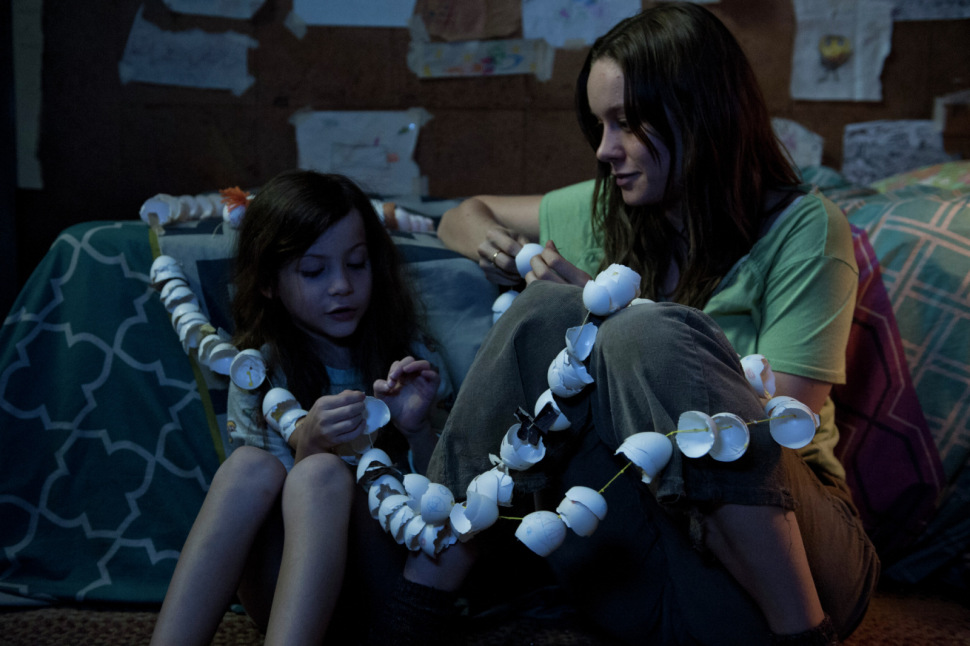
Jacob Tremblay and nominee Brie Larson in Room.
Regarding the rest of the Spirit Awards nominees, there are a number of pleasant surprises and less pleasant omissions. First, the gripes: The excellent 99 Homes, Room, Love and Mercy being left out of the best feature and best director categories is an unfortunate oversight, though each picked up a single acting nomination; about those single acting nominations, though, Jacob Tremblay belongs in the supporting actor category for his great work next to nominee Brie Larson in Room, and I would have liked to see Elizabeth Banks in supporting actress for Love and Mercy.

For the good, I was happy to see Michael Shannon recognized in supporting actor for 99 Homes, and the best international film list includes two of my favorite films this year, Mustang and A Pigeon Sat on a Branch Reflecting on Existence. Spotlight deservedly will receive the Robert Altman Award, given to the best ensemble cast of the year, an inarguable distinction for a film built on the strengths of its remarkable actors.

Overall, it is an exciting and eclectic list that reflects the best intentions of the nominating organization. Per tradition, the Independent Spirit Awards ceremony will take place the night before the Oscars, Feb. 27, 2016. Check out the full list of nominees here.

Wednesday, April 8, 2015

Buzz kill: It Follows and the media hype machine


Maika Monroe stars in the new horror film It Follows.

Hype is a killer. I am probably guiltier of it than most people I know, but we have all done it – oversold a movie or a book or a restaurant and, by our enthusiasm, destroyed any opportunity for our audience to enjoy something without bias. Rather than instilling the level of excitement in our friends that we might hope for, we are priming them to be let down.

It is a natural cultural phenomenon that has been exacerbated to an absurd degree by the Internet. It makes a certain amount of sense. With a million things at once all vying for attention, it helps to stand out in the crowd, so movies are sold with superlatives. Everything is the best, the funniest, the scariest, etc. What this does, however, is it robs us of the joys of the merely good.

Writer-director David Robert Mitchell’s new horror-thriller It Follows is pretty good, but its premiere was met with breathless praise, proclaiming it the new pinnacle of modern horror and so forth. Here is a sampling of quotes from the marketing materials:

“It Follows is the best horror film in over a decade.” – Boing Boing

“… the best American horror film since The Blair Witch Project.” – The Dissolve

“It Follows pretty much earns its buzz as the scariest and best-engineered American horror movie of recent years …” – Salon

The Dissolve also landed the quote that adorns most of the film’s posters, calling it “one of the most striking American horror films in years.” Notice all those superlatives, and this sample is representative. The film owns a score of 83 out of 100 on film criticism aggregation site Metacritic and has enjoyed raves from such publications as The New York Times, Los Angeles Times, and The Guardian. It would be difficult for any film to live up to such a reputation, let alone an indie horror flick from a relatively unproven filmmaker.

As a general rule, I try not to let buzz influence my anticipation of a film one way or the other. I do not read reviews before I see movies or, indeed, until after I have written down my own thoughts. Some cross-pollination of ideas is obviously inevitable, but for the most part, I am flying blind. However, It Follows was only on my radar due to the tremendous critical praise it was receiving. As an avid horror fan, I was excited by the possibilities of a new classic of the genre and sought it out.

What I can report is that It Follows is an accomplished thriller that impresses on a technical level and features an intriguing premise but also has some real flaws. Aided by a brilliant musical score by Disasterpeace that reminds of classic grindhouse movies, Mitchell creates a genuinely chilling first half that will have you grasping at your arm rest in dread. The back half of the film is more problematic thanks to a script that refuses to address certain issues of logic and motivation.

The plot concerns a young woman played by the up-and-coming Maika Monroe who is told after a consensual sexual encounter that she will be terrorized by some kind of supernatural force that will eventually kill her. She learns the only way to avoid a gruesome death is to pass the haunting on to someone else by having sex, and this is about as deep as the plot goes. The rest is atmosphere, mood, and more than a few well timed jump scares.

Since Mitchell and his collaborators keep their cards close to their chest, any message about promiscuity or sexual freedom is murky at best and indecipherable at worst. The film lacks a true point of view and seems willfully adolescent in its treatment of sexuality and violence. In other words, It Follows is a standard teen slasher pic, which makes for a fun night at the movies if that is your thing, but it is greatly burdened by its “best this” and “scariest that” buzz.

The Babadook
Recent Australian horror picture The Babadook opened to similar critical acclaim, and while it is a more accomplished film than It Follows, it also suffocates under the weight of universal adulation and sky-high expectations. The problem extends beyond horror and beyond film, really, but the proximity to each other and similarity of response to It Follows and The Babadook got me thinking about the way we build things up and give ourselves over to the consensus.

Our culture is no longer really set up to accommodate measured consideration of complex topics – a shortcoming that affects all manner of discourse, not just films. When a line is drawn in the sand, we pretty much have to pick a side, which means It Follows is either the best horror film of the new century or the most overrated piece of drivel in recent memory.

Twitter, Facebook, and other social media await your decision, and the most ardent commenters are ready to dole out shame and punishments as necessary to those of you who choose wrong, whatever you choose. But, what if It Follows is neither pinnacle nor nadir? What if it is merely good, and the audience’s only expectation is a thrilling ride and a fun night out? Well, that would be a promise on which this movie could surely deliver.