Showing posts with label Anomalisa. Show all posts

Thursday, February 25, 2016

Countdown to the Oscars: Best Animated Feature

Co-directors Charlie Kaufman and Duke Johnson's Anomalisa is nominated for Best Animated Feature at the Academy Awards.

Welcome to Last Cinema Standing’s Countdown to the Oscars, our daily look at this year’s Academy Awards race. Be sure to check back every day this month for analysis of each of the Academy’s 24 categories.

Best Animated Feature


The nominees are:

Anomalisa
Boy & the World
Shaun the Sheep Movie
When Marnie Was There

It is hard to believe this category has existed for only 15 years. Maybe it is because I am younger, but this category has always felt like a part of the Oscars to me. It makes sense. Certainly before 2001, there were not nearly enough feature-length animated films to justify a separate category. But with the explosion in independent animation houses in the late 1990s and early 2000s, a wealth of quality animated films flooded the market, and thus, a category was born. Still, despite the growth on the margins of the industry and the democratization of production, one very big company has ruled them all.

Pixar Animation Studio has earned 10 nominations in this category in 15 years, missing out with only three eligible films. Of the 14 Best Animated Feature Oscars so far handed out, Pixar films have won seven. No other studio has more than two, while two different Pixar directors have two Animated Feature awards. Each one of those numbers is set to be raised by one this year as previous winner Pete Docter returns this year with a seemingly unbeatable frontrunner. The nominees are universally fantastic, but it is a fool who bets against the Pixar machine.

Inside Out (directed by Pete Docter and Ronnie Del Carmen) – There was talk among pundits when Inside Out came out in June last year of the film possibly being nominated for Best Picture. Only three animated films ever have been nominated in the top category – Beauty and the Beast, Up, and Toy Story 3 – and none since the Academy changed its rules to allow five to 10 nominees rather than a straight 10. The Best Picture nomination did not pan out for Inside Out, but such talk was emblematic of the love the film inspires among critics and fans.

Surely, it is a wild, imaginative ride through the mind of a preteen girl, showing us what it is like to experience the world as someone who still understands so little of it. It is a literal depiction of depression – which is tackled too rarely in film – for a target audience that is just beginning to understand its feelings and how it fits into the culture as a whole. It is also the work of parents, valiantly pleading with their children to keep as much joy in their lives as possible.

Docter, Del Carmen, and co-writers Meg LeFauve and Josh Cooley know how easy it is for the world to get you down, and they have created a beautiful expression of youth and imagination that celebrates life above all else. Docter won this award in 2009 for Up, which showed how an old man can recapture the joy in his life by embracing what it means to be young. Docter will likely win the award this year for the opposite – for showing how a young girl does not have to give up joy just because she is getting older.

Anomalisa (directed by Duke Johnson and Charlie Kaufman) – There is no one who writes films like Kaufman. There never has been, and it would be shocking if there ever were again. His perspective on life and human relationships is so specific and so unique that to attempt to replicate it would be to destroy it. Kaufman’s films are what they are because of the man who made them, and for his first animated feature, with co-director Johnson, he has taken his distinctive writing style and translated it to a medium that can truly express the depth of his vision.

Nothing much happens in Anomalisa. A customer service expert arrives in Cincinnati to give a speech on, well, customer service. While at the hotel, he meets a woman who is unlike anyone he has ever met in his life. She is in fact the only other unique person in this world, so far as he can tell. Their courtship and the fragile bond they form makes up the bulk of the film, which ultimately is less about the story it tells than the feelings that story inspires in the audience. There is pain, fear, and regret, along with fleeting moments of happiness, and it all adds up to one man’s not-so-special life, made momentarily whole by his meeting another individual.

Kaufman is a previous Oscar winner for Original Screenplay for Eternal Sunshine of the Spotless Mind, while he was also previously nominated for co-writing Adaptation. and writing Being John Malkovich. Each of those films, plus his brilliant directorial debut Synecdoche, NY, is exemplary of the kind of insight and world building of which Kaufman is capable. No one else does what he does. Johnson is a 37-year-old wunderkind animator working on his first feature. His mix of stop-motion and puppetry on Anomalisa is what makes the film tick. Without Johnson’s technical wizardry, they would be just amazing words on a page.
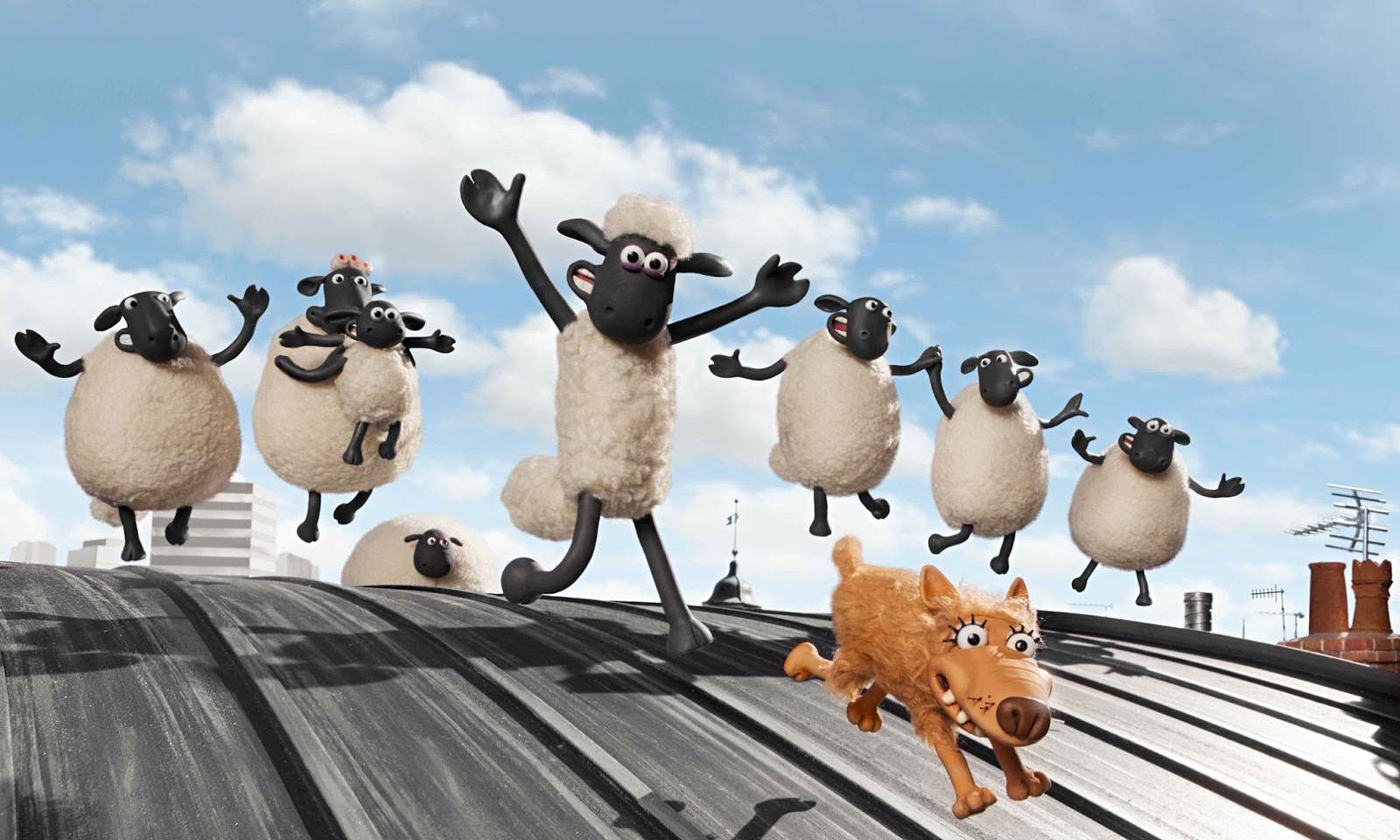
Shaun the Sheep Movie (directed by Mark Burton and Richard Starzak) – The only film in this lineup for the most part strictly for children, Shaun the Sheep Movie is one of my favorite discoveries of the year. I was unfamiliar with the television show on which the film is based, a Wallace & Gromit spinoff also produced by Aardman Animations; however, the Aardman style is unmistakable. Both in its look and its emotional core, Shaun the Sheep Movie is an absolute delight from start to finish.

The stop-motion animation is simply flawless, and the script hits on a number of interesting ideas about routine, taking our loved ones for granted, and the importance of home and family. It is fairly deep stuff for a movie about an intrepid sheep who leads his flock into the big city to find their farmer who has accidentally become an icon of the hairstyling world. The gags are great, the music is wonderful, and if you can allow yourself to be taken in by its charms, Shaun the Sheep Movie is a joyously realized, surprisingly tender little movie.

Boy & the World (directed by Alê Abreu) – This is the kind of film for which animators tend to fall head over heels. It takes the simple premise of a young boy setting off to find his father who has left home and turns it into an examination of corporatization, globalization, and the way the innocence of youth gives way to the compromise and corruption of adulthood. It blends hand-drawn animation – Abreu made every one of this film’s drawings himself – live-action documentary footage, and a raucous, rousing musical score to create a sensory experience unlike any other.

The film opens with simple line drawings over a white background, depicting a boy who has never left the safety of his home. The more he explores, the more complex the animation becomes, reflecting his fuller understanding of the world around him. It is not a happy life he finds in the larger world. In fact, it is damn hard – demoralizing and dehumanizing in equal measure. He comes to understand how people must find small joys in moments or actions that may seem meaningless but carry great emotional and symbolic weight for them.

When Marnie Was There (directed by Hiromasa Yonebayashi) – The Studio Ghibli banner has always been a mark of quality. From the earliest films of Hayao Miyazaki and Isao Takahata, Ghibli has stood for superbly rendered animation that brings to life worlds of magical realism that help people understand their own inner worlds and struggles a little better. Yonebayashi, who has been an animator of Studio Ghibli films for nearly 20 years, here directs just his second feature, and it is unmatched for majesty and depth of feeling.

When Marnie Was There is the story of a young orphan girl suffering from depression who meets another young girl whose family is always away. Through their friendship, each learns to cope with the pain and difficulties of life. It is rare to see such deep and meaningful female friendships portrayed onscreen, and it is refreshing. To watch Anna and Marnie interact is to watch the work of filmmakers who truly understand what it is to be young, to feel lost and alone, and to discover another soul that looks like yours.

The final analysis


Inside Out is one of the biggest hits of the year, it is culturally ubiquitous, and many would argue it is a new high-water mark for the standard-bearer of animation studios. There is every likelihood more Academy members will have seen Inside Out than the other four nominees combined. Its popularity and its quality will carry it to the win over a remarkable field. Among these nominees, there is no wrong answer, but the winner will be Inside Out.

Will win: Inside Out
Should win: Anomalisa
Should have been here: Minions

Tomorrow: Best Picture

Friday, February 12, 2016

Countdown to the Oscars: Best Sound Editing

The Martian is a great example of solid, nuts-and-bolts filmmaking, including its Oscar-nominated sound editing.

Welcome to Last Cinema Standing’s Countdown to the Oscars, our daily look at this year’s Academy Awards race. Be sure to check back every day this month for analysis of each of the Academy’s 24 categories.

Best Sound Editing


The nominees are:

Sicario
Star Wars: The Force Awakens

Just to revisit this quickly, yesterday, we covered sound mixing, which refers to the balancing of all the different sonic elements of a film. Today, we will talk about sound editing, which refers mostly to the creation of sound effects and the general sonic landscape of a movie. If you hear a rippling stream or leaves rustling or a distant coyote howling, those noises were created in the sound editing process. If you have ever seen Albert Brooks’ 1981 comedy Modern Romance – which you really should anyway – then you have a better understanding of this process than most.

As opposed to Best Sound Mixing, in which there is a fairly even split between rewarding musicals and action movies, Best Sound Editing is almost exclusively the domain of action movies when it comes to winners. War films in particular have done well throughout the years. Since 1990, this award has gone to an action-adventure movie or a war film every year but two – Hugo in 2011 and Bram Stoker’s Dracula in 1992. This year will not add a third title to that list as every nominee could be categorized somewhat broadly as either action or adventure or both.

The sound categories are tied pretty closely together – which adds to the confusion of what each means individually – and often share many of the same nominees. The differences highlight the biases in each. For instance, over the last three years, Best Sound Mixing and Best Sound Editing have shared four nominees. In 2013, Inside Llewyn Davis (musical) was nominated for Sound Mixing, while All Is Lost (adventure drama) took its place in Sound Editing.

In 2014, Whiplash (musical) was nominated and won for Sound Mixing, while The Hobbit: The Battle of the Five Armies (action-adventure) was cited instead in Sound Editing. This year, Bridge of Spies (legal drama) hit in Sound Mixing, while Sicario (action thriller) made it into the five for Sound Editing. When searching for a winner in this category then, it pays to look for the most critically acclaimed action film. So, that is where we will start.

Mad Max: Fury Road – This is the eighth and final crafts category we will cover in which Mad Max: Fury Road and The Revenant are pitted against each other. I said in my first Countdown to the Oscars piece this year that the most likely scenario would be for one or the other to run the table, winning a majority of the crafts awards and leaving the other relatively unrewarded. I have not exactly predicted things that way. By the end of this piece, I will have predicted The Revenant to take four crafts awards, Mad Max: Fury Road to win three, and neither to win Best Costume Design. It is just that close of a year.

The funny thing about it is these two films could not be more different or, some would say, incomparable. George Miller has created a loud, in-you-face action extravaganza with Mad Max: Fury Road, while Alejandro González Iñárritu has crafted a quiet, meditative western saga with The Revenant. When it comes to these crafts categories, it will be a matter of whether voters prefer the work to be more overt or subtler. It would be hard for them to go wrong in either direction.

Supervising sound editor Mark A. Mangini is a four-time nominee who has never won, and his last nomination came in 1997 for The Fifth Element. Sound designer David White has received his first nomination for his first narrative feature film credit, though he has worked on a number of documentaries, as well as the television series Farscape. Mangini and White have tapped into the same gonzo energy that informs the rest of Mad Max: Fury Road and produced a soundscape that incorporates elements of a post-apocalyptic future and an ancient-seeming desert that was here long before we first drove our war rigs through its sands.

The Revenant – The architects of The Revenant’s magnificent soundscape are supervising sound editor Martín Hernández and sound designer Lon Bender. Their task was to take viewers back to a time before anything we know now existed, a natural world that had yet to be destroyed by human contact. The work is a triumph, bringing together the chirps and cries of the animal kingdom, the crunch of the snow and the crackle of a fire, and the ever-present wind howling across a pristine landscape. With your eyes closed, you could get lost in the sonic environment Hernández and Bender cultivate.

Hernández earned his first nomination last year for the backstage cacophony he helped create on Iñárritu’s Birdman, while Bender is a four-time nominee who won his only Oscar in 1995 for Braveheart. Their work on The Revenant speaks for itself in its complexity and beauty, and whether it wins will likely come down to how willing Academy members are to listen to the artistry on display. If they really listen and hear it, I do not see how they could choose anything else.

The Martian – I touched on this briefly yesterday, but The Martian really is an interesting case this year. When compared against The Revenant and Mad Max: Fury Road, it has neither the artistry nor the ambition of either. Against the other popular sci-fi film in the lineup, Star Wars: The Force Awakens, it does not have the same sense of scope or operatic grandeur. The Martian is a fine movie, solid, nuts-and-bolts filmmaking that the Academy obviously warmed to, but it just cannot stand out in this crowd.

Sound designer and supervising sound editor Oliver Tarney earned his only previous nomination two years ago for Captain Phillips, another piece of solid, nuts-and-bolts filmmaking. His work on The Martian is terrific as he brings to life a world we could scarcely imagine, turning the Martian landscape into a tangible reality for both Mark Watney (Matt Damon) and the audience. In any other year, this would be winning work, but in this field, it simply cannot compete.

Star Wars: The Force Awakens – For otherworldly sound design, voters might be more likely to look to Star Wars: The Force Awakens. It is the showier of the two sci-fi films in this group and probably constitutes the showiest film of the five. The sound design feat of any Star Wars film is to create an immersive sonic experience out of essentially never-before-heard sounds. The droids and alien creatures, as well as the space crafts and weaponry, of course do not exist. The sound team must invent it all, and the remarkable thing about a Star Wars movie, particularly from the original trilogy and The Force Awakens, is that the audience gets so caught up in spectacle that we never once question the reality.

Supervising sound editor Matthew Wood served in the same position on all three prequel films in the Star Wars series and has previously been nominated for There Will Be Blood and the outstanding sound design of Wall-E, still among the best sonic achievements in recent cinema history. This is the first nomination for David Accord, also a supervising sound editor on the film. Star Wars: The Force Awakens would certainly be a deserving winner, and to a certain kind of voter, it might make the most sense here. It will be a matter of whether the prestige of the rest of the field trumps the spectacle of this nominee.

Sicario – Director Denis Villeneuve’s Sicario is a taut thriller with a number of outstanding elements, though the whole is more conventional than I think its staunchest supporters will admit. One thing it has going for it is an incredibly virtuosic climax, featuring a nighttime raid through a system of drug-smuggling tunnels. We covered Roger Deakins’ stellar night-vision cinematography already, but the sound design has just as much to do with making this scene work as every heavy step, crumbling rock, or clicking gun could spell doom for our heroes.

Supervising sound editor Alan Robert Murray has received eight nominations in this category, second only to the legendary Richard Hymns. Murray has won twice, including just last year for his work on Clint Eastwood’s American Sniper. His other win came for Eastwood’s Letters from Iwo Jima in 2006. Both of those were more traditional winners than Sicario would make. Sicario feels smaller and more intimate, which is perfect thematically but not exactly helpful in terms of awards.

The final analysis


The way the crafts categories go will be a big indicator in terms of what kind of night it is going to be. If The Revenant starts picking up award after award, we could be headed for a history-making sweep for Iñárritu and his film. If Mad Max: Fury Road takes a few, it will leave the top categories more open-ended. I think if the Academy really wants to reward the best achievements in filmmaking, though, and not just the flashiest, The Revenant will end up with the majority of these awards.

Will win: The Revenant
Should win: The Revenant
Should have been here: Anomalisa

Tomorrow: Best Adapted Screenplay

Tuesday, November 24, 2015

Spirit Awards: Where indie still means indie


What a difference a year makes. On Tuesday, Film Independent announced its nominees for the annual Independent Spirit Awards. Last year in this space, I wrote about the general trend of the Independent Spirits toward more Oscar-friendly films, but this year, the nominated films and performances are nothing if not fiercely independent. That is not to say there are no likely awards heavies in the lineup, but there is more than a fair share of movies that probably will not get anywhere near the Academy Awards.

The nominees for best feature are Charlie Kaufman and Duke Johnson’s stop-motion Anomalisa, Cary Fukunaga’s African war story Beasts of No Nation, Todd Haynes’ beautiful tale of forbidden romance Carol, Tom McCarthy’s masterpiece Spotlight, and Sean Baker’s experimental Tangerine. All six of those directors also were cited in the best director category and are joined by David Roger Mitchell for the retro-horror It Follows.

Last year, four of the five best feature nominees ended up nominated for Best Picture at the Oscars (Birdman; Boyhood; Selma; and Whiplash), a feat that is unlikely to be repeated this year. Of these, Spotlight is rightfully among the frontrunners for the Academy Awards, but only Carol among the others has a realistic shot at Oscar glory. Let’s take a look at each of these films and break down their merits and possible awards futures.

Anomalisa Kaufman, an Academy Award winner for co-writing Eternal Sunshine of the Spotless Mind, is the marquee name here for cinephiles, but Johnson has the animation chops likely to make this film memorable. For Community fans out there, Johnson directed the magnificent “Abed’s Uncontrollable Christmas” episode.

This is the only film in the lineup I have yet to see – hopefully that will be rectified next week, though the film does not hit theaters until the end of December – but with these two attached, it is highly anticipated, which I wrote about here. As for the Academy, this might be a little too out there for any of the top categories, but a Best Animated Feature nomination is not out of the question.

Beasts of No Nation A harrowing tale of child soldiers in war-torn Africa, Fukunaga’s film might be most notable for its unusual release strategy. A Netflix Original film, Beasts of No Nation was released to theaters and on the movie streaming site on the same day, alienating a number of larger theater chains. As a result, the movie was locked out of theaters in most of the country, screening only in independent cinemas. The film, which likely works better on the big screen, deserved a better fate, but its quality will carry it through the awards season.

It is a fair question to ask whether filmmakers will embrace this new distribution model or reject it and hold it against the film. The Independent Spirit nominations, however, bode well for its chances, including in the technical categories, where it would not be out of place. Fukunaga also adapted the film from its source novel and served as the director of photography, and he would make for a handsome nominee in either category at the Oscars.

CarolI wrote at length about Haynes’ exquisite film here, and it is not surprising to see a film this well acted and this superbly crafted lead the nominations list with six, including notices for both its lead actresses, Cate Blanchett and Rooney Mara. If the independent film community rallies around Carol, which it seems like it will, the film could be a threat in a number of top categories at the Oscars.

SpotlightAs I said in my review, McCarthy’s exploration of the investigation into the Catholic Church sex abuse scandal is hands down the best American film of the year (so far) and an undeniable masterpiece. Carol is definitely the flashier film, but Spotlight is an unimpeachable achievement in filmmaking. A number of pundits have it down as the Best Picture frontrunner, and it deserves to be. As for its independent bona fides, McCarthy is a hero of the independent film community after his fantastic The Station Agent, The Visitor, and Win Win showed the best of what the community can accomplish.

TangerineEvery year, there is a film firmly in the awards discussion that just passes me by, and it seems Baker’s sordid story of transgender prostitutes in L.A. is the one this year. I do not see what others see in this highly regarded and critically acclaimed film. Tangerine is a testament to the democratization of filmmaking in its low-budget, low-fi origins, but I simply found nothing to like in its story or craft. It would be one of the biggest shocks of the year for me if it were read out in any category on Academy Awards nominations morning.

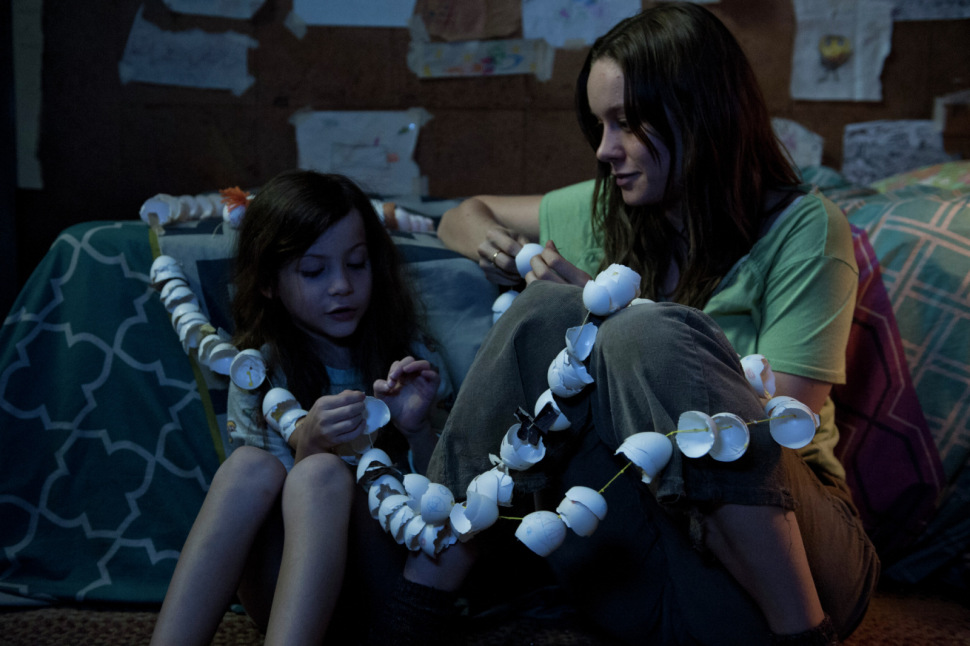
Jacob Tremblay and nominee Brie Larson in Room.
Regarding the rest of the Spirit Awards nominees, there are a number of pleasant surprises and less pleasant omissions. First, the gripes: The excellent 99 Homes, Room, Love and Mercy being left out of the best feature and best director categories is an unfortunate oversight, though each picked up a single acting nomination; about those single acting nominations, though, Jacob Tremblay belongs in the supporting actor category for his great work next to nominee Brie Larson in Room, and I would have liked to see Elizabeth Banks in supporting actress for Love and Mercy.

For the good, I was happy to see Michael Shannon recognized in supporting actor for 99 Homes, and the best international film list includes two of my favorite films this year, Mustang and A Pigeon Sat on a Branch Reflecting on Existence. Spotlight deservedly will receive the Robert Altman Award, given to the best ensemble cast of the year, an inarguable distinction for a film built on the strengths of its remarkable actors.

Overall, it is an exciting and eclectic list that reflects the best intentions of the nominating organization. Per tradition, the Independent Spirit Awards ceremony will take place the night before the Oscars, Feb. 27, 2016. Check out the full list of nominees here.

Sunday, October 11, 2015

Film festivals, Coen brothers, and Scorsese talks

The 15th anniversary screening of O Brother, Where Art Thou? at the New York Film Festival (photo credit: Sean DiSerio).

With the end of the New York Film Festival today, fall festival season is mostly at a close. The big ones – Telluride, Toronto, Venice, New York – have had their say and launched a great majority of the films that will compete for the top Oscars come January and February. For the most part, the movies that were meant to play like gangbusters did, and a little below, we will take a look at some of the reactions as the first phase of the run-up to the Academy Awards wraps up.

I have lived in New York nearly two years now, but this was the first year I was able to attend any of the New York Film Festival. As you might imagine, it was quite the experience, one I hope to expand on in the coming years. No, I did not get to attend any of the big premieres or see any of the new films. I will catch up with those in theaters like most of you will. Instead, my 2015 New York Film Festival experience was focused on the past.

O Brother, Where Art Thou?


On Sept. 29, I was invited to the 15th anniversary screening of Joel and Ethan Coen’s O Brother, Where Art Thou?, the brothers’ adaptation of Homer’s Odyssey transposed to Dust Bowl America. In attendance for the post-screening question-and-answer session, moderated by festival director Kent Jones, were the Coens, stars George Clooney, John Turturro, and Tim Blake Nelson, and legendary cinematographer Roger Deakins.

Tim Blake Nelson, Geroge Clooney, and John Turturro in O Brother.
The Coens are as rye as their films suggest, and at any mention of their genius – which came up a lot from the audience – they demurred. As far as they are concerned, they are just two humble guys who like to make movies. In their introduction, Joel Coen said they rarely re-watch their films, and the last time they had was at a similar event for their debut feature, Blood Simple. He joked they came away with 15 or 20 minutes of edits to make and added the next time we see O Brother not to be surprised if it is about 15 minutes shorter.

For the most part, they seemed reluctant to discuss any deeper meaning or intent behind their film – a trait that can be seen in almost all their interviews, as well – but that did not stop the rest of those assembled on stage from gushing about their work. Nelson in particular was complimentary and also offered that the Coens and this film essentially launched his career.

Deakins, who was Oscar-nominated for the film and has worked with the Coen brothers 12 times, spoke about the digital intermediate process used to capture the faded-postcard look of the film. The technique involves digitizing a film to alter the color and other characteristics of the image in post-production. It was the first time the process had been used in a major motion picture in the U.S., and its success is further proof of Deakins’ brilliance behind the camera.

Ethan Coen, Kent Jones, and Nelson at the afterparty.
Clooney, whose third collaboration with the Coens you may have seen a new trailer for this week, is every bit the star you imagine him to be, and his reputation as a charming, impish troublemaker seems well deserved if you believe Clooney himself. He told tales of playing the Coens off each other, trying to trip up the famously simpatico siblings, and just generally being a puckish presence on set. He was similarly puckish on stage, much to the audience’s delight.

The evening concluded with an afterparty at the Landmarc restaurant in Columbus Circle and drinks with the Coens, Deakins, Nelson, and a number of festival luminaries. Clooney did not attend the afterparty, which is probably for the best. Stars like that have a tendency to suck all the air out of a room just by showing up. As it was, it was a loose affair full of good conversation, tasty food, and free-flowing wine.

I told Deakins what he must already know – that he is a master of what he does and his work on this year’s Sicario is breathtaking. I listened to Nelson, Jones, and Ethan Coen chat it up on one side of the room as Joel Coen held court on the other. At the end of it all, I stood on the sidewalk and joked with Ethan Coen about the rain, which had started sometime during the party. He chuckled, but the joke was clearly on me as he made his way to the car he arrived in, while I, dressed for the occasion but not the weather, walked to my train.

Heaven Can Wait


If you are a film nerd – and if you are here, you are either a film nerd or related to me somehow – there is no more rewarding experience than listening to Martin Scorsese speak. Hearing Scorsese talk about film and film history is like hearing Hank Aaron talk about baseball or Ernest Hemingway about writing. There is nothing you can say that will add to the conversation, so just shut up, sit back, and listen.

Martin Scorsese talks to Jones (photo credit: David Godlis).
For about 25 minutes Oct. 1 at Alice Tully Hall, I had the chance to do just that. Scorsese was at the Lincoln Center for a screening of Ernst Lubitsch’s classic Heaven Can Wait (no relation to the 1978 Warren Beatty movie of the same name), but mostly, he was in town to talk about The Film Foundation and its ongoing mission to rescue and preserve classic films for future generations.

Heaven Can Wait is a beautiful showcase for the foundation’s work. For a movie from 1943, the print we saw looked absolutely gorgeous, featuring a depth of color and brilliance of sound we would be lucky to get for a new film, let alone one produced more than seven decades ago. The set design truly pops, and Gene Tierney is as luminous as you are ever likely to see her. If you have the opportunity to see a roadshow screening at a theater or museum of one of The Film Foundation’s restored prints, I urge you to go. Whether or not you have seen the films, these restored prints are like seeing them anew.

Jones was back, ostensibly to moderate the conversation, but in the end, he was just like the rest of us in the audience, an engaged student humbly taking in lessons from the master. Jones opened the talk by asking Scorsese to describe how he got involved in the preservation and restoration of old films, and that was it. Scorsese was off.

It would be an injustice to the experience to pull out of context a few choice quotes or funny anecdotes. It was not that kind of evening. When you listen to Scorsese lecture, it is about feeling the cumulative effect of one man’s life in film washing over you. If you are lucky, you will grasp just some of it. This man, a giant of the film industry, has dedicated most of the second half of his life so far to giving back to that industry. He is an inspiration, through and through, and just given the chance to sit in awe of him, well, yeah, heaven can wait.

Festival season


The fall festival season is an embarrassment of riches for film fans. It is the time when movies we have all been anticipating get their first public screenings, and when movies we have never even heard of prove worthy of anticipation. Moreover, the festival circuit is now the prime breeding ground for Best Picture contenders at the Oscars and, more often than not, Best Picture winners.

Going back to the Coens’ No Country for Old Men, each of the last eight Best Picture winners has debuted at a festival, and just to prove everything is connected in some way or another, the last film to win without a festival premiere was Scorsese’s The Departed in 2006. Unsurprisingly, that was also the last Best Picture winner that was a significantly commercial proposition from the get-go, although The King’s Speech, Slumdog Millionaire, and Argo were all box-office hits.

However, over the last few years, an interesting shift has taken place with regard to the line between independent, festival hit and big-budget blockbuster – namely, it has disappeared. In fact, some of the best reviewed films of this festival season have been commercially minded movies from marquee directors such as Ridley Scott (The Martian), Steven Spielberg (Bridge of Spies), Robert Zemeckis (The Walk), and Danny Boyle (Steve Jobs). There is no saying exactly whether these films will have the legs to make it to Oscar season, but with those names, those reviews, and likely big numbers at the box office, they have a good shot.

Charlie Kaufman's Anomalisa is scheduled for a December release.
As far as the movies I was less familiar with coming into the fall, a few have certainly cropped up that I will be putting at the top of my personal must-see list. Foremost among them, writer-director Charlie Kaufman’s Anomalisa, a stop-motion animated feature that won the special jury prize at the Venice Film Festival. I am a big fan of Kaufman’s writing (Being John Malkovich, Adaptation, Eternal Sunshine of the Spotless Mind) and an even bigger fan of his lone feature directing credit, Synecdoche, N.Y., so consider me in the bag for his latest venture.

Another director I have always loved is Tom McCarthy, whose first three features are unimpeachable – The Station Agent, The Visitor, and Win Win. He took an odd turn off course with last year’s simultaneously dour and oddly whimsical The Cobbler, but he appears to be back in form with Spotlight, which has gotten some of the best notices of any film at any festival this year. The film tracks the true story of the Boston Globe’s attempts to break open the Catholic Church sex abuse scandal. It sounds like topical, important work from one of our finest, most underappreciated directors, and I cannot wait.

I could go on, but you get the idea. The festival season is over, which means it is movie-going season for the rest of us. It is nearly impossible in any year to keep up with all the great films being released, and this year looks better than most, so as my idol used to say, I’ll see you at the movies.