Showing posts with label Love and Mercy. Show all posts

Thursday, February 11, 2016

Countdown to the Oscars: Best Sound Mixing

Tom Hanks stars in Bridge of Spies, nominated for six Academy Awards, including Best Picture and Best Sound Mixing.

Welcome to Last Cinema Standing’s Countdown to the Oscars, our daily look at this year’s Academy Awards race. Be sure to check back every day this month for analysis of each of the Academy’s 24 categories.

Best Sound Mixing


The nominees are:

Star Wars: The Force Awakens

Today and tomorrow, we are going to cover the sound categories – Best Sound Mixing and Best Sound Editing. I gave a thorough explanation of each last year in a combined piece on both categories, which you can read here. Quickly, sound mixing refers to the levels of sound such as the score, dialogue, effects, etc., and sound editing refers to the creation of a film’s soundscape, essentially creating the sound effects.

When you talk about sound mixing, what you are really talking about is balance and mood as in finding the right levels for each element of a film’s sonic environment while also using disparities in those levels to help the story forward without intruding on its telling. Should the music be louder, should the dialogue be crisper, should the background noise come up, etc.? These are the types of questions the sound mixing team seeks to answer.

Loud films tend to do well with the Academy in this category since the contribution of the mixers is easier to discern, though the sound branch tends to nominate talky dramas nearly as often as action epics. The dramas rarely win, however. Most of the time, you are looking for a musical or a popular action film for the victory here. This year, we have no musicals nominated but four big action or adventure movies.

The Revenant – Director Alejandro González Iñárritu’s western saga is such a unique and stunning visual achievement that it is easy to get lost in its imagery, but the world the sound team creates makes the film as remarkable to hear as it is to see. The mixers have done an incredible job in this film of pulling together a thousand tiny elements into a cohesive whole that carries viewers through the narrative. The ominous, droning score, the nature sound effects, and the minimal dialogue blend together with the non-diegetic sounds that seem to come from inside the characters’ heads to turn The Revenant into a film that you experience viscerally, as well as intellectually and emotionally.

Supervising sound designer Randy Thom is a legend in the field with 15 nominations and two wins to his credit. Re-recording mixers Frank A. Montaño and Jon Taylor were both double nominees last year for Unbroken and Iñárritu’s Birdman. This is Taylor’s third nomination overall, while Montaño has eight total nominations and has never won. This is production sound mixer Chris Duesterdiek’s first nomination. The Revenant is a quieter film than tends to win in this category, but its overall popularity may carry this team to a well deserved Oscar win for its mammoth achievement.

Mad Max: Fury Road – For all the strangeness of seeing George Miller’s epic chase film nominated at the Oscars, the sound categories would seem like an obvious place for the film to show up even if it were not so popular. This is the kind of aggressive sound work the branch usually does cartwheels over. Just finding the levels for all the vehicles in this film would be an insane task, let alone the sandstorm sequence, the citadel scenes, and the quiet moments with nothing but the wind whipping across the desert.

Re-recording mixers Chris Jenkins and Gregg Rudloff each have a pair Oscar wins. Jenkins’ has five previous nominations, while Rudloff has seven, including last year for American Sniper. This is production sound mixer Ben Osmo’s first nomination. While the work is unimpeachable, for this team to come away with the win will likely require Mad Max: Fury Road to be a juggernaut across the crafts categories with Academy members checking off boxes for this film left and right.

The Martian – I will not have been the first person to point this out, but in terms of plot and technical achievement, Ridley Scott’s space castaway movie bears a striking resemblance to Apollo 13. They have even followed a somewhat similar path at the Oscars, each racking up a healthy haul of nominations (The Martian with 7; Apollo 13 with 9) but missing out in the Best Director category. Ultimately, Apollo 13 won just two awards in what turned out to be the year of Braveheart. One of those awards, however, was for Best Sound Mixing.

Space films tend to do well in this category when it comes to nominations because of the scale and variety of elements featured, from rocket ships and big explosions to extraterrestrial landscapes. The Martian has it all. Re-recording mixers Paul Massey and Mark Taylor are both multiple nominees who have never won, while this is production sound mixer Mac Ruth’s first nomination. As with every other place it is nominated alongside The Revenant and Mad Max: Fury Road, The Martian is probably running third or further back in this category. It is a case of too many accomplished epics and too few awards.

Star Wars: The Force Awakens – The other thing likely drawing votes away from The Martian is the other space epic in the category, the $2 billion box-office smash Star Wars: The Force Awakens. For what seem like obvious reasons, Star Wars films have always done well in this category. A New Hope and The Empire Strikes Back each won the award, while Return of the Jedi and even The Phantom Menace came away with nominations.

Re-recording mixer Andy Nelson is a double nominee this year, along with his work on Bridge of Spies, the 19th and 20th nominations in his career. Re-recording mixer Christopher Scarabosio is a two-time nominee, and production sound mixer Stuart Wilson has been nominated three times now. Star Wars: The Force Awakens is a slick, rollicking space adventure, but it may not have the prestige to compete against the rest of the nominees in this category, especially given the other four are all Best Picture nominees as well.

Bridge of Spies – At first glance, this seems like a game of “one of these things is not like the other things,” with the talky legal drama Bridge of Spies pitted against four films painted on a much grander canvas. In reality though, such an assessment sells Steven Spielberg’s film short, and it would be just as accurate to think of it as a globetrotting spy thriller. For me, the most impressive aspects of this mix are the background elements – such as the far-off gunfire and sirens – that make James Donovan’s (Tom Hanks) experience so unsettling. There is nothing overt about the danger in Bridge of Spies, but the sound mix helps keep the sense of harm always lurking around the corner.

As I said, Nelson is now a 20-time nominee, and six of those nominations have come for Spielberg films. His two wins in the category have come for Saving Private Ryan and Tom Hooper’s Les Miserables. Re-recording mixer Gary Rydstrom has 18 nominations to his name and seven victories, four for Best Sound Mixing and three for Best Sound Editing. Sound mixer Drew Kunin has two nominations, notably fewer than either of his co-nominees but two more than most of us will ever have. It will be difficult for Bridge of Spies, however, to stand out among these nominees, so the nomination will most likely be the reward for this team.

The final analysis


Once again, it comes down to the two nominations leaders. The Revenant features the more subtle and some would say more artistic work this year, while Mad Max: Fury Road is the kind of bold statement that is just begging for recognition. Star Wars: The Force Awakens could be the spoiler here, but I am guessing The Revenant’s overall popularity will put it over the top.

Will win: The Revenant
Should win: The Revenant
Should have been here: Love and Mercy

Tomorrow: Best Sound Editing

Tuesday, November 24, 2015

Spirit Awards: Where indie still means indie


What a difference a year makes. On Tuesday, Film Independent announced its nominees for the annual Independent Spirit Awards. Last year in this space, I wrote about the general trend of the Independent Spirits toward more Oscar-friendly films, but this year, the nominated films and performances are nothing if not fiercely independent. That is not to say there are no likely awards heavies in the lineup, but there is more than a fair share of movies that probably will not get anywhere near the Academy Awards.

The nominees for best feature are Charlie Kaufman and Duke Johnson’s stop-motion Anomalisa, Cary Fukunaga’s African war story Beasts of No Nation, Todd Haynes’ beautiful tale of forbidden romance Carol, Tom McCarthy’s masterpiece Spotlight, and Sean Baker’s experimental Tangerine. All six of those directors also were cited in the best director category and are joined by David Roger Mitchell for the retro-horror It Follows.

Last year, four of the five best feature nominees ended up nominated for Best Picture at the Oscars (Birdman; Boyhood; Selma; and Whiplash), a feat that is unlikely to be repeated this year. Of these, Spotlight is rightfully among the frontrunners for the Academy Awards, but only Carol among the others has a realistic shot at Oscar glory. Let’s take a look at each of these films and break down their merits and possible awards futures.

Anomalisa Kaufman, an Academy Award winner for co-writing Eternal Sunshine of the Spotless Mind, is the marquee name here for cinephiles, but Johnson has the animation chops likely to make this film memorable. For Community fans out there, Johnson directed the magnificent “Abed’s Uncontrollable Christmas” episode.

This is the only film in the lineup I have yet to see – hopefully that will be rectified next week, though the film does not hit theaters until the end of December – but with these two attached, it is highly anticipated, which I wrote about here. As for the Academy, this might be a little too out there for any of the top categories, but a Best Animated Feature nomination is not out of the question.

Beasts of No Nation A harrowing tale of child soldiers in war-torn Africa, Fukunaga’s film might be most notable for its unusual release strategy. A Netflix Original film, Beasts of No Nation was released to theaters and on the movie streaming site on the same day, alienating a number of larger theater chains. As a result, the movie was locked out of theaters in most of the country, screening only in independent cinemas. The film, which likely works better on the big screen, deserved a better fate, but its quality will carry it through the awards season.

It is a fair question to ask whether filmmakers will embrace this new distribution model or reject it and hold it against the film. The Independent Spirit nominations, however, bode well for its chances, including in the technical categories, where it would not be out of place. Fukunaga also adapted the film from its source novel and served as the director of photography, and he would make for a handsome nominee in either category at the Oscars.

CarolI wrote at length about Haynes’ exquisite film here, and it is not surprising to see a film this well acted and this superbly crafted lead the nominations list with six, including notices for both its lead actresses, Cate Blanchett and Rooney Mara. If the independent film community rallies around Carol, which it seems like it will, the film could be a threat in a number of top categories at the Oscars.

SpotlightAs I said in my review, McCarthy’s exploration of the investigation into the Catholic Church sex abuse scandal is hands down the best American film of the year (so far) and an undeniable masterpiece. Carol is definitely the flashier film, but Spotlight is an unimpeachable achievement in filmmaking. A number of pundits have it down as the Best Picture frontrunner, and it deserves to be. As for its independent bona fides, McCarthy is a hero of the independent film community after his fantastic The Station Agent, The Visitor, and Win Win showed the best of what the community can accomplish.

TangerineEvery year, there is a film firmly in the awards discussion that just passes me by, and it seems Baker’s sordid story of transgender prostitutes in L.A. is the one this year. I do not see what others see in this highly regarded and critically acclaimed film. Tangerine is a testament to the democratization of filmmaking in its low-budget, low-fi origins, but I simply found nothing to like in its story or craft. It would be one of the biggest shocks of the year for me if it were read out in any category on Academy Awards nominations morning.

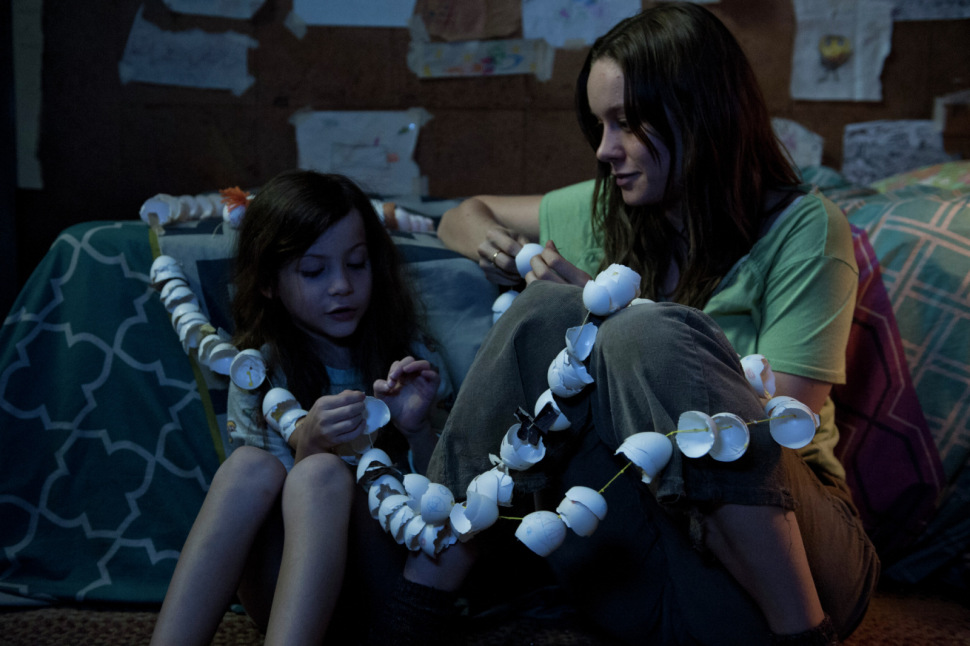
Jacob Tremblay and nominee Brie Larson in Room.
Regarding the rest of the Spirit Awards nominees, there are a number of pleasant surprises and less pleasant omissions. First, the gripes: The excellent 99 Homes, Room, Love and Mercy being left out of the best feature and best director categories is an unfortunate oversight, though each picked up a single acting nomination; about those single acting nominations, though, Jacob Tremblay belongs in the supporting actor category for his great work next to nominee Brie Larson in Room, and I would have liked to see Elizabeth Banks in supporting actress for Love and Mercy.

For the good, I was happy to see Michael Shannon recognized in supporting actor for 99 Homes, and the best international film list includes two of my favorite films this year, Mustang and A Pigeon Sat on a Branch Reflecting on Existence. Spotlight deservedly will receive the Robert Altman Award, given to the best ensemble cast of the year, an inarguable distinction for a film built on the strengths of its remarkable actors.

Overall, it is an exciting and eclectic list that reflects the best intentions of the nominating organization. Per tradition, the Independent Spirit Awards ceremony will take place the night before the Oscars, Feb. 27, 2016. Check out the full list of nominees here.

Sunday, June 21, 2015

New movie review: Love & Mercy

Paul Dano plays the young Brian Wilson in Bill Pohlad's remarkable Love & Mercy.

Brian Wilson is a genius. Full stop. As the primary creative force behind The Beach Boys, he is responsible for crafting some of the catchiest pop melodies this side of The Beatles, and his complex musical and vocal arrangements have been and will be studied by musicians and critics for decades. His contributions to popular music are innumerable, and his influence is as widespread as it is singular. There is no one like him.

It is also indisputable that he has lived a hard life. Every step of the way, he was harassed, abused, and exploited by those around him. His petty, vindictive father terrorized him his whole life. He succumbed to drugs, alcohol abuse, and mental illness. He famously spent three years lying in bed, haunted by the voices in his head and the demons in his thoughts. His greatest gift is also his curse, and though the creative spirit he embodies has been battered and bruised by the world around him, it has not been broken.

The story of Wilson’s life is by turns haunting, surreal, sad, and triumphant and deserves a film of equal depth and complexity. That film is director-producer Bill Pohlad’s tender, beautiful Love & Mercy. Pohlad has spent most of his career as a producer, helping shepherd to the screen films such as 12 Years a Slave, The Tree of Life, and Brokeback Mountain. Here, he takes over the director’s chair for the first time in 25 years, and the results are stunning.

Working from a screenplay by Oren Moverman and Michael A. Lerner, Pohlad portrays Wilson’s life as a gorgeous, elliptical tone poem about the confused and hyperactive mind of a brilliant artist. Pohlad avoids the pitfalls of most by-the-numbers music biopics by not focusing on dry biography – though the film is impeccably researched and detailed – and instead presenting events as Wilson would have experienced and interpreted them.

John Cuscak and Elizabeth Banks in Love & Mercy.
The film is split into two parts given roughly equal weight. Paul Dano plays a younger Wilson shown struggling to take the band and its music in new directions with the recording of the now-legendary Pet Sounds. John Cusack plays Wilson two decades later, after his “bed” period and while under the control of psychiatrist Eugene Landy (Paul Giamatti). During this time, he meets Melinda Ledbetter (Elizabeth Banks), who tries to help him break free of Landy’s influence.

All of the performances are superb, and Banks in particular is a revelation. Known almost exclusively for her comedic roles, though some audiences will no doubt recognize her best as Effie Trinket from the Hunger Games films, Banks plumbs depths of emotional resolve and compassion that she has rarely been able to showcase. She more than rises to the challenge, exerting herself as the conscience of the film as Ledbetter is the only person we meet who sees Wilson for the man he is behind the myth.

Giamatti turns in typically excellent work as Landy, whose purposeful misdiagnosis allows him to take guardianship of Wilson and bend and manipulate him to his will with a cocktail of medications and psychological abuse. In an older but not-yet-wise Wilson, Cusack gets a role befitting his immense talent. Through all his lies and fabrications, Landy says one true thing – that Wilson is a boy in a man’s body – and Cusack’s subtle, introverted work perfectly captures that truth.

This half of the movie comprises a more traditional narrative, which is strong, if a bit clichéd and propped up by its wonderful actors. The sequences with younger Wilson, identified in the credits as “Past Brian,” are another matter altogether. In showing the process of creation, Pohlad mixes film stocks, plays tricks with the soundscape, and shuffles our perception of time to put the audience directly in the mind of a musician having an artistic and spiritual breakthrough.

Though the supporting performances are strong, Dano is like a one-man show through this section of the film. An actor who has showed immense promise in films as diverse as Little Miss Sunshine and There Will Be Blood, here, he realizes the full potential of his talents. Wilson cannot escape his past as every element of his life conspires to drag him back to a place of pain and misery. Dano embodies this man who wants so badly to please others and express himself artistically but keeps finding these two endeavors to be contradictory. Making full use of his face, voice, and mannerisms, Dano brings to life someone who is simultaneously breaking through and breaking down.

In service of all these wonderful performances, Pohlad provides an immaculately crafted world for his actors to explore and for his to take root. It is hard to think of a recent film that has used sound so well and in so many different ways. From the complete lack of artifice in Wilson’s hammering out of a rough version of “God Only Knows” to the sonic collage of past Beach Boys hits – provided by frequent Trent Reznor collaborator and Oscar winner Atticus Ross – Pohlad creates a universe of sound that is rarely pleasant but always emotionally resonant. This, we can infer, is what it sounds like to be Wilson.


The portrait of Wilson in Love & Mercy is that of neither saint nor sinner. He has done wrong and been wronged. For every triumph, he has been exposed to a trial. While the people in his life have hurt him, he has endured and persevered with help of others. His successes have not inured him to the difficulties of life. He is a genius whose struggles have humbled him. He does not ask for pity or praise. All he needs is a little – well, it’s right there in the title.

See it? Yes.