On Tuesday, I called this the year of the ensemble, and many
of the best films of the year were stacked with wonderful performers giving
themselves over to a theater-like atmosphere of community and trust. As a
result, this year was not overflowing with big, showy, movie-star performances –
with one notable exception we will discuss below – and instead, 2015 was a year
of talented actors, young and old, delivering the type of subtle, measured work
that often goes underappreciated.
The following 10 achievements come from seven very different
films, which share in common only the commitment and perseverance of their
actors. The characters they play run the gamut from prisoners and spies to
survivalists and robots. In each case, though, it is like the audience is
witnessing a magic trick, watching as one person disappears and another appears
in an instant to transport us to worlds we could otherwise never know.
Before we get to the list, here are five more performances
that certainly belong in the conversation for the year’s best: Benicio Del Toro
in Sicario; Marion Cotillard in Macbeth; Paul Dano in Love and Mercy; Rinko Kikuchi in Kumiko, the Treasure Hunter; and Günes
Sensoy in Mustang.
10. Tom Hardy as John Fitzgerald in The Revenant

Hardy has built his career on chameleon-like character work.
It is a cliché, but if you had told me the same actor was Charles Bronson in Bronson, Bane in The Dark Knight Rises, Eames in Inception,
and Fitzgerald in The Revenant, I simply
would not have believed you. Hardy had a magnificent year with turns as Max in Mad Max: Fury Road and the Kray brothers
in the critically acclaimed Legend,
but those pale in comparison to his portrayal of the antagonist in the year’s
darkest adventure story.
Hardy makes Fitzgerald completely unsympathetic while still
giving the audience time and space to come around to his point of view. His
actions are incredibly self-serving and cowardly, but one may never question
his will to survive. For a film that is all about the triumph of the human
spirit against impossible odds, Hardy is the kind of fearless actor who dares
to show us the dark side of the human spirit. Fitzgerald is not evil, just
weak, and Hardy’s performance is that much stronger for the choice.
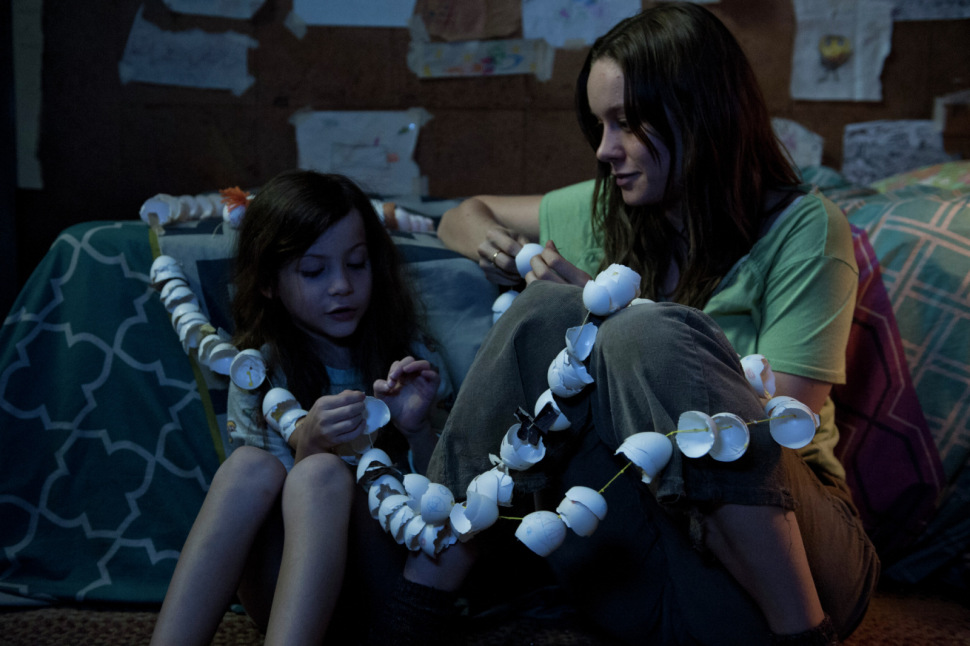
9. Jacob Tremblay as Jack in Room

This may be a bit of a mild spoiler for Room, so if you have not seen it, I insist you run out and see it
as soon as you can, then come back and finish up the list – or you know, just
skip to the next entry. Everyone else still here? Okay. The moment Jack first
meets a real dog might be the most uplifting three seconds in recent cinema
history. A boy who until a month or so before had no idea the real world
existed meets the animal he has long dreamt of but could never really imagine.
It is a moment that reminds us why we watch movies, and its success is all due
to the look on Tremblay’s face.
If it were that moment alone, Tremblay might have earned a
spot on this list, but from the first scene to the last, the then-8-year-old
child star of Room makes the audience
feel every second of his experience. He simply radiates childlike wonder,
curiosity, and exuberance. In an otherwise bleak tale, he is the shining beacon
of light for every other character, but without Tremblay’s mature, controlled
performance, the role could come off as too cute or cloying. Instead, it is one
of the most memorable elements of an eminently memorable film.
8. Brie Larson as Joy in Room

Joy is the shadow of Jack. She is the one who knows the life
she is missing, the life she has lost. She does everything she can to keep Jack
sheltered from reality, but the truth is always staring her in the face. She is
a young woman who is nearly destroyed by the contradictions she is forced to
live with every day, and the only reason she keeps it together is for the sake
of her son. Larson embodies this torment with an achingly physical performance
that ensures the audience comprehends the torture she endures.
Still just 26, Larson has been appearing onscreen since she
was 9 years old – something which no doubt allowed her to connect on a deeper
level with her young co-star. Apart from 2013’s Short Term 12, though, she has never had a role as raw as this to
sink her teeth into. No one would have doubted the lifelong actress could pull
off this part, but even Larson’s most ardent fans and supporters must have been
floored by the grit, determination, and strength of this performance.
7. Michael Shannon as Rick Carver in 99 Homes

Albert Brooks has a great speech in Broadcast News about the devil. In it,
he says, “What do you think the devil is going to look like if he’s around?
Come on! Nobody is going to be taken in by a guy with a long, red, pointy
tail.” It is my favorite scene in one of my all-time favorite movies because it
gets at a core truth about people. We do not fall prey to evil because we are
evil ourselves. We fall prey because evil is often seductive and alluring.
Carver is a bad guy who rarely acts like a bad guy. He comes off as a
pragmatist and an opportunist, but few of us could identify him as evil, which
is what he is.
By walking that line and never
betraying the darkness inside the character, Shannon pulls us into a web of
deceit and treachery the way only a true villain can. He is inviting rather
than menacing. He is calm rather than raging. While the world collapses all
around him, Shannon portrays Carver as a man who will sit back and wait for it
to finish, then go collect the deeds on the rubble. I have said before that
along with Michael Fassbender and Leonardo DiCaprio, Shannon is one of the best
actors of his generation, and with performances like this, I do not think I
will be proven wrong any time soon.
6. Tom Courtenay as Geoff in 45 Years

Courtenay is an absolute acting legend
who could have had any career he wanted. In 60 years of screen work, he has
just 51 credits and often has gone years between film or television gigs,
preferring instead to focus on the stage. Considering the universal acclaim he
has enjoyed, things have not worked out too badly for him. For the rest of us,
as people who mostly cannot make to British theater productions very often, we
are surely missing out. Nowhere is that more evident than in Courtenay’s
stellar work in 45 Years.
The audience never meets Geoff before
the opening scene of the film changes his life forever, but through Courtenay’s
portrayal, we are able to understand the kind of man he was and the kind of man
he has become. We see him lost in thought, sulking, sullenly contemplating the
five decades of his life since his first love died in an accident. Yet,
Courtenay also gives us glimpses of the loving husband and anarchic spirit that
are buried by unexpected news from the past. We cannot exactly root for Geoff,
but because of Courtenay, we can certainly understand him.
5. Alicia Vikander as Ava in Ex Machina

Last year was a remarkable breakout
year for Vikander, who appeared in the critically lauded Ex Machina, Testament of
Youth, and The Danish Girl. She
does not look to be slowing down in 2016 with Derek Cianfrance’s highly
anticipated The Light Between Oceans,
a new Wim Wenders film, and a role in the next Bourne film. If she is not a household name by now, she should be
by the end of this year, and she has earned it, not only by starring in quality
films but by generally being one of the best aspects of those films.
Her performance as Ava is so studied
and mannered it is almost otherworldly, which is the point. She is a humanoid
robot meant to test our capacity for telling the difference between a human and
a machine. The question of whether Ava has what we would call a soul is the
central drama of Ex Machina, and
Vikander’s portrayal of this alien being keeps the audience in the dark right
up to the final frames. Meanwhile, we are as transfixed by Ava as the characters,
and that is due to Vikander.
4. Yana Novikova as Anya in The Tribe

The
Tribe is a swirling maelstrom of rage and
disaffection, and at the center of all this pain is Anya. The plot may revolve
around Sergei (Grigoriy Fesenko), the new arrival at a boarding school for the
deaf, but Anya is the film’s soul. We cannot know how long she has been a part
of this makeshift society, but we can see how she has accepted her place in it.
There is a gang that runs the school, and she is simply a cog in their machine.
She wants out, but she knows no matter where she goes, her options are limited,
so she stays.
Novikova is heartbreaking in the role.
Like most of her co-stars in the film, Novikova is deaf and had never acted
before The Tribe. Her performance
makes one wish there were more call for deaf actors. Hell, someone should
probably just write a movie around her. Every moment she is onscreen in this
essentially silent film, your eye is naturally drawn to her. Almost without
uttering a single noise, she brings you into Anya’s world of disappointment and
lost innocence. There is no comparison in cinema history for this work, and
this is just as well because the performance is incomparable.
3. Leonardo DiCaprio as Hugh Glass in The Revenant

I talked about this a bit in my review
of the film, but I am going to repeat myself here because I want to be very
clear. Apart from it generally being an honor, DiCaprio does not care if he
wins an Academy Award. The cynical among the film commentariat would have you
believe his choice of films and roles is influenced by a burning desire within
him to win a small gold statue. Consider this, though: Maybe his choices are
informed by a sincere wish to do amazing work. Wouldn’t that be novel –
sincerity?
It seems necessary to repeat this
because some have criticized DiCaprio’s performance in The Revenant as simply Oscar bait. If these critics mean DiCaprio’s
physical and mental dedication to portraying the grueling journey made by Glass
is the kind of performance the Academy often awards, they are correct. DiCaprio
should win an Oscar for his wholesale transformation from famous actor to
frontiersman, and if he does, some will deride that victory, but they will be
wrong. DiCaprio’s portrayal of Glass is career-defining work by an actor at the
height of his powers.
2. Mark Rylance as Rudolf Abel in Bridge of Spies

Like Courtenay, Rylance is a brilliant
British actor who has devoted himself to the theater, earning multiple Tony and
Olivier (the British version of the Tony) awards in the process. He has just a
handful of screen credits, but after his turn in Steven Spielberg’s Bridge of Spies, you can expect that to
change. In fact, Spielberg has already brought Rylance on for his next film, The BFG, a dark children’s literature
adaptation. I do not have to see it to know Rylance will be amazing in it.
Rylance delivering an awesome performance is a fact of life, like the sun
rising or a stone sinking.
Abel is a suspected Soviet spy who is
captured and railroaded through the court system, not because it is just but
because the institutional fear of communism demands it. His lawyer, James
Donovan (Tom Hanks), is incensed by this miscarriage of justice, but Abel
remains cool. Rylance plays Abel as a studious man at peace with the things he
has done and the consequences thereof. When Donovan asks if he is scared, Abel
asks in return, “Would it help?” It is a wonderful line, and Rylance sells it
with the calm conviction of a condemned man who has done nothing but follow his
conscience.
1. Charlotte Rampling as Kate in 45 Years

This could be nothing else. From the minute this film ended,
I knew I had just seen the performance of the year by a living legend of
European cinema. Rampling has created indelible characters her whole career,
from The Night Porter to The Verdict to Swimming Pool, but the most remarkable thing about Kate is how
unremarkable Rampling is able to make her. Kate’s life has pretty much gone
according to plan. She met a man, got married fairly young, became an apparently
well liked school teacher, and retired to the countryside with her beloved
husband. By all indications, hers is a dream life.
At the start of 45
Years, the dream is over, and Kate wakes up. For an hour and a half, we
watch as this woman’s fragile existence is torn apart from within and without,
and Rampling’s performance turns an otherwise low-key marriage drama into a
Shakespearean tragedy. Every note of pain and remorse registers on Rampling’s
face, and she uses her body the way other actors use a monologue. There is not
a false note or wrong step to be found in Rampling’s portrait of a woman grappling
with the lie at the center of her life and searching for the strength to face
the truth.
Check back tomorrow as we conclude our Year in Review series with Last Cinema Standing's Top 10 Films of 2015.