Friday, December 4, 2015

New movie review: Brooklyn

Saoirse Ronan stars as Irish immigrant Eilis in director John Crowley's romantic drama Brooklyn.

It sometimes seems we lack appreciation for simplicity, particularly in our entertainment. Call it the Lost effect or whatever you want, but audiences and critics especially now demand immense complexity from television shows and films. This has led showrunners and filmmakers to mistake illogical mythologies and labyrinthine plotting for depth of character and richness of storytelling. As it is, entertainment that engages the mind but not the heart is doing only half its job.

Director John Crowley’s Brooklyn does not make this mistake. Crowley, working from a script by Nick Hornby based on the novel by Colm Tóibín, takes a simple story and tells it well. Eilis (Saoirse Ronan) is a young woman living in a stiflingly small Irish town in the 1950s who embarks on a journey to America, leaving behind her mother and older sister. In the U.S., she gets a job, makes friends, and falls in love with an Italian-American boy, Tony (Emory Cohen). Tragedy brings her back to Ireland, where she is forced to choose between her old life and the new one she has made for herself overseas.

Simple enough, but Crowley and Hornby infuse the characters and situations with humor, heart, and emotional honesty. There is never a false moment, and while the plot may be relatively small shakes in the grand scheme of things, Eilis’ conflict seems great because we care deeply about what happens to the character and want what is best for her.

Emory Cohen and Ronan in Brooklyn.
Ronan, who is still all of 21 years old, has not had a lengthy film career, but it sure has been an interesting one. Oscar nominated for just her third feature, Atonement, she has consistently chosen compelling parts in daring films by talented directors, including Joe Wright’s Hanna, Peter Weir’s The Way Back, and Ryan Gosling’s Lost River, not to mention her turn in last year’s Best Picture-nominated The Grand Budapest Hotel.

In Brooklyn, Ronan takes another left turn to explore the life of a girl who lived not so long ago – an age at a time that could make the character many of our mothers or grandmothers now. It is her most sensitive, subtle performance yet as she inhabits the sweet, soulful psyche of an immigrant who feels displaced both at home and abroad. Ronan easily taps into Eilis’ gentle naïveté but adds an undercurrent of strength and resiliency that is less on the page than in the performance.

Credit is due to the filmmakers, however, for bringing to the screen a movie filled with strong, well developed female characters when a lot of movies in theaters these days struggle to come up with just one. The boarding house Eilis lives in is populated by a witty, funny group of women who joke and snipe but ultimately support each other, and Eilis’ mother and sister are an intriguing study in people burdened by old-world values as the new world springs up around them.

The male characters are somewhat less developed but no less interesting. Cohen, playing the American love interest, and Domhnall Gleeson, Eilis’ suitor back in Ireland, deliver grounded, sympathetic performances as two men in love with the same woman. There are shades of Marlon Brando in On the Waterfront in Cohen’s tremendous portrayal of a lunk-headed guy who falls in love with a shy girl from the neighborhood – there are also shades of Eva Marie Saint in Ronan’s performance. 

Domhnall Gleeson and Ronan in Brooklyn.
As for Gleeson, here are his credits for the last two years: Frank; Calvary; Unbroken; Ex Machina; Brooklyn; The Revenant; and a little movie called Star Wars: The Force Awakens. It is a hot streak few other actors can lay claim to, and he has earned every one of those roles with consistently brilliant performances in wildly different parts. He has little screen time in Brooklyn, but the character is crucial to the film’s arc, and Gleeson leaves enough of an impression that we understand fully Eilis’ dilemma.

The key to the story is that neither man is a villain. They are well meaning people who see in Eilis the same things the audience sees. One simply represents her old life and the other her new one. In choosing between these two men, Eilis is really choosing between the past and the future. The culture she was raised with values the past deeply, and she values her culture, so it becomes a question of how willing she is to leave behind the life and people that made her who she is.

Apart from a few gorgeous shot set-ups, particularly when Eilis is checking in at Ellis Island, Crowley’s direction is unfussy and effective. He matches Hornby and Tóibín’s simple but sophisticated story with a straightforward style that leaves the plot room to breathe and gives the actors space to shine. Brooklyn is not the fanciest or flashiest movie you will see this year, but it is something better: admirable.

See it? Yes.

Wednesday, December 2, 2015

New movie review: Creed

Michael B. Jordan stars as Adonis Johnson in writer-director Ryan Coogler's excellent Creed.

A lot of us probably went through the five stages of movie reboot grief when the announcement came that there was a new Rocky movie in the works. Denial – Well, movies get announced all the time; that doesn’t mean anyone’s actually going to make it. Anger – How dare they ruin the legacy of a classic character like Rocky Balboa? Bargaining – As long as they respect the history of the originals, maybe it will be okay. Depression – They’re really going through with this, eh? Acceptance – Looks like it comes out around Thanksgiving; I guess it’s that or see Spectre again.

Only, I never had any trepidation about the new film because it has one thing no other reboot, remake, or sequel has: writer-director Ryan Coogler. Sure enough, under the steady, guiding hand of one of the best young filmmakers in the business, Creed is a crowd-pleasing triumph that takes a world we loved and updates it for the world we know.

Those folks nervous about a return to this universe probably had good reason to be. Sometimes in boxing, a fighter comes back one too many times – hell, it is the plot of at least three Rocky movies – but that fighter is rarely infused with this much new blood, new energy, and new life. Coogler and co-writer Aaron Covington, who worked closely with Sylvester Stallone in developing the script, have a firm grasp of both the established world of the film and the next-generation story they want to tell. As such, Creed shines as a stirring, bold standalone film and a worthy successor to the Rocky franchise.

Coogler reteams with his Fruitvale Station star Michael B. Jordan to tell the story of Adonis Johnson, son of Rocky rival and friend Apollo Creed. Adonis spends his youth in and out of group homes and juvenile detention centers until he is taken in by Apollo’s widow, Mary Anne (Phylicia Rashad). She brings him up with the intention of getting him away from fighting, but he proves to be his father’s son, seemingly genetically drawn to the ring.

Jordan and Sylvester Stallone in Creed.
Because of the way Apollo died, however, no trainer of worth will take on Adonis, so he moves to Philadelphia to seek counsel from the long-retired Rocky. The former heavyweight champion, now restauranteur, whose life has been defined mostly by struggle and loss, is initially reluctant, but he has the same fighting gene as Apollo and Adonis, and he cannot stay away. Now, with Rocky in his corner, Adonis seeks to build his own legacy and escape the darkness of the long shadow cast by his father.

Stallone wrote the first six Rocky movies and directed four of them, and his handle on the character he created is as strong now as it was nearly 40 years ago. Across seven films in five different decades, Stallone has never lost sight of the sweet, quiet guy with a champion’s heart that made Rocky so lovable and popular. When Adonis takes a photo on his phone and tells Rocky he has uploaded it to the cloud, Stallone’s brief, curious glance up at the sky tells us all we need to know about the character. This is still our Rocky.

All credit, though, goes to Coogler, who developed the original story for this film, for keeping the focus squarely on Adonis. As important as Stallone is to the character and Rocky is to the plot, Creed is not a Rocky movie. Rocky is in the final act of his life, while Adonis is in the first act of his. So, while it may be fun to see one of our favorite old characters brought back one more time, the real draw is watching Adonis’ story develop and, by extension, Jordan’s remarkable performance.

It is hard to say maybe from where you might know Jordan best. His first major onscreen work came in The Wire. Later came recurring roles on Friday Night Lights and Parenthood. I caught my first real glimpse of him in the excellent 2012 found-footage movie Chronicle, but his real breakout came two years ago in Coogler’s acclaimed true-life drama Fruitvale Station as the doomed Oscar Grant. In all of these parts, Jordan has been impressive, but in both his physical and emotional commitment to Adonis, we see him stretch his range further than he ever has. If this is an indication of things to come for Jordan, it will be exciting to see where he chooses to go next.

Jordan and Tessa Thompson in Creed.
Jordan provides Adonis with a rough exterior and pained interior that make the audience root for him to grow, and he does with Rocky’s training and a burgeoning romance with Bianca (Tessa Thompson). Bianca is the rare female character in a sports movie with her own story and her own complex life experiences, and Thompson gives her the inner strength to match Adonis blow for emotional blow. A singer-songwriter with degenerative hearing loss, she does not need Adonis to make her whole, but they each benefit from having the other in their lives.

With all the pieces in place – a superb cast delivering great performances, a killer story, and a willing audience – all that is left is to deliver the knockout punch, and Coogler’s direction sure does deliver that. I had the chance to meet Coogler last year around this time when he and Jordan were at the Lincoln Center in New York City for a script reading of Do the Right Thing as part of #BlackOutBlackFriday.

Coogler grew up in the East Bay in Northern California, where I was also raised. I told him how much it meant to me to see the area I grew up in portrayed so vibrantly and so accurately on screen in Fruitvale Station. In our brief chat, he came off as a smart, passionate filmmaker who cares deeply about his subjects. The remarkable thing about Coogler is how he is able to bring that same passion and care he showed in his much more intimate first film to a large-scale, sports movie franchise. Creed is a characters-first movie, and every choice the director makes is in service of those characters.

For Adonis’ first fight with Rocky as his trainer, the entire bout is filmed in one extended take that boggles the mind for its technical prowess and emotional intensity. For those 10 minutes, every one of us is Adonis, sweating, bleeding, dealing punches, taking them, and simply trying to stay on our feet. It is a painful but rewarding experience and a beautiful microcosm of the film around it. To climb out of the shadows, Adonis must battle the darkness around him and within him, but when he reaches the light, the fight will have made it that much brighter and that much warmer.

See it? Yes.

Friday, November 27, 2015

New movie review: Trumbo

Bryan Cranston plays Dalton Trumbo in director Jay Roach's historical drama Trumbo.

The U.S. has suffered a few black eyes over the years, mostly its own doing and mostly revolving around unfounded persecution. Native populations, blacks, women, Japanese, a whole cross-section of Europeans, and practitioners of most major and minor non-Protestant Christian religions have all been on the receiving end of the distinctly American us-vs.-them treatment. In the harsh light of history, all of these cases have been rightly viewed as affronts to human dignity.

Among the more fascinating ages in this country’s short history is the mid-20th century, when we rabidly feared communist aggression and insidious socialist agendas. Not a decade removed from four terms of the most socialist president the U.S. is likely ever to have, congress swung the pendulum the other direction in a big way with the House Un-American Activities Committee and Sen. Joseph McCarthy’s legislative witch hunts.

Hollywood has gone to this well a few times, most recently and most successfully with George Clooney’s stellar Goodnight and Good Luck, about newsman Edward R. Murrow’s fight against McCarthy. Now comes director Jay Roach’s Trumbo, which looks at the role Hollywood itself played in discriminating against ideas deemed dangerous or subversive. Trumbo plays like a lighter companion piece to the Clooney film, neither as hard hitting nor as tightly crafted but not without merit.

Cranston in Trumbo.
Bryan Cranston, in his first major post-Breaking Bad screen appearance, plays Dalton Trumbo, a screenwriter and novelist at the top of the world. As the film begins, Trumbo’s books and movies are never more popular, he and his lovely family live on a massive estate, and he signs a deal to become the highest paid writer in Hollywood. Writer John McNamara, adapting the book Dalton Trumbo by Bruce Cook, spends the first half of his script stripping away everything Trumbo has spent his life building. The second half chronicles his fight against the system that tried to destroy him.

The plot kicks off with Congress becoming concerned with the messages being promoted by Hollywood films – an unsurprising and sadly still relevant turn of events. Showing a cowardice that had hurt it before and would hurt it again, the movie industry took steps to censor itself under the spurious logic that if anyone was going to harm the film business, it might as well be the studios themselves. In this way, the infamous blacklist was born.

The Hollywood Ten, which counted among its ranks Trumbo and Ring Lardner Jr., chose not to answer HUAC’s questions and were cited for contempt of Congress. They took their battle to the Supreme Court, where they lost, and most of them ended up in prison, except for one who turned against the group and cooperated with the investigation. When Trumbo gets out of prison, he finds himself to be a pariah, unable to work or support his family.

He and a number of other members of the Hollywood Ten began taking writing jobs from schlock movie producer Frank King (John Goodman) and producing scripts under aliases. This specific topic was tackled in the tremendous and tremendously underrated 1976 comedy The Front, directed by Martin Ritt. Trumbo certainly has elements of that earlier film but fills in the history around the edges for audiences who are another four decades removed from the era.

Roach, known mostly for comedies such as Meet the Parents and the Austin Powers series, is a bit out of his element directing a historical drama. There is an undercurrent of black comedy running through the film, but it is tempered by the gravity of the events being depicted. Traditionally comic performers such as Louis CK and Alan Tudyk deliver solid, measured performances in supporting roles, and even the most overtly comic character, King, benefits from committed, carefully crafted work by Goodman. It should be noted Diane Lane and Helen Mirren also provide sharp supporting performances in less well defined roles as the wife (Lane as Cleo Trumbo) and antagonist (Mirren as Hedda Hopper).

Helen Mirren and Cranston in Trumbo.
Where Roach gets in trouble is in the details. Namely, there are too many. Running more than two hours, the movie feels at least an hour longer and could easily have been a half-hour shorter. Roach and McNamara get bogged down in their step-by-step recounting of the trials of the Hollywood Ten early on and the writing of the King scripts later. There is something to be said for historical context and a desire to get the details right, but good filmmakers know when to trust the audience, and Trumbo too often feels as though it is holding the audience’s hand.

It is a shame because if ever there were a story that could breeze by on the strength of its emotional resonance, it is this one. The communist witch hunts and Hollywood blacklist are such a clear systemic failure that audiences need just a basic understanding of the events to become invested in the struggle of those facing persecution. Had the filmmakers stripped away some of the minutiae, they could have given the story much more room to breathe and cleared the way for Cranston’s towering central performance.

As with his famous portrayal of television anti-hero Walter White, Cranston absolutely commands the screen as Trumbo. He imbues his Trumbo with a brash, swaggering confidence and a palpable sense of righteous indignation. He has the maniacal single-mindedness of someone who believes there is a right and wrong answer to every question and also believes he always has the right answer.

The world according to Trumbo: Early in the film, his daughter asks him if she is a communist since he is. He proposes a scenario in which she has a sandwich and another child at school does not. Would she share her sandwich or tell the other kid to get a job and buy his own sandwich? Share, she says. Then, she is as much a communist as he is. The script occasionally buys into this highly simplified worldview, but Cranston never does. At all times, he is selling the nuances of a broken system that Trumbo refuses to let break him.

Cranston does not play Trumbo as a hero so much as an indignant rabble rouser who happens to be on the side of good. It is because of people like Trumbo, Murrow, the Hollywood Ten, and others that we are able to look back critically on times when ignorance and injustice threatened to destroy us from within – if only we could look at ourselves with the same critical lens, learn from our mistakes, and not repeat them. That world might be an okay place to live.

See it? Yes.

Tuesday, November 24, 2015

Spirit Awards: Where indie still means indie


What a difference a year makes. On Tuesday, Film Independent announced its nominees for the annual Independent Spirit Awards. Last year in this space, I wrote about the general trend of the Independent Spirits toward more Oscar-friendly films, but this year, the nominated films and performances are nothing if not fiercely independent. That is not to say there are no likely awards heavies in the lineup, but there is more than a fair share of movies that probably will not get anywhere near the Academy Awards.

The nominees for best feature are Charlie Kaufman and Duke Johnson’s stop-motion Anomalisa, Cary Fukunaga’s African war story Beasts of No Nation, Todd Haynes’ beautiful tale of forbidden romance Carol, Tom McCarthy’s masterpiece Spotlight, and Sean Baker’s experimental Tangerine. All six of those directors also were cited in the best director category and are joined by David Roger Mitchell for the retro-horror It Follows.

Last year, four of the five best feature nominees ended up nominated for Best Picture at the Oscars (Birdman; Boyhood; Selma; and Whiplash), a feat that is unlikely to be repeated this year. Of these, Spotlight is rightfully among the frontrunners for the Academy Awards, but only Carol among the others has a realistic shot at Oscar glory. Let’s take a look at each of these films and break down their merits and possible awards futures.

Anomalisa – Kaufman, an Academy Award winner for co-writing Eternal Sunshine of the Spotless Mind, is the marquee name here for cinephiles, but Johnson has the animation chops likely to make this film memorable. For Community fans out there, Johnson directed the magnificent “Abed’s Uncontrollable Christmas” episode.

This is the only film in the lineup I have yet to see – hopefully that will be rectified next week, though the film does not hit theaters until the end of December – but with these two attached, it is highly anticipated, which I wrote about here. As for the Academy, this might be a little too out there for any of the top categories, but a Best Animated Feature nomination is not out of the question.

Beasts of No Nation – A harrowing tale of child soldiers in war-torn Africa, Fukunaga’s film might be most notable for its unusual release strategy. A Netflix Original film, Beasts of No Nation was released to theaters and on the movie streaming site on the same day, alienating a number of larger theater chains. As a result, the movie was locked out of theaters in most of the country, screening only in independent cinemas. The film, which likely works better on the big screen, deserved a better fate, but its quality will carry it through the awards season.

It is a fair question to ask whether filmmakers will embrace this new distribution model or reject it and hold it against the film. The Independent Spirit nominations, however, bode well for its chances, including in the technical categories, where it would not be out of place. Fukunaga also adapted the film from its source novel and served as the director of photography, and he would make for a handsome nominee in either category at the Oscars.

Carol – I wrote at length about Haynes’ exquisite film here, and it is not surprising to see a film this well acted and this superbly crafted lead the nominations list with six, including notices for both its lead actresses, Cate Blanchett and Rooney Mara. If the independent film community rallies around Carol, which it seems like it will, the film could be a threat in a number of top categories at the Oscars.

Spotlight – As I said in my review, McCarthy’s exploration of the investigation into the Catholic Church sex abuse scandal is hands down the best American film of the year (so far) and an undeniable masterpiece. Carol is definitely the flashier film, but Spotlight is an unimpeachable achievement in filmmaking. A number of pundits have it down as the Best Picture frontrunner, and it deserves to be. As for its independent bona fides, McCarthy is a hero of the independent film community after his fantastic The Station Agent, The Visitor, and Win Win showed the best of what the community can accomplish.

Tangerine – Every year, there is a film firmly in the awards discussion that just passes me by, and it seems Baker’s sordid story of transgender prostitutes in L.A. is the one this year. I do not see what others see in this highly regarded and critically acclaimed film. Tangerine is a testament to the democratization of filmmaking in its low-budget, low-fi origins, but I simply found nothing to like in its story or craft. It would be one of the biggest shocks of the year for me if it were read out in any category on Academy Awards nominations morning.

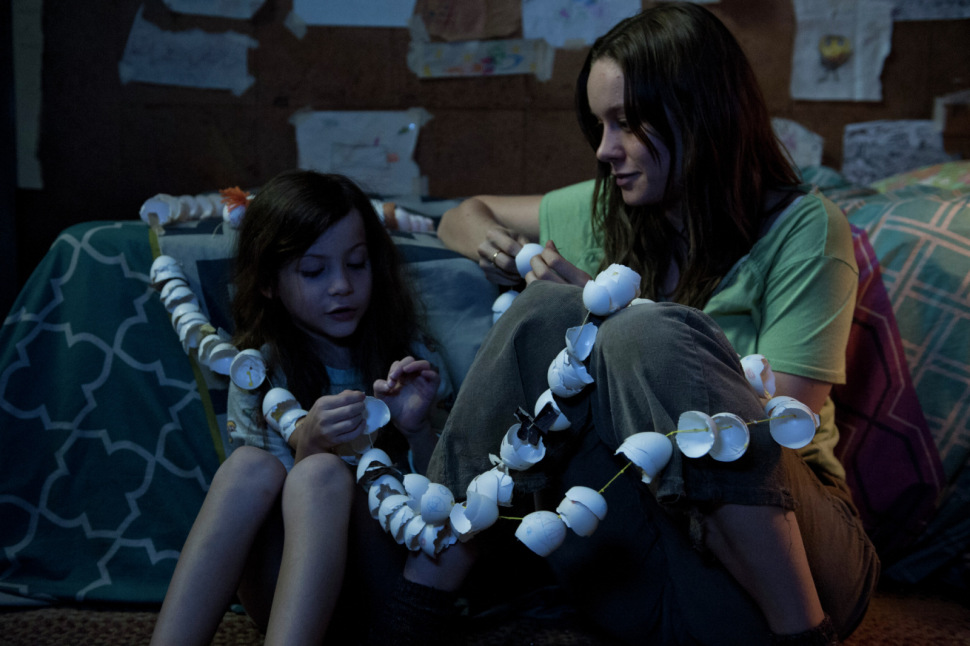
Jacob Tremblay and nominee Brie Larson in Room.
Regarding the rest of the Spirit Awards nominees, there are a number of pleasant surprises and less pleasant omissions. First, the gripes: The excellent 99 Homes, Room, Love and Mercy being left out of the best feature and best director categories is an unfortunate oversight, though each picked up a single acting nomination; about those single acting nominations, though, Jacob Tremblay belongs in the supporting actor category for his great work next to nominee Brie Larson in Room, and I would have liked to see Elizabeth Banks in supporting actress for Love and Mercy.

For the good, I was happy to see Michael Shannon recognized in supporting actor for 99 Homes, and the best international film list includes two of my favorite films this year, Mustang and A Pigeon Sat on a Branch Reflecting on Existence. Spotlight deservedly will receive the Robert Altman Award, given to the best ensemble cast of the year, an inarguable distinction for a film built on the strengths of its remarkable actors.

Overall, it is an exciting and eclectic list that reflects the best intentions of the nominating organization. Per tradition, the Independent Spirit Awards ceremony will take place the night before the Oscars, Feb. 27, 2016. Check out the full list of nominees here.

Saturday, November 21, 2015

Carol: The predicament of looking

Rooney Mara and Cate Blanchett star in director Todd Haynes' sublime new romance Carol.

You see someone across the room, and you instantly feel a connection. You do not have the words to express what you feel, but you know you are changed by this moment. Your image of this person is filtered through your past, your present, your vision of the future, your expectations of this person, and the other thousand things that can come between the two of you. You must fight through all these filters until you are face to face with this other person, and only then can you truly connect.

So goes the love story at the center of director Todd Haynes sumptuous new film Carol. The film stars Cate Blanchett and Rooney Mara as Carol and Therese, two women who fall in love but whose romance is complicated by the prevailing social norms of the early 1950s. Haynes was in attendance Wednesday night at the Lincoln Center in New York City for a screening of Carol and an extended conversation to kick off the Film Society’s retrospective “Todd Haynes: The Other Side of Dreams.”

Dennis Lim and Haynes at the Lincoln Center.
The series, which runs through Nov. 29, will feature all of Hayne’s feature films, several of his shorts, and the HBO miniseries Mildred Pierce. Each screening will be paired with a film hand-picked by Haynes and cited as either a direct or indirect influence on the filmmaker’s work, and Haynes will be on hand to introduce and discuss several of the films.

With its post-World War II setting and gay love story, Carol is sure to remind viewers of Haynes’ earlier film Far from Heaven, but while the two share certain similarities, Carol is much grittier and more intensely focused. Rather than try to encompass the malaise of an entire generation as he did in that previous work, Haynes narrows his focus to the specific experiences of Carol and Therese. The script, written by Phyllis Nagy and based on the Patricia Highsmith novel The Price of Salt, makes us a part of this world and shows us life from the perspective of two stoic but vulnerable women.

“For me, it was an opportunity to explore the love story in a way that I felt like I really hadn’t done in movies,” said Haynes. “On the one hand, it made me think of how I felt when I was in Therese’s shoes, as many of us have all been, falling in love, maybe when we’re much younger, maybe not, where you feel completely like you are inventing a language, like no one has ever experienced this before, like you’re completely at the mercy of the power of the person who you’re obsessed over and reading the signs and indicators of how they feel about you.

“But what’s interesting about this is it’s both universal, and it’s intensely historically specific because that’s really true about lesbian representation at this time, even more than gay male representation. So it has both very specific historical relevance and accuracy, but it also speaks to a feeling that we’ve all had when we don’t have that historical specificity to support it.”

Therese is a Manhattan shopgirl who first meets Carol when the older woman is picking out a doll to give to her young daughter for Christmas. Therese is instantly struck by this woman but has no frame of reference for her feelings. Haynes pointed out that in the novel, Therese says she would “call it love, except Carol is a woman.” It is this discrepancy between raw emotion and social convention that drives the narrative, and Haynes and his two lead actresses play off this cognitive dissonance wonderfully.

In a way, both women are forced to fight who they are. For her part, Therese barely understands this strange new experience of falling for a woman and tries to rationalize her actions to her friends and ersatz partner Richard. While Carol has carried on relationships with women before, she is in the midst of a messy divorce and still must learn to navigate the murky waters of female sexuality – let alone female homosexuality – at a time when women who stepped outside the norm were perceived as mentally unbalanced.

Blanchett and Mara are perfectly keyed in to this struggle, and though about half the movie depicts each character’s separate life, the central romance is so engrossing that everything else seems to fall away – as it would for two new lovers. Carol’s seduction of Therese is quick but not easy and takes place in a series of exchanges full of silence and anxiety, which Haynes took from the novel but did not find in the first draft of the script he read.

“I felt when I first read [Nagy’s] first draft that there was something – and she immediately agreed with me when I talked to her about it – that had been defanged in her treatment of the novel,” said Haynes. “The novel has such great disquiet and anxiety between the two women, and in the script, the first draft I read, there was a kind of congeniality between them right away. It felt like this has been adjusted for financiers. This had been eased along the long, arduous process of trying to get it made, and when I talked to Phyllis about that tension and that disquiet, she was like, ‘Yes! Great! Let’s get that back in the script.’”

Haynes’ instinct was correct, and the heavy silences, during which neither Therese nor Carol knows what to make of the other, are among the best moments in the film. In these seemingly blank spaces, Blanchett and Mara are tasked with conveying a range of complex emotions with a single glance or furrowed brow, and Haynes was quick to point out the actresses’ contribution to the success of the film.

Lim and Haynes speak after a screening of Carol.
“It is all in those silences and the lack of dialogue and the gestures,” said Haynes. “Some of those moments are very clearly marked and described in the script, but it’s also I think that really great performances like Rooney’s, which sort of conducts the way we look at both her face reading Carol and what she’s seeing in Carol, it’s so cognizant of the proportions of film as a medium and how much trust it gives to the viewer to invite interpretation and that if she did any more, it would be like, ‘Whoa, whoa, whoa.’ It’s indicating too much. It’s telling too much. If she did any less, it would feel maybe vacant or unengaging or uninteresting, and it’s just walking that really delicate line.”

The director had similar praise for Blanchett, particularly with regard to her awareness of the camera and its meaning. At different points through the film, Blanchett must keep track of where her character is both emotionally and in relation to how Therese feels about her. She must project her true self and the image of herself that Therese is seeing at various moments in the story. Blanchett, who was instrumental in getting the film made in the first place, has a facility for this kind of nuanced character acting that is simply stunning to watch.

“The amazing thing about this performance of Cate’s is that Cate is aware of her proximity to the viewer so acutely and basically has to depict the image of Carol through the eyes of Therese and then various shades of a closer proximity to the real, complicated, and often ambivalent woman behind that image,” said Haynes. “If she wasn’t aware of that and almost always aware of where the camera is and what it’s doing when it’s photographing her – whose point of view it’s assuming at different times in the movie – the language of the movie wouldn’t work.”

The language of the film is its imagery as we almost always view these characters through windows or mirrors or curtains or some combination of factors. The visual narrative then becomes the stripping away of these filters standing between Carol and Therese but also between the audience and the characters.

“The interest in filtering and creating barriers between us and the objects we’re looking at just reveals the predicament of looking and maybe at some level stokes desire because when there’s something in the way, you want to get around it, and you’re aware of the act that you are looking,” said Haynes. “When there’s nothing in the way, you don’t even have to think about looking as a predicament, but this continually puts something between us, so it is filtering. Cate and Rooney also participated in that visual language. Just as the way I was describing Cate’s sensitivity toward where the camera was and how she was being depicted through these filters, that visual language was a starting point for everybody involved.”

Haynes skillfully holds the viewer at a distance throughout the film, mirroring for us the experience Therese has with Carol, until finally there are no more barriers to overcome, no more filters to remove. It is at this moment for the characters and the audience that everything becomes clear, and once it is, we are truly able to connect.

Lovers and Lollipops


Haynes chose to pair Carol with Morris Engel and Ruth Orkin’s 1956 romantic comedy Lovers and Lollipops, which follows the story of a single mother introducing her 7-year-old daughter to her new boyfriend. The film is a funny, honest snapshot of its time and place and captures a version of New York City that heavily influenced Haynes’ portrayal of the city in Carol.

Lovers and Lollipops
“Lovers and Lollipops was a discovery because I didn’t know about it, and I was really interested in evoking natural light and natural settings in New York City at this time, but I wasn’t finding great examples of that from Hollywood at the period,” said Haynes. “Well, Ruth Orkin and Morris Engel were partners, as I mentioned earlier, and they made these films together, and Lovers and Lollipops, unlike Little Fugitive, which is about a little boy who runs off to Coney Island for the day, this one really took place in a lot of the locations that are relevant to Carol, including a scene in Macy’s toy floor.

“Macy’s in Lovers and Lollipops is like a disaster area. There’s trash on the floor and kids rolling around and tired shopwomen and pegboard walls, and [production designer] Judy Becker and I were like, ‘Pegboard, yes! We’re going to put pegboard all over Carol.’ People are always saying, ‘Carol is such a stylish-looking film,’ and I’m like, ‘What?’ It’s dingy and distressed, and I love that about it. I mean Carol is stylish, and the clothes are great looking because people dressed that way in the ’50s, but I love the distress of it.”

In addition to the photography, Lovers and Lollipops was a tremendous influence on the depiction of Carol and Therese as women of the period, and Haynes said Blanchett and Mara took great inspiration from Lori March’s central performance.

“The woman represents a kind of lost example of femininity that you don’t see in actresses from the period and we haven’t seen since – maybe you see glimmers of it in your grandmothers – and it’s a kind of poised, slightly mannered version of a woman that is just kind of a lost iconography,” said Haynes. “It was just so interesting to both Cate and Rooney in looking at how to build these characters, who are both very different kinds of women in Carol, but this central character in Lovers and Lollipops was instrumental in that development for both actresses.”